Coloring pages by age: why a 3-year-old and a 5-year-old need different pages
Most sites sort coloring pages by subject. That is how adults search and a poor way to choose for a child. Here is what actually changes between ages three and eight.
A three-year-old and a five-year-old need genuinely different coloring pages. The three-year-old needs thick outlines and a few big areas. The five-year-old needs finer lines, more parts, and something that takes real effort to finish.
Give either one the other's page and the same thing happens: they stop. Too easy is boring; too hard makes them press harder, grip tighter, and decide they are bad at it.
Why age matters more than the picture
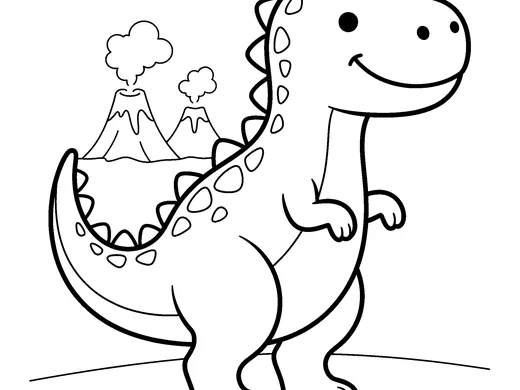
Most coloring sites sort by subject: animals, cars, princesses. That is how adults search, and it is a useless way to choose a page for a child. A dinosaur drawn with hundreds of fine scales and a dinosaur drawn as five big shapes are not the same product, even though both are "a dinosaur coloring page".
What makes a page work for a particular child is four things, and none of them is the subject:
- Line weight. How thick the outline is. Thick lines forgive a wandering crayon.
- Area size. How big the spaces to fill are. Big areas mean visible progress fast.
- Number of parts. How many separate things there are to keep track of.
- Detail floor. The size of the smallest thing on the page that has to be colored.
What changes at each age
| Age | The page should have | What the child is practicing |
|---|---|---|
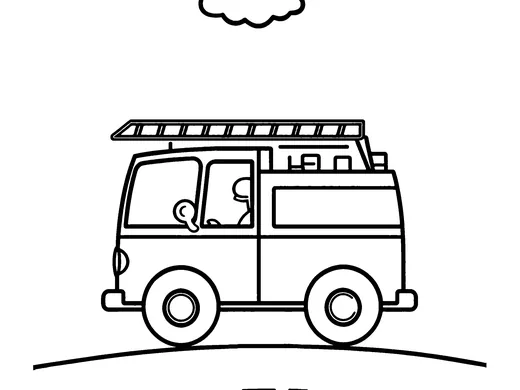
| 2–3 · toddlers | One subject, extra-thick outlines, 3–5 huge areas, no small detail | Whole-arm movement, holding a tool, finishing something |
| 3–4 · preschool | Thick outlines, large areas, a few bigger details like an eye or an ear | Deliberate coloring, first careful strokes, color choice |
| 4–5 · pre-K | Medium lines, several named parts, one genuinely fiddly element | Staying inside lines, keeping track of parts, sustained effort |
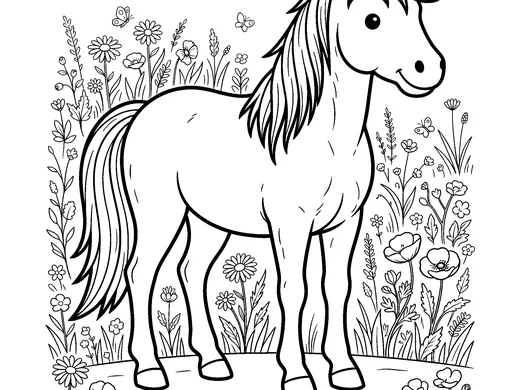
| 5–6 · kindergarten | Finer lines, smaller areas, a background or scene | Controlled strokes, pressure control, storytelling |
| 6–8 · early elementary | Realistic proportions, texture in the lines, detail that takes two sittings | Endurance, shading, caring how it turns out |
Two practical notes. First, these are bands, not tests — a child who prefers the band below is not behind, and a child who reaches for the band above is not gifted, they just like a challenge that day. Second, the bands overlap on purpose: a four-year-old will happily do a 3–4 page when tired and a 4–5 page on a good morning.
What happens when the page is too hard
This is the failure most parents never connect to the page. A child given a page beyond their hand does three things in order: they grip the crayon harder, they press harder into the paper, and then they abandon it — often saying they are bad at coloring.
The grip part matters beyond the drawing. Pencil grip develops until around age six, and a hard, tense grip is one of the few grip problems worth acting on. Handing a preschooler a page of fine detail is a reliable way to teach the tense grip you would rather they never learned.
The reverse is milder but real: a page well below a child's level gets colored in thirty seconds with three scribbles, because there is nothing in it worth their attention.
Why these pages are realistic rather than cartoonish
Every page here is drawn as a real animal or object, simplified to the right level — not as a cartoon with huge eyes and eyelashes. There are two reasons.
The first is that a coloring page is often a young child's reference image for what an elephant is. A realistically proportioned elephant teaches something; a cartoon one teaches the cartoon.
The second is that children notice condescension early. By six, most children can tell when a drawing is aimed at babies, and they will refuse it. Keeping the proportions honest is what lets the same site serve a three-year-old and an eight-year-old.
How to pick a page in practice
- Start at your child's age band, not above it. Finishing something is the point; being challenged is a bonus.
- Watch the first two minutes. Quiet and absorbed means it fits. Pressing hard or looking around the room means it does not.
- Print two levels on a bad day. Let them choose. Choosing is a large part of why they keep going.
- Print in black and white, fit to page. The line weight is designed at A4/Letter size — scaling down thins the lines and undoes the point.
- Do not correct the colors. A purple lion is a decision, not an error.
Every page on this site states the age it was drawn for, and explains on the page itself what that particular drawing is asking the hand to do. That is the whole idea: not more coloring pages, but the right one.
Sources
- CDC, Learn the Signs. Act Early.: Milestones by 3 Years. cdc.gov
- American Academy of Pediatrics, HealthyChildren.org: Developmental Milestones, 3 to 4 Year Olds. healthychildren.org
- Schneck C. M., Henderson A. (1990): Descriptive analysis of the developmental progression of grip position for pencil and crayon control in nondysfunctional children. AJOT 44(10), 893–900. PubMed
- Cameron C. E. et al. (2012): Fine Motor Skills and Executive Function Both Contribute to Kindergarten Achievement. Child Development 83(4), 1229–1244. PMC
Written by a parent, from published developmental guidance — the sources are listed above. It is general information, not medical advice. If you are worried about your child's development, speak to your pediatrician.
Free starter pack 🎒
10 coloring pages for ages 2–8, plus a guide to what each one builds.
More for parents
Every child's drawing moves through the same sequence, and the ages are far looser than parents expect. Here is what each stage is for, and what not to say about it.
7 min readHow long they can sitAttention span by age: how long a child can actually stay with somethingThe official figure is much smaller than most parents expect, and it only describes half of what is going on. The other half explains why the same child can color for thirty minutes.
6 min readActivities at homeFine motor skills at home: 30 activities from the kitchen and bathroomThe best fine motor equipment is already in your kitchen. Thirty activities from age two, what each one builds, and why ten minutes a day beats a program you abandon.
8 min read