Attention span by age: how long a child can actually stay with something
The official figure is much smaller than most parents expect, and it only describes half of what is going on. The other half explains why the same child can color for thirty minutes.
The one number with an official source behind it: by five years old, most children can pay attention for five to ten minutes during an activity. That is the CDC's milestone, and it surprises most parents, who expect far more.
The popular rule — "two to three minutes per year of age" — is a rough guide that gets repeated everywhere without a study behind it. Treat it as a sanity check, not a measurement. And note what it is measuring: attention to something an adult chose. Given something they picked themselves, the same child may stay for half an hour.
What to expect at each age
| Age | An adult-led task | Something they chose |
|---|---|---|
| 2–3 years | 2–5 minutes, and they will get up in the middle | Up to 10 minutes on an absorbing toy |
| 3–4 years | About 5 minutes; a story can hold longer | 10–15 minutes |
| 4–5 years | 5–10 minutes | 15–20 minutes |
| 5–6 years | 10–15 minutes — roughly what a classroom asks for | 20–30 minutes |
| 6–8 years | 15–25 minutes | Often as long as they are allowed |
The first column is the one that causes arguments at the kitchen table. The second is the one that tells you the attention is there.
Two different things get called "attention"
Sustained attention is staying with one thing. It grows slowly and steadily through the preschool years and is what the numbers above describe.
Voluntary attention is choosing to stay with something that is not intrinsically interesting — finishing the boring half of a page. This one develops much later, alongside impulse control, and is still immature at eight.
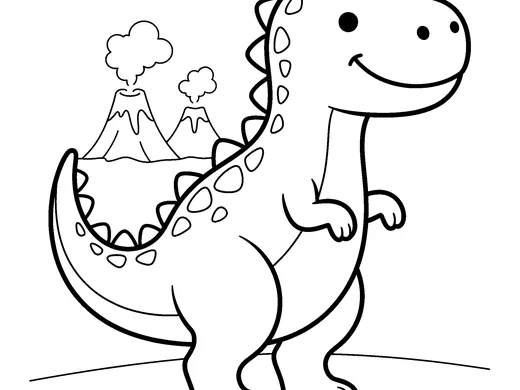
A child who colors a whole dinosaur but abandons a worksheet after ninety seconds is not inconsistent. They are showing you a normal four-year-old with normal sustained attention and normal, undeveloped voluntary attention.
What makes it shorter
- A task pitched wrong. Too hard and the child stops to avoid failing; too easy and there is nothing to hold them. Most "he won't concentrate" complaints are a fit problem.
- Background television. Even when nobody is watching it, an audible TV cuts the number of words an adult says to a child sharply — the AAP cites a drop from about 940 to 170 words an hour — and it fragments play. Turning it off is the single cheapest change available.
- Tiredness and hunger. Attention is the first thing to go and the last to come back.
- Too much choice. Fifteen crayons on the table is a decision problem. Four crayons is a coloring problem.
- Being watched and corrected. Commentary interrupts the very thing you want to lengthen.
What makes it longer
The research on early attention points at fairly dull, practical things rather than exercises.
- Let them finish. The commonest way adults shorten attention is by interrupting an absorbed child — with a question, a snack, a photograph. Protecting a child who is already concentrating does more than any activity designed to build focus.
- One thing on the table. Clear the surface. A page and a few crayons, nothing else in reach.
- Start together, then step back. Sit down and color for two minutes yourself. Children join an activity in progress far more readily than one they are told to start.
- Let them choose the page. Choice moves the task from the left-hand column of that table to the right-hand one, and often doubles the time.
- Stop before they do. Ending while it is still going well leaves the activity something they want to come back to.
Why coloring is a reasonable way to practice
Coloring has an unusual shape for a preschool task: there is no wrong answer, the goal is visible, and progress is obvious from across the room. A child can see how much is still white. That built-in feedback is why a page will often hold a four-year-old longer than a toy will.
It only works if the page fits. Too much detail for the age and the child gives up in a minute — which reads as an attention problem and is actually a page problem. Pages here are sorted by the age they were drawn for, and coloring pages by age explains what to look for.
A practical trick for a child who stops early: fold or cover half the page. Finishing half a page is a finish. An abandoned whole page is not.
When short attention is worth mentioning
Attention varies enormously between healthy children, and almost all short attention at three or four is just being three or four. The pattern worth raising with a pediatrician is a persistent one, present for more than six months, in more than one setting — home and preschool, not only home — and getting in the way of things the child wants to do. Add to that: never able to stay with a self-chosen activity either, constant motion that they cannot damp down even when it matters, or a clear loss of focus a child previously had.
Formal attention diagnoses are usually not made before school age, for exactly the reason this article started with: the normal range is very wide.
Sources
- CDC, Learn the Signs. Act Early. — 5-year milestones, including "Pays attention for 5 to 10 minutes during activities." cdc.gov
- American Academy of Pediatrics, Media and Young Minds (2016), Pediatrics 138(5): e20162591 — background media and adult–child talk. aap.org
- AAP HealthyChildren.org: Why to Avoid TV Before Age 2 — the 940-to-170 words per hour figure. healthychildren.org
- Longitudinal Links Between Media Use and Focused Attention Through Toddlerhood. Frontiers in Psychology 11 (2020). frontiersin.org
- Ruff H. A., Lawson K. R. (1990): Development of sustained, focused attention in young children during free play. Developmental Psychology 26(1), 85–93.
Written by a parent, from published developmental guidance — the sources are listed above. It is general information, not medical advice. If you are worried about your child's development, speak to your pediatrician.
Free starter pack 🎒
10 coloring pages for ages 2–8, plus a guide to what each one builds.
More for parents
A child in a full tantrum cannot be reasoned with, because the reasoning part is offline. What works is the opposite of what feels natural, and there is good evidence behind it.
8 min readScreensScreen time for ages 2 to 6: the hour, and the things that matter moreTwo health bodies give almost the same number. The number is also the least informative thing they say. Here is what the research actually points at.
7 min readHow to chooseColoring pages by age: why a 3-year-old and a 5-year-old need different pagesMost sites sort coloring pages by subject. That is how adults search and a poor way to choose for a child. Here is what actually changes between ages three and eight.
6 min read