Free printable mazes for kids
Twenty-two printable mazes, sorted by age. Each has one way in, one finish and exactly one correct path, so a child can never end up in a maze with no solution.
For ages 3–4 there are ten mazes with paths 22–32 mm wide and a short way through, wide enough for a thick crayon. For ages 4–5 there are more dead ends and the paths narrow to 16–19 mm. For ages 5–6 the grid is 10×10 or 11×11, the paths are 12–13 mm wide and three of the sheets add a task: collect something on the way.
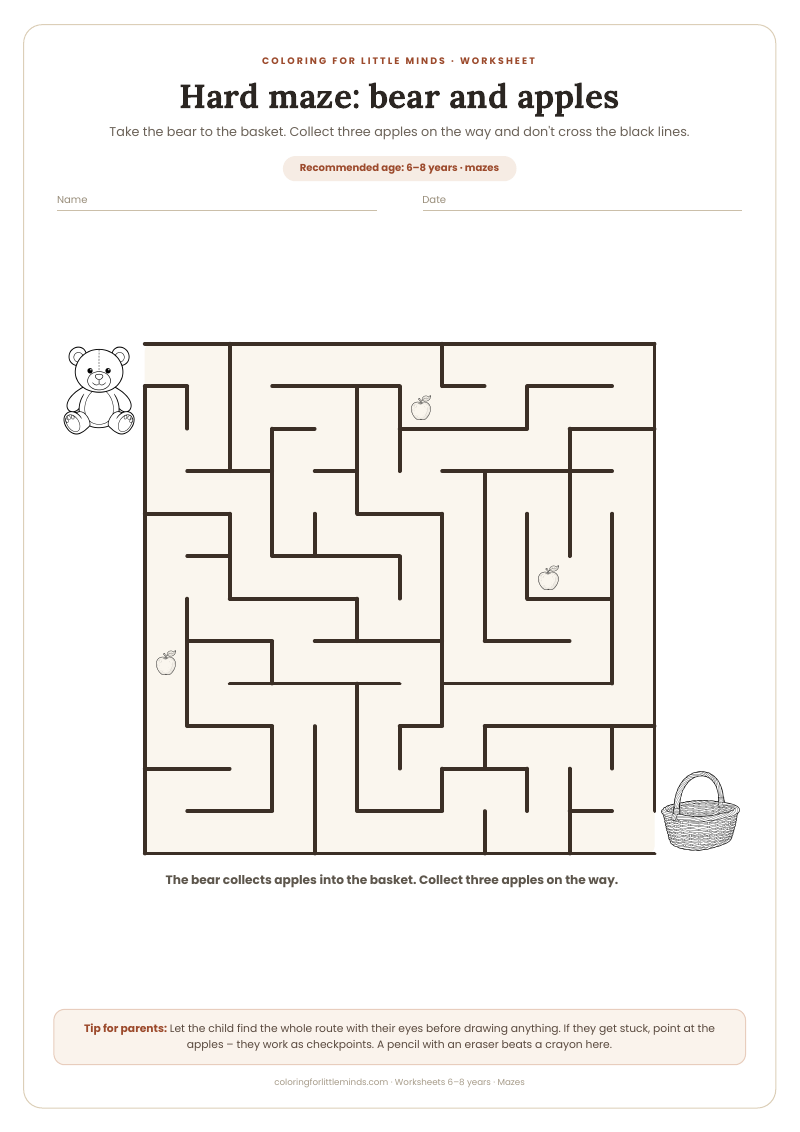
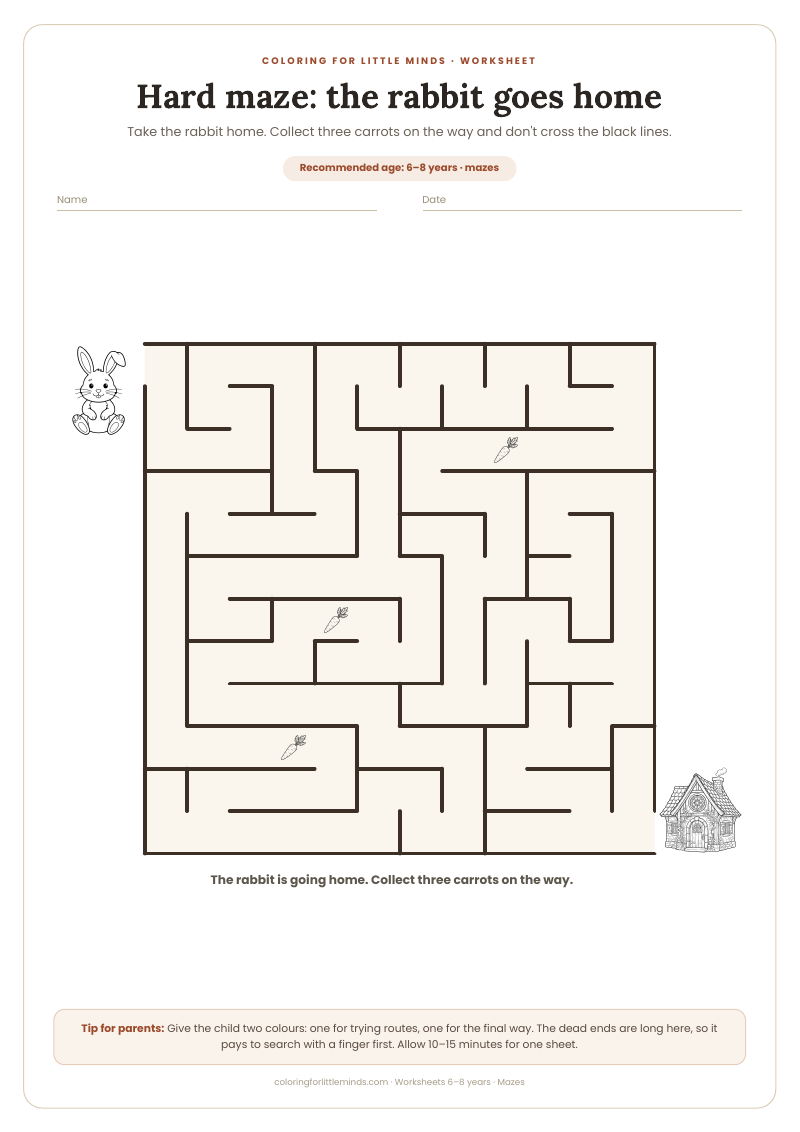
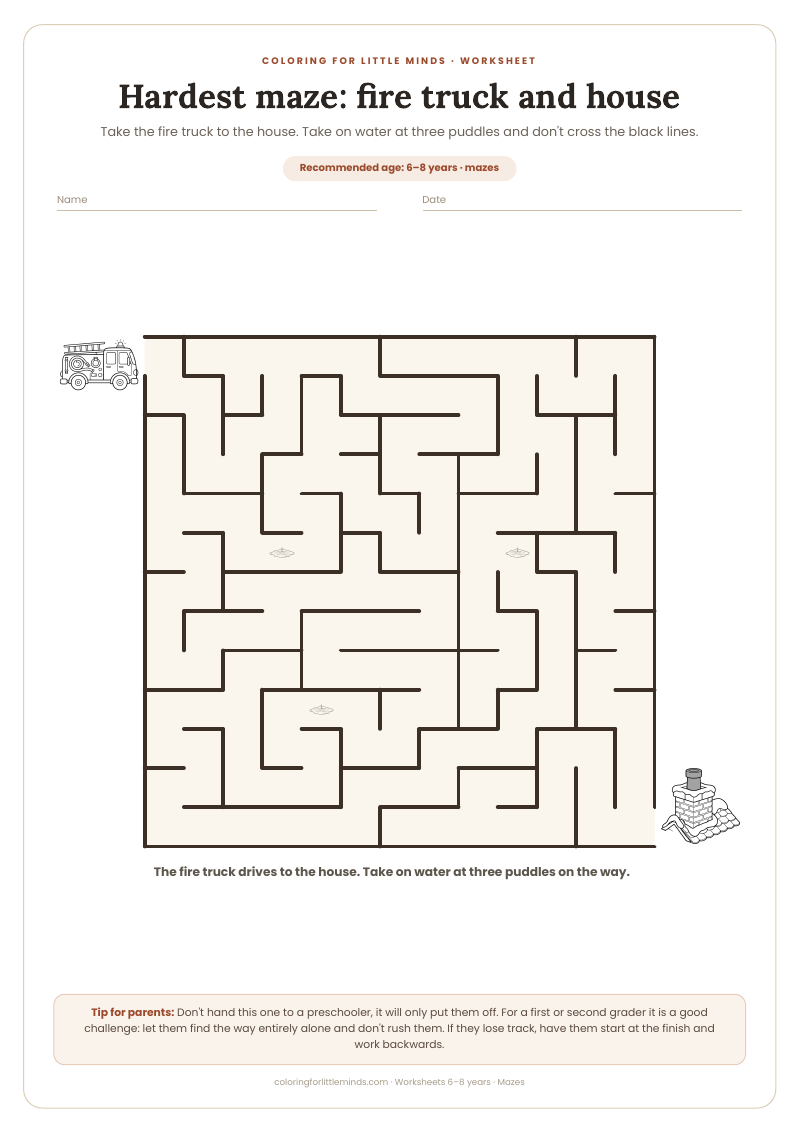
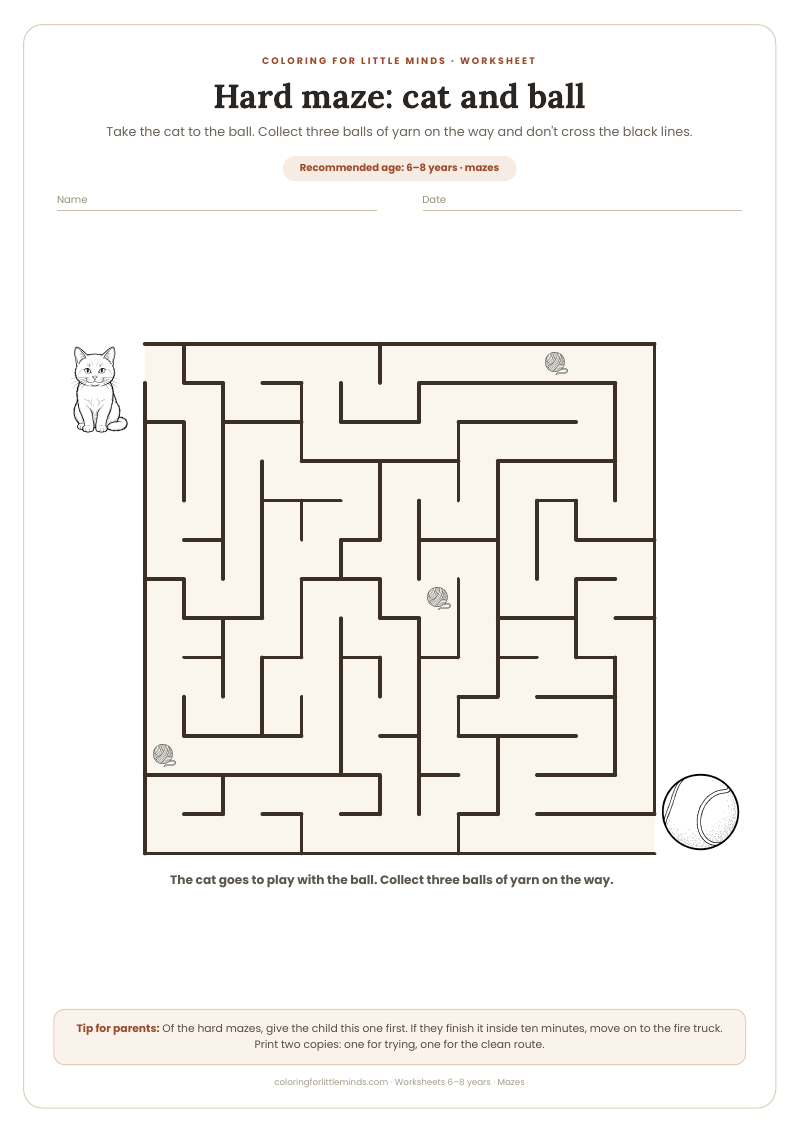
For ages 6–8 there are four big mazes: a 12×12 and 13×13 grid, paths 10.5–11.3 mm wide and a way through of more than a hundred squares. Every sheet carries a short tip for parents. Start one age band below your child's age and let them trace the way with a finger first.
Sheets by age:
Ages 3–4 (10)
⬇ Bundle: mazes ages 3–4 (10 sheets) in one PDF
 Save
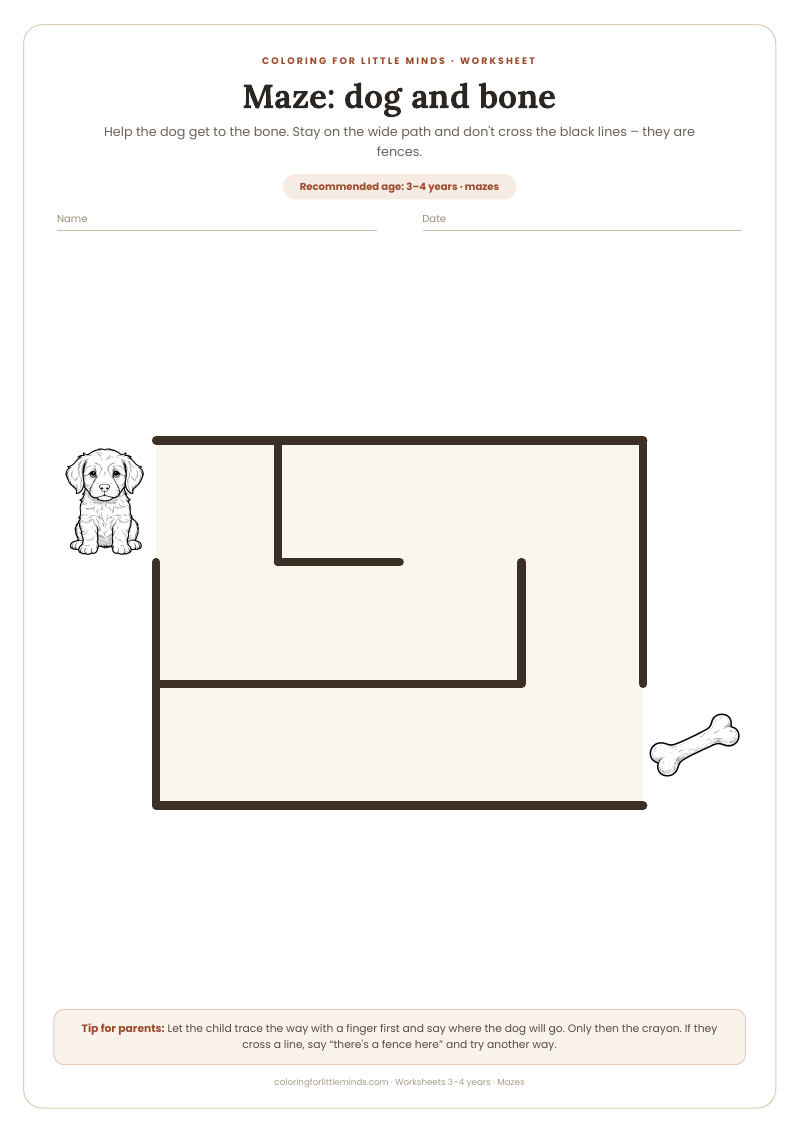
Maze: dog and bone
Mazes · ages 3–4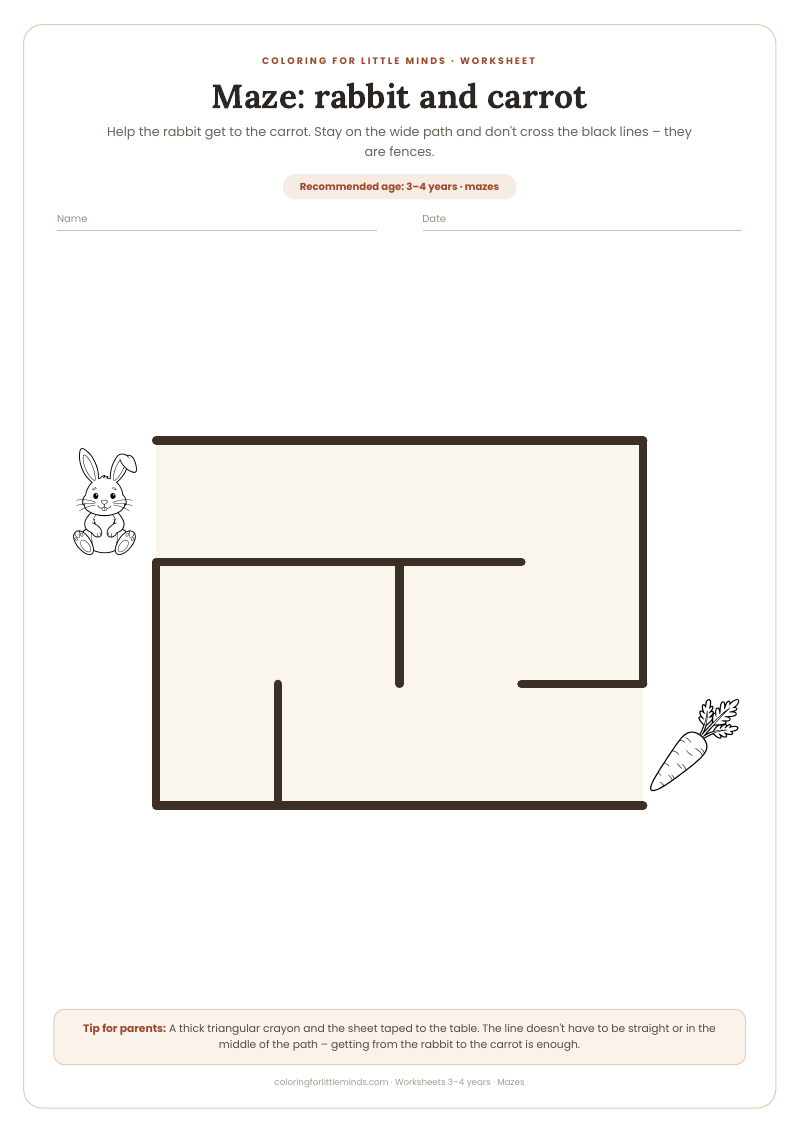 Save
Maze: rabbit and carrot
Mazes · ages 3–4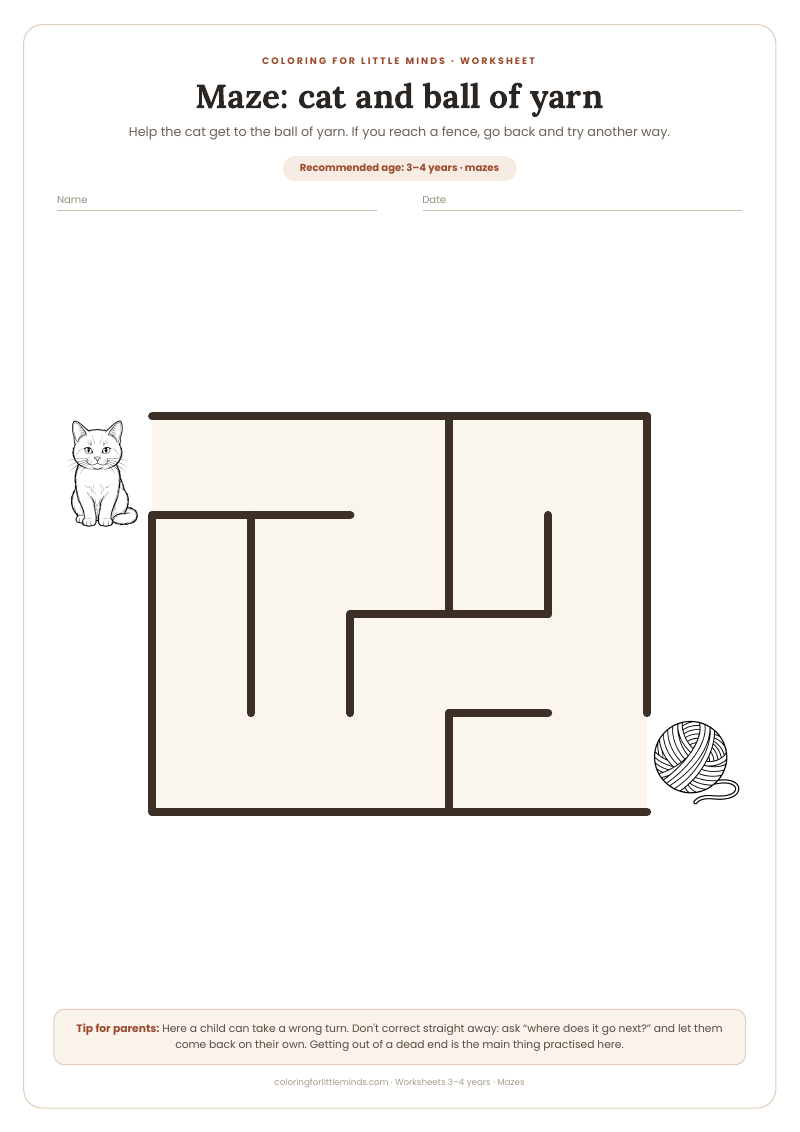 Save
Maze: cat and ball of yarn
Mazes · ages 3–4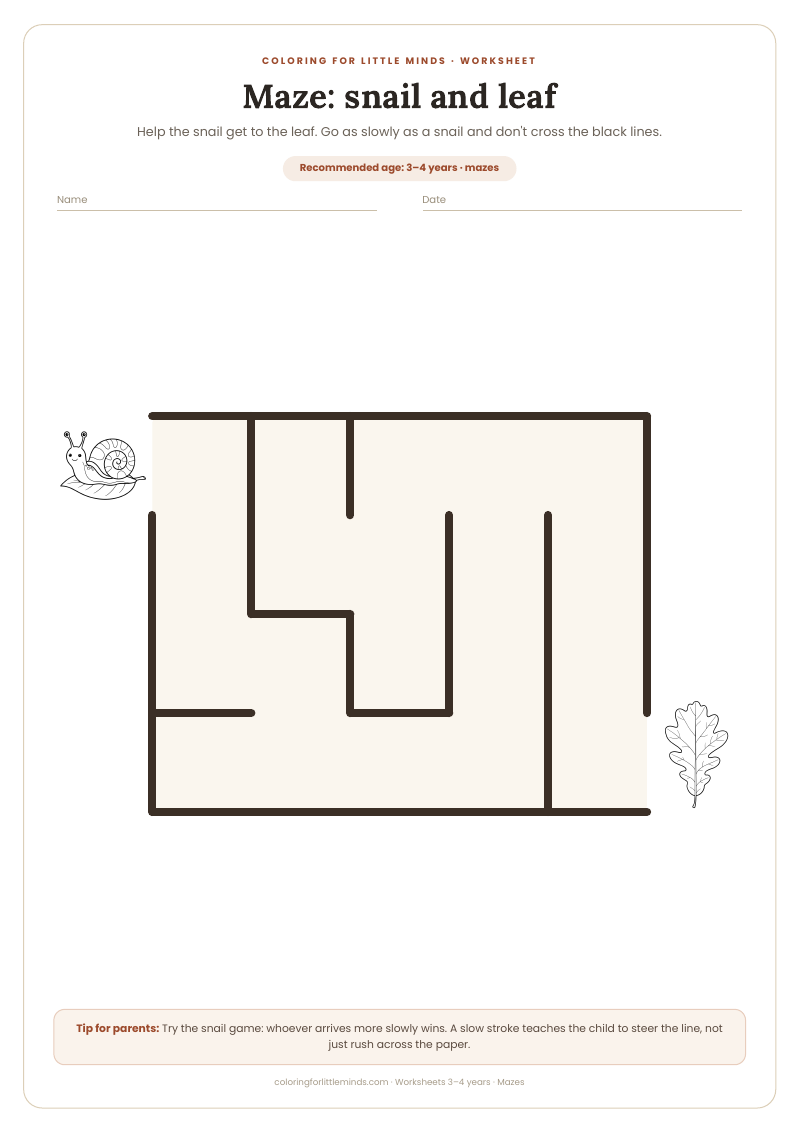 Save
Maze: snail and leaf
Mazes · ages 3–4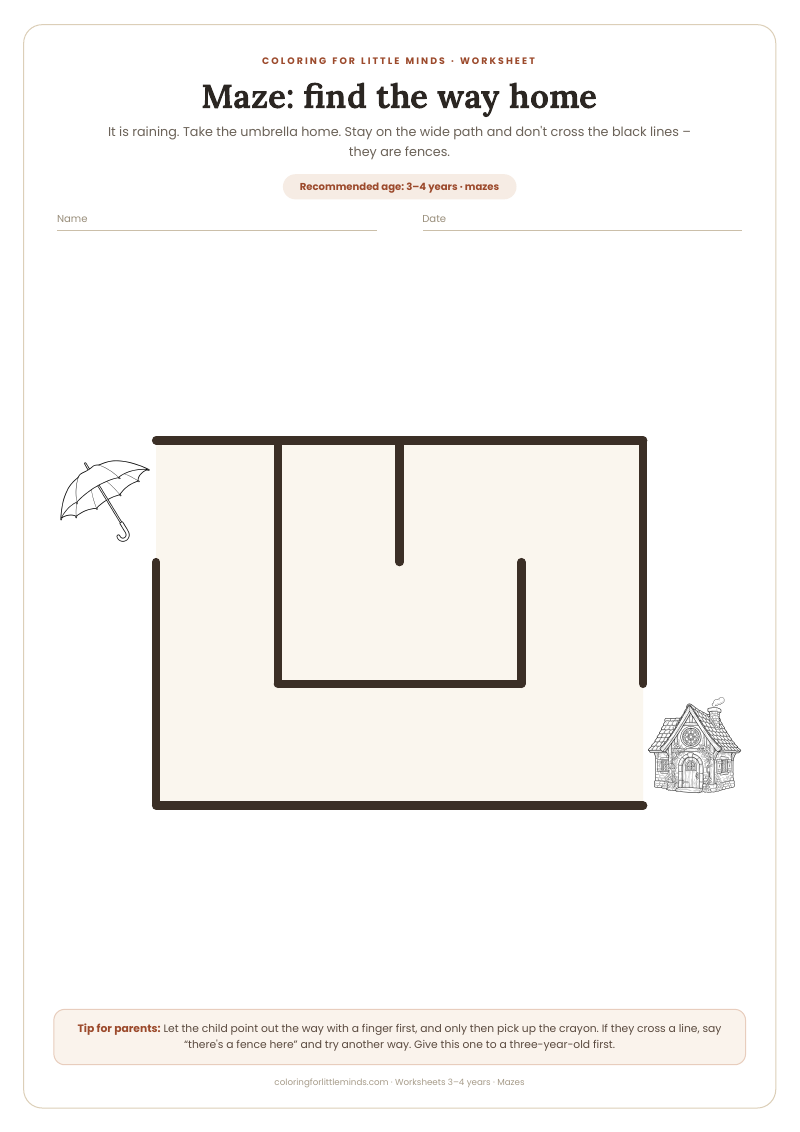 Save
Maze: find the way home
Mazes · ages 3–4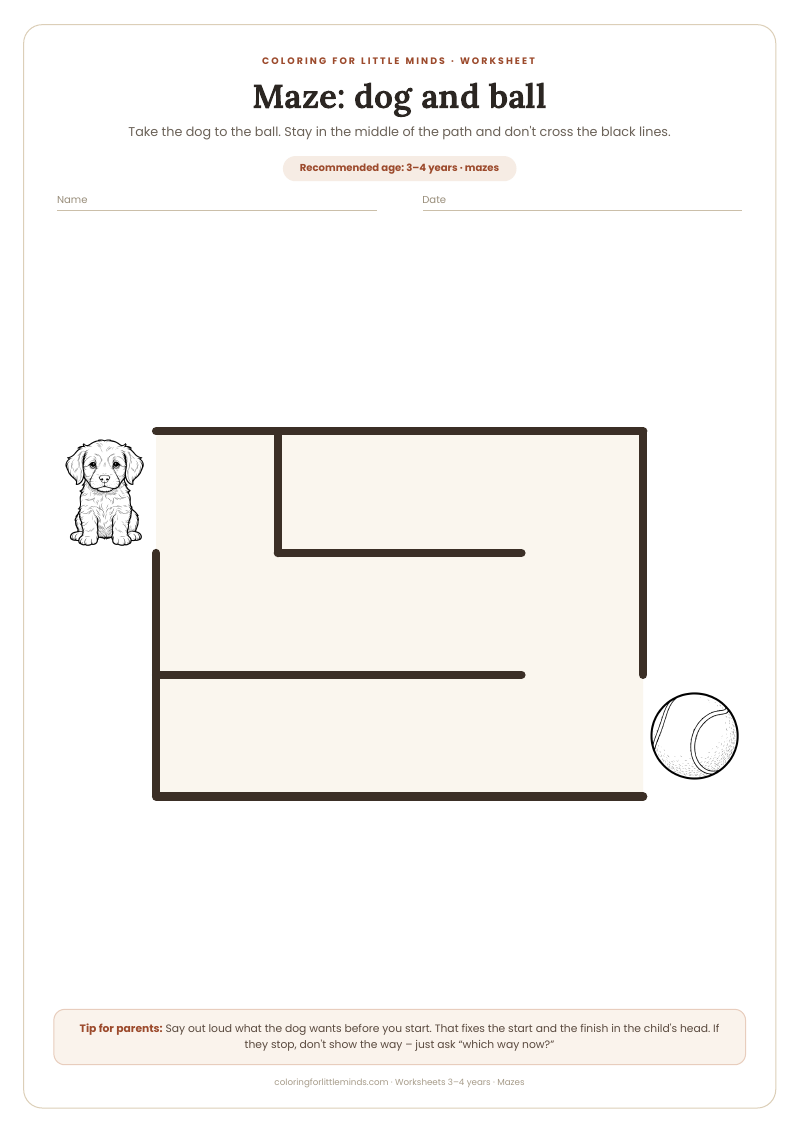 Save
Maze: dog and ball
Mazes · ages 3–4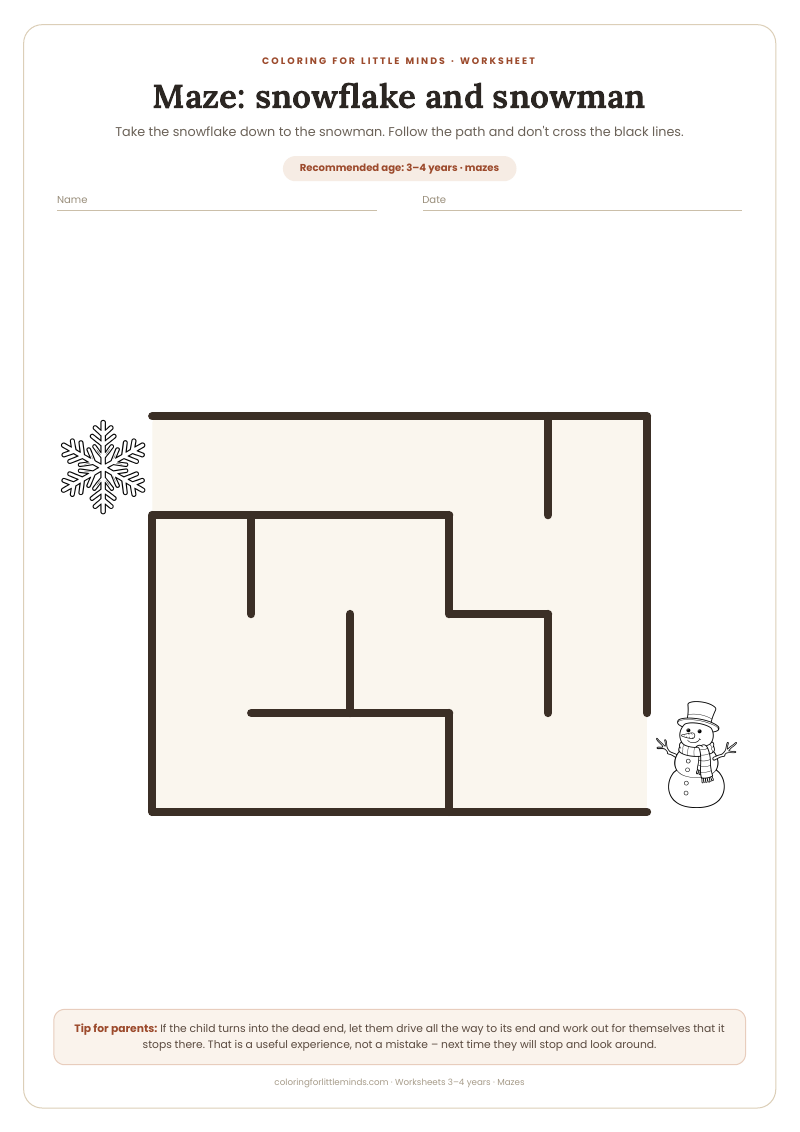 Save
Maze: snowflake and snowman
Mazes · ages 3–4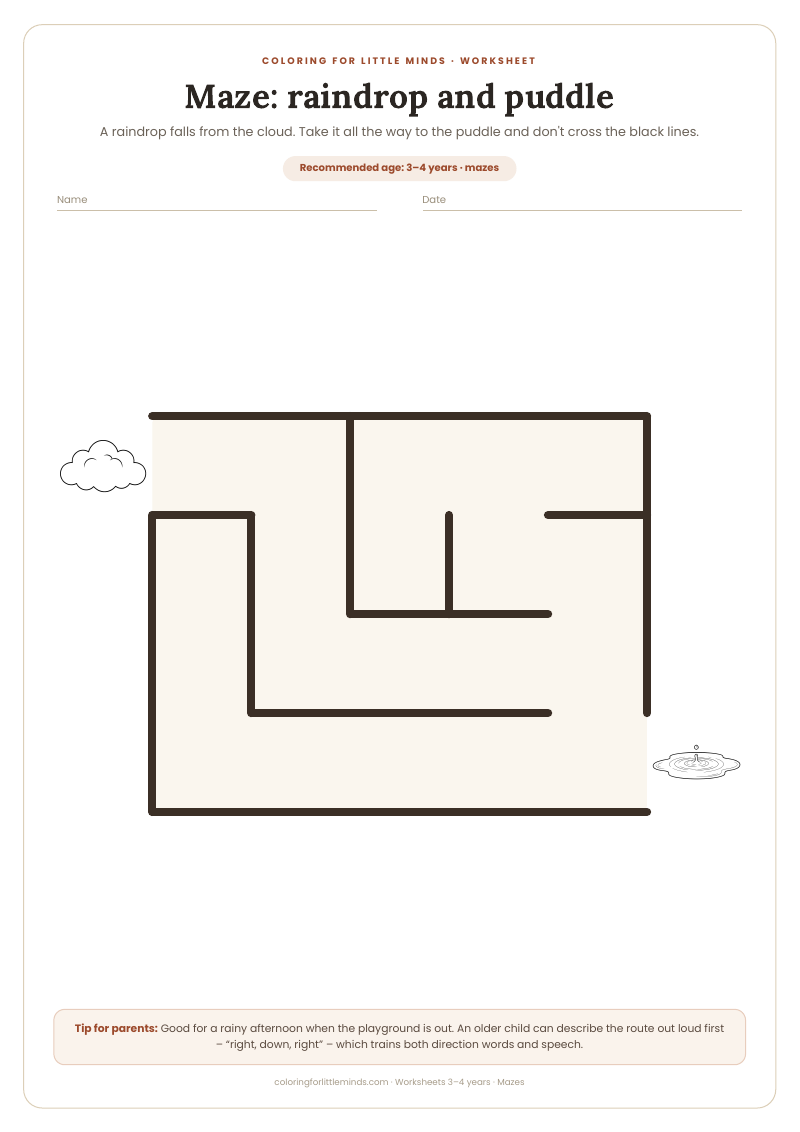 Save
Maze: raindrop and puddle
Mazes · ages 3–4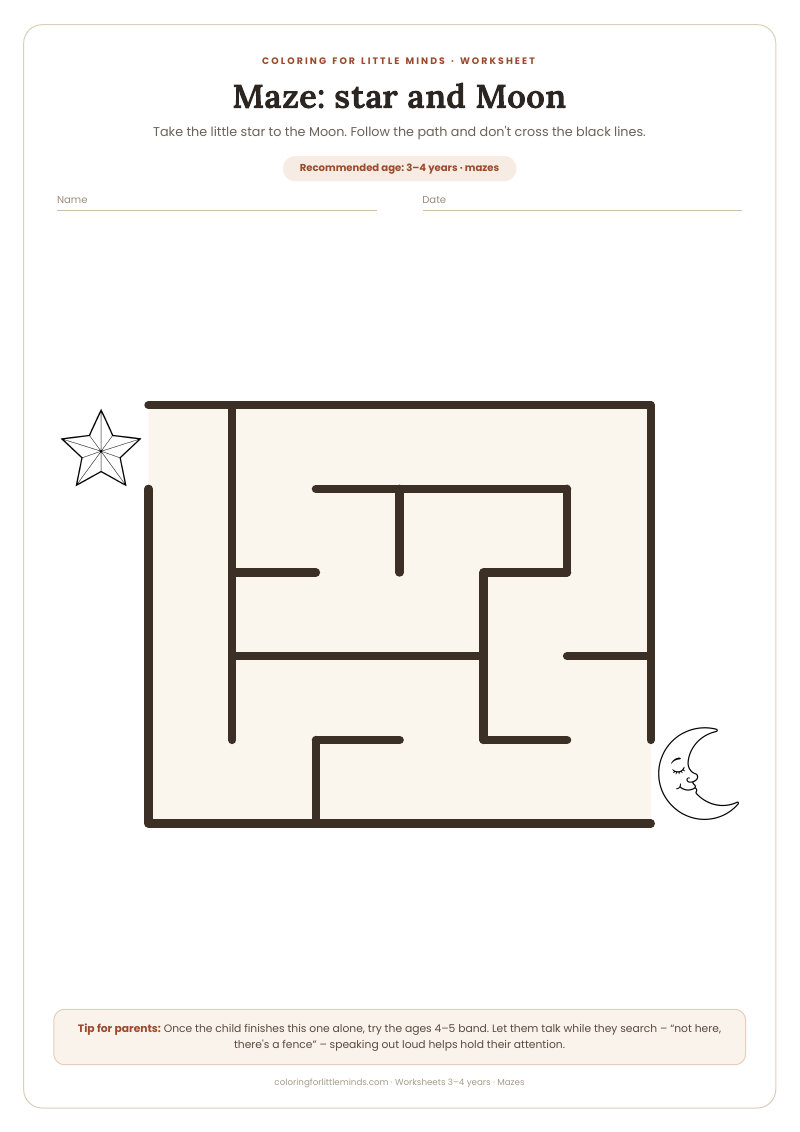 Save
Maze: star and Moon
Mazes · ages 3–4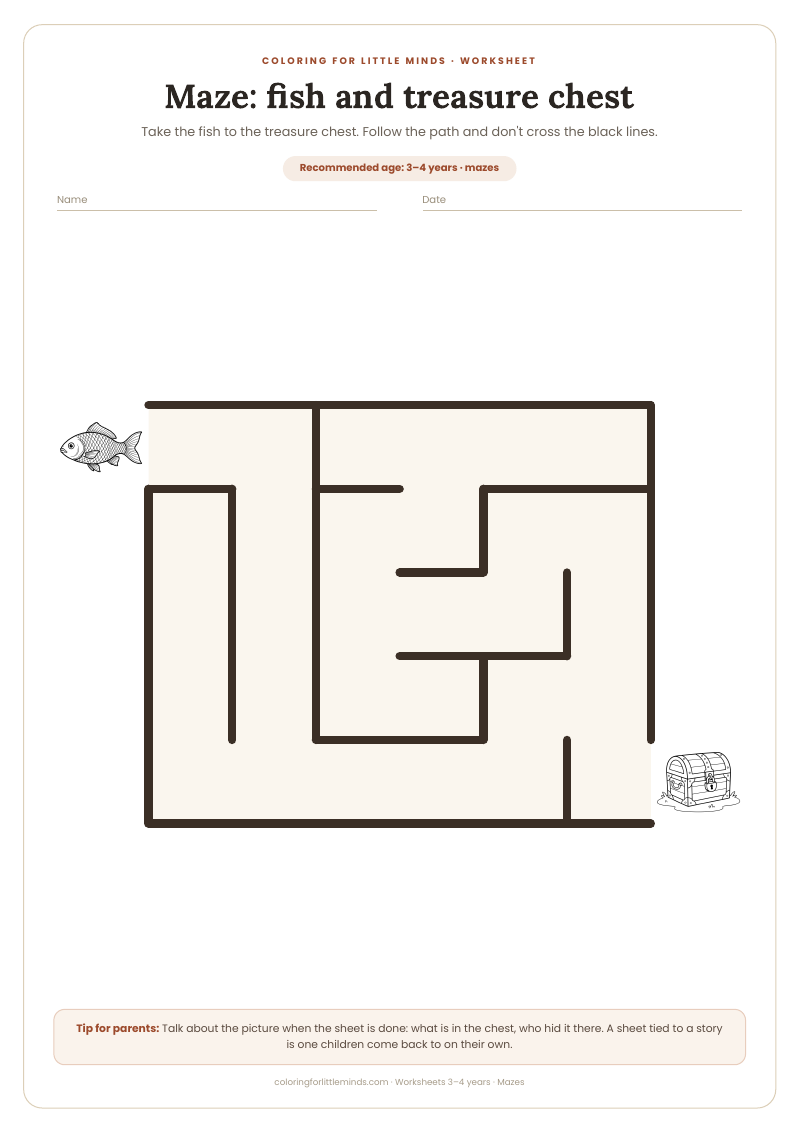 Save
Maze: fish and treasure chest
Mazes · ages 3–4Ages 4–5 (4)
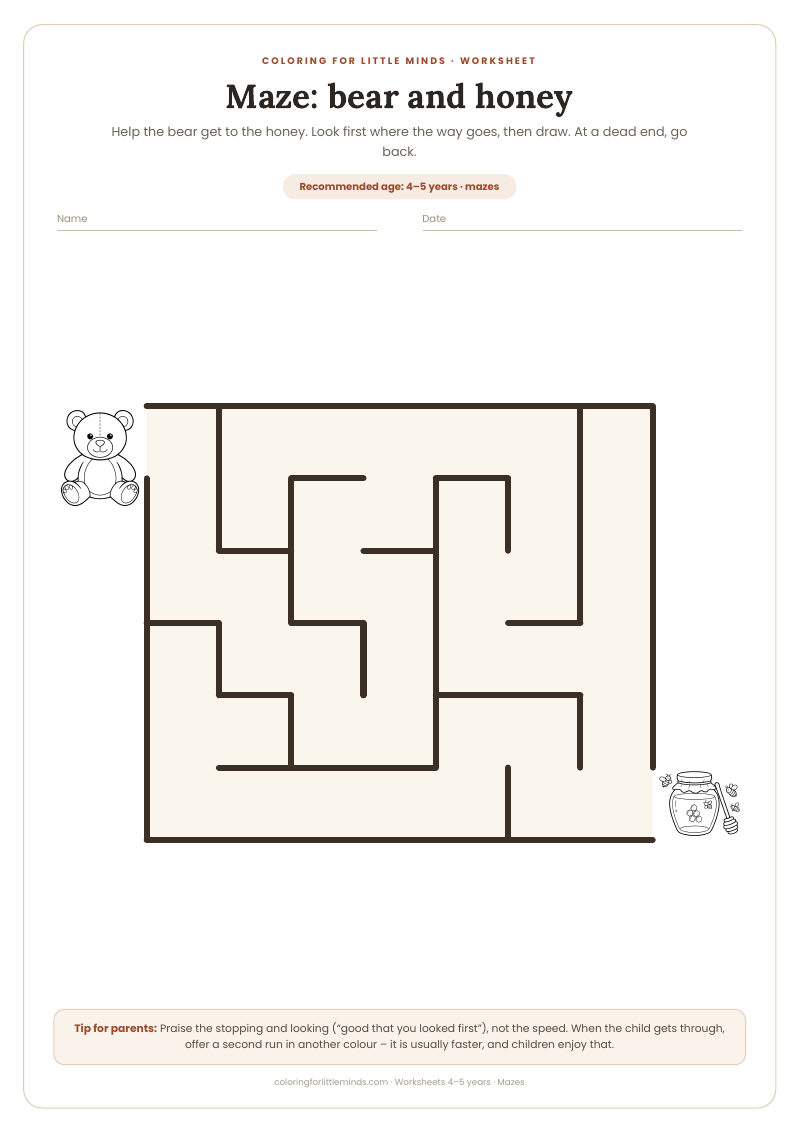
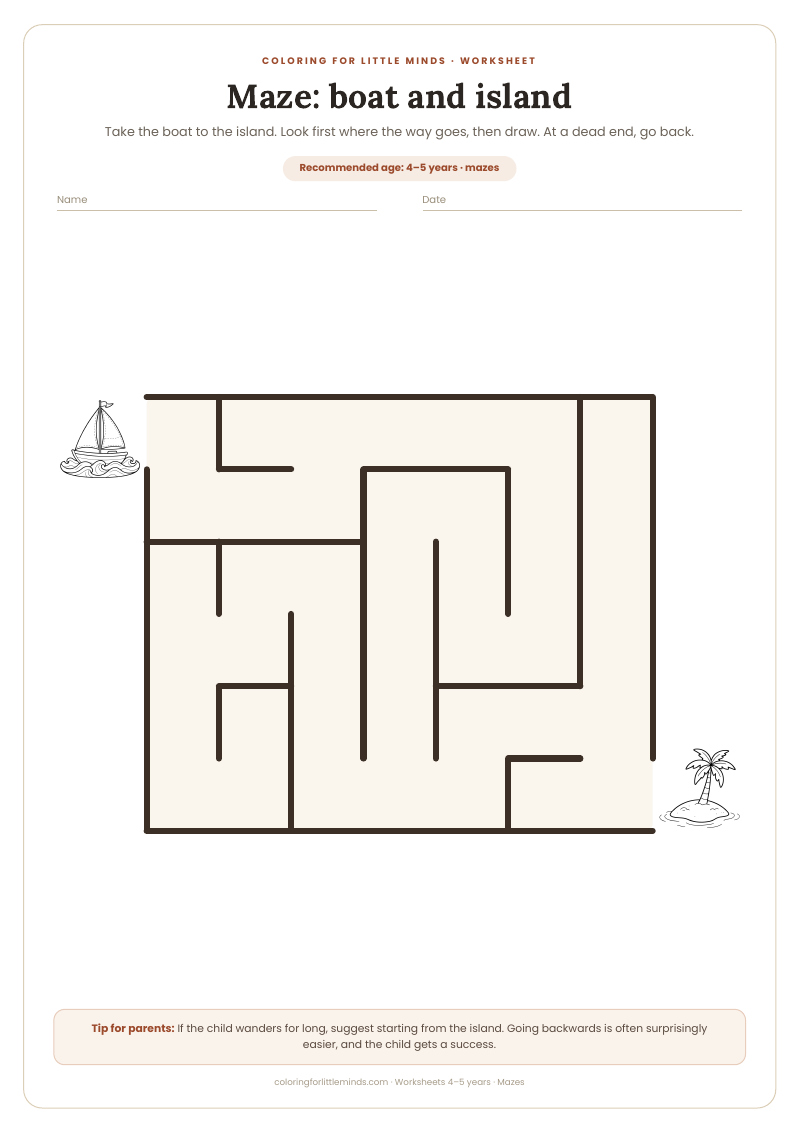
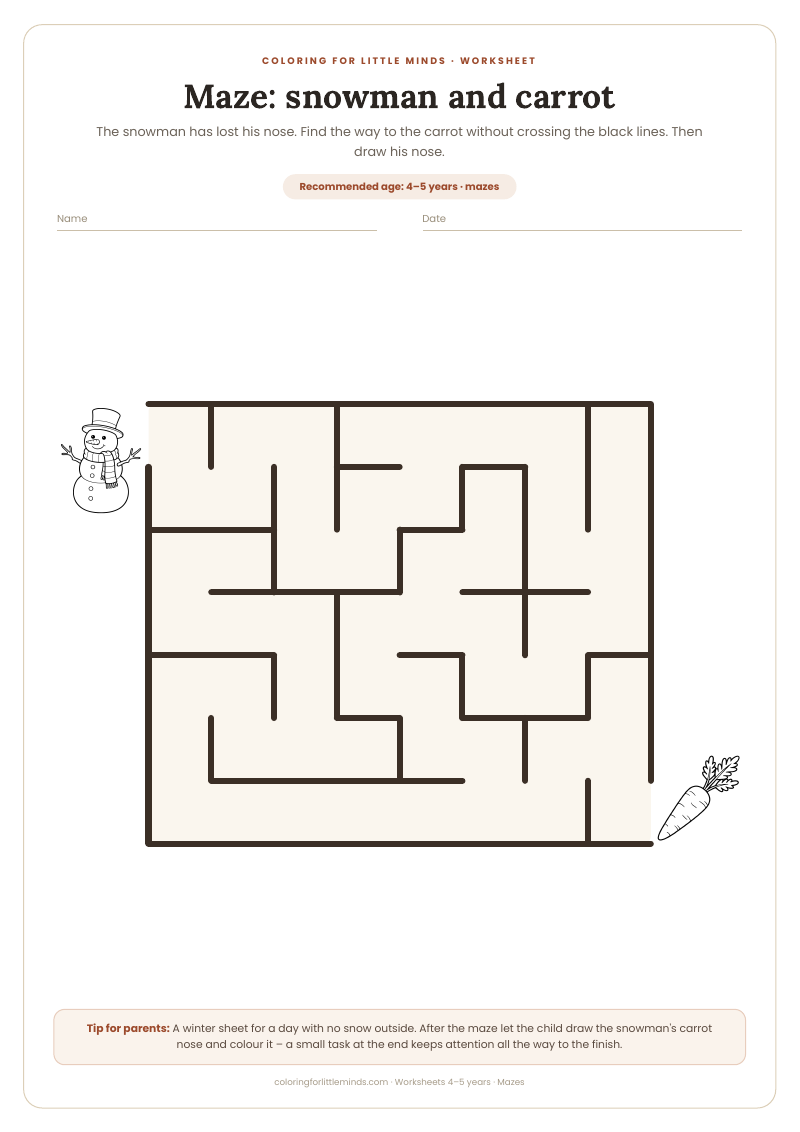
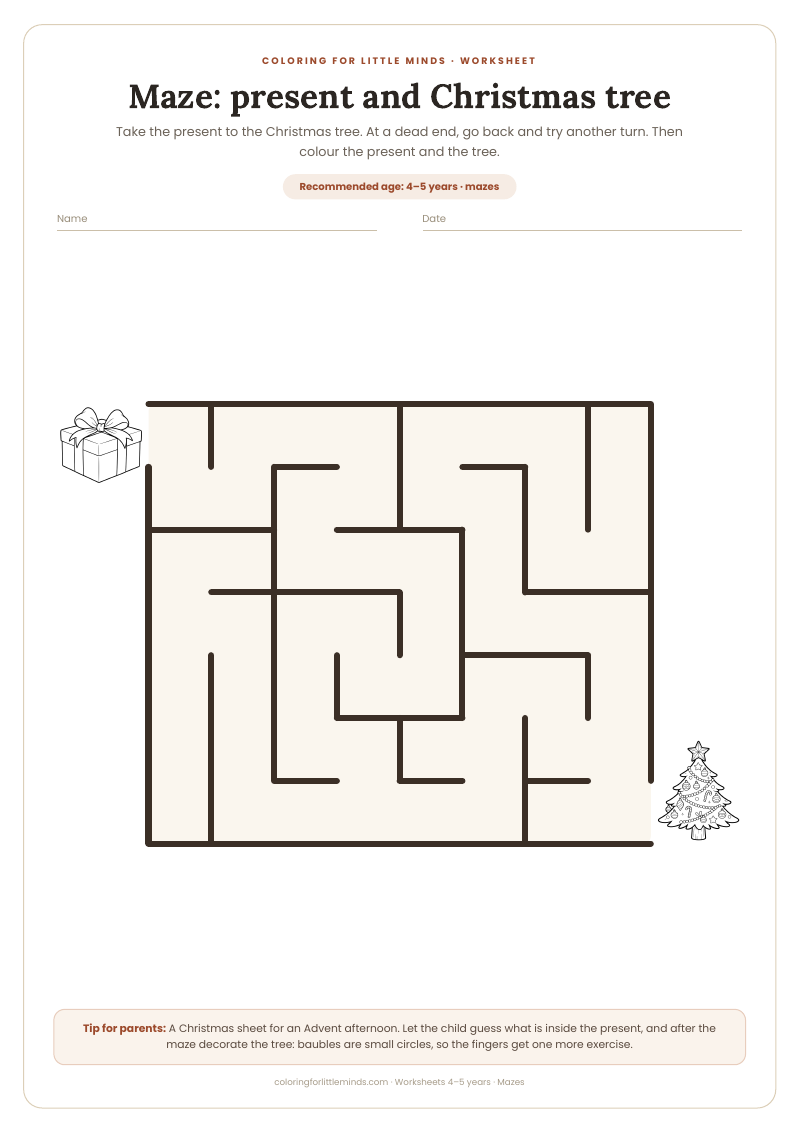
Ages 5–6 (4)
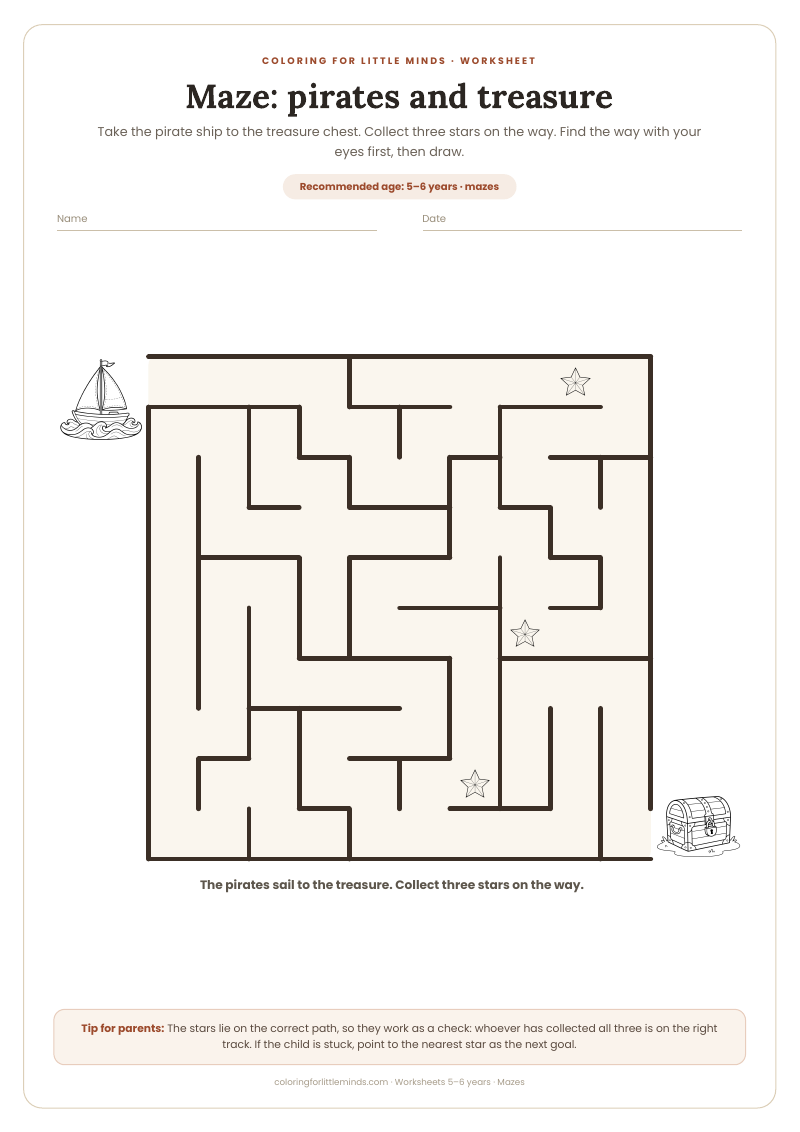
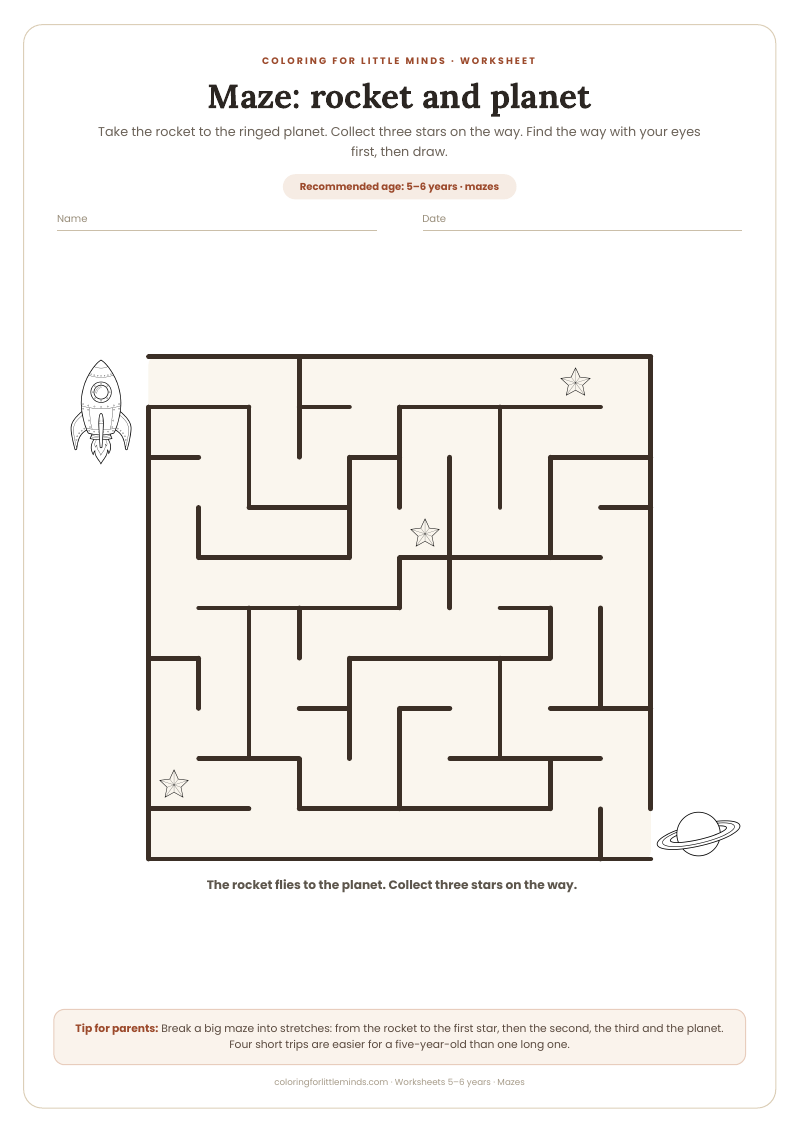
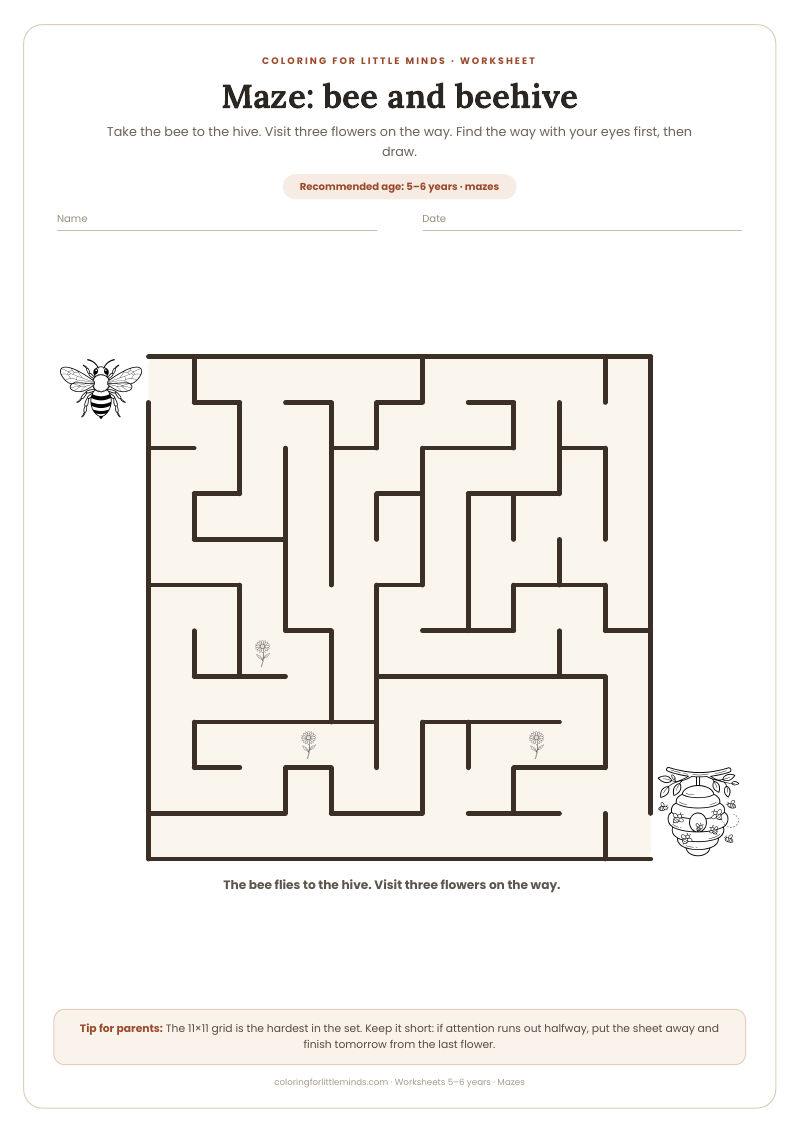
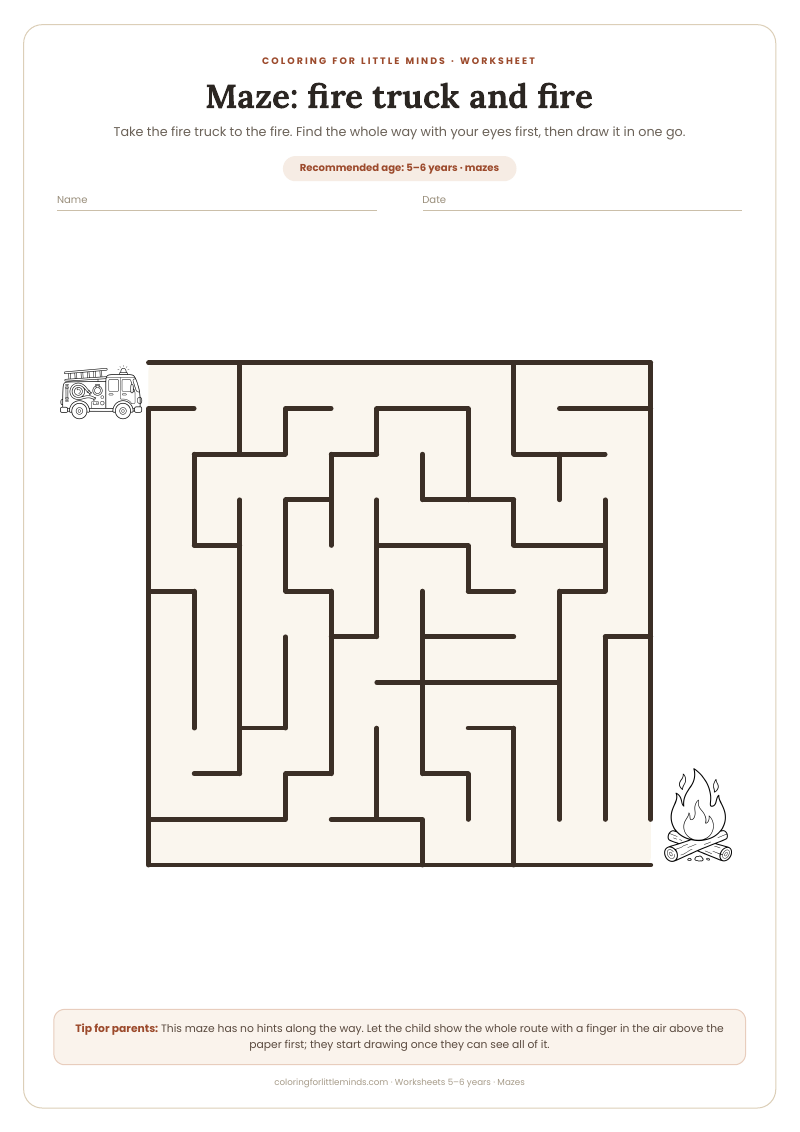
Ages 6–8 (4)
Questions parents ask
What age are mazes good for?
Simple mazes with wide paths work from about age 3, as long as the child traces the way with a finger first. A smaller grid and a wider path matter more than the age on the label: if the child struggles, go one age band down.
Which maze is the easiest?
The umbrella maze or the dog and the ball: a 4×3 grid, paths 32 mm wide and a way through of six squares with a single turn. Age three is enough.
Do you have hard mazes for older kids?
Yes, four of them for ages 6–8. A 12×12 or 13×13 grid, paths 10.5–11.3 mm wide, over a hundred squares to walk through and three things to collect on the way. Preschoolers will not finish them alone; a first grader will.
What if my child crosses a line?
Nothing dramatic. Say “there's a fence here” and try another way. The aim is not a perfect line but learning to stop, look and choose a path.
How can we reuse a maze?
Slip the sheet into a clear plastic sleeve and use a dry-erase marker, or go through it with a finger first, then a pencil, then a crayon in another colour.
Do the mazes come with solutions?
Each maze has exactly one path from the start to the finish. There is no separate answer sheet; an adult can see the way at a glance.