Counting worksheets 1–5 and 1–10
Counting worksheets to 3, to 5 and to 10: count the pictures, touch each one, then match the result to dots or to a numeral.
Counting is not reciting numbers. A child has to learn that each object gets exactly one number, and that the last number said tells how many there are. These sheets practice just that.
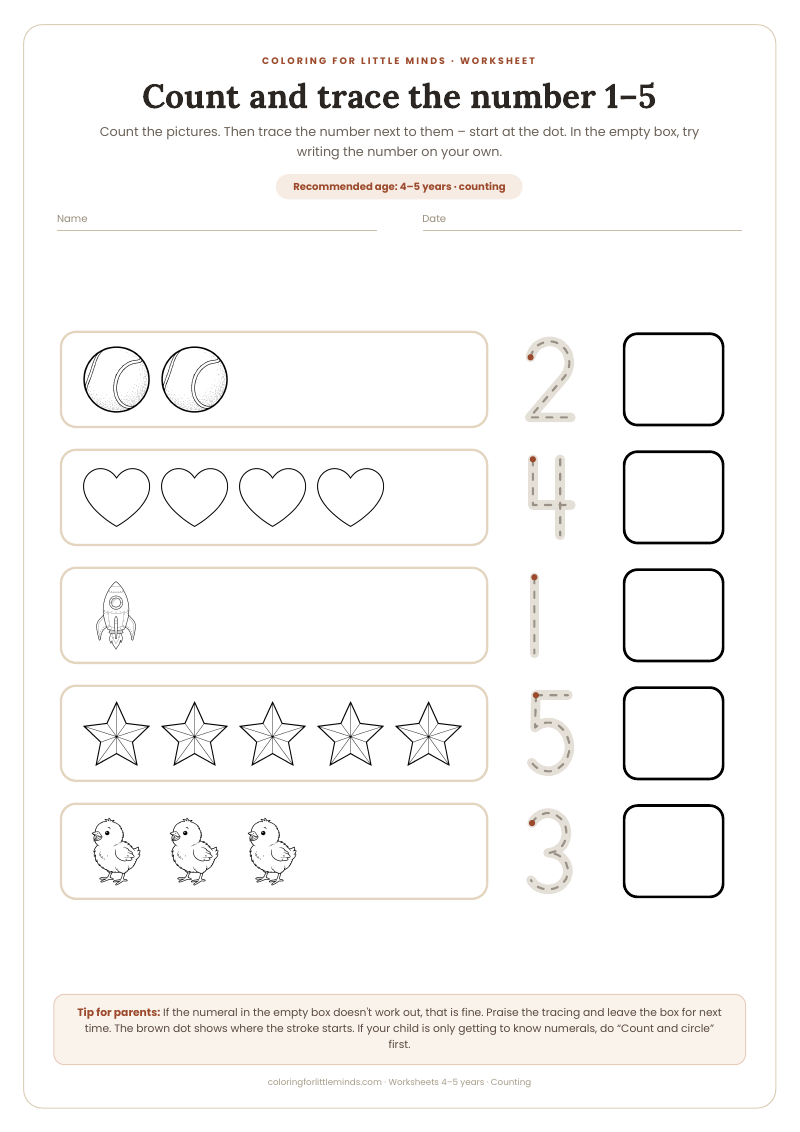
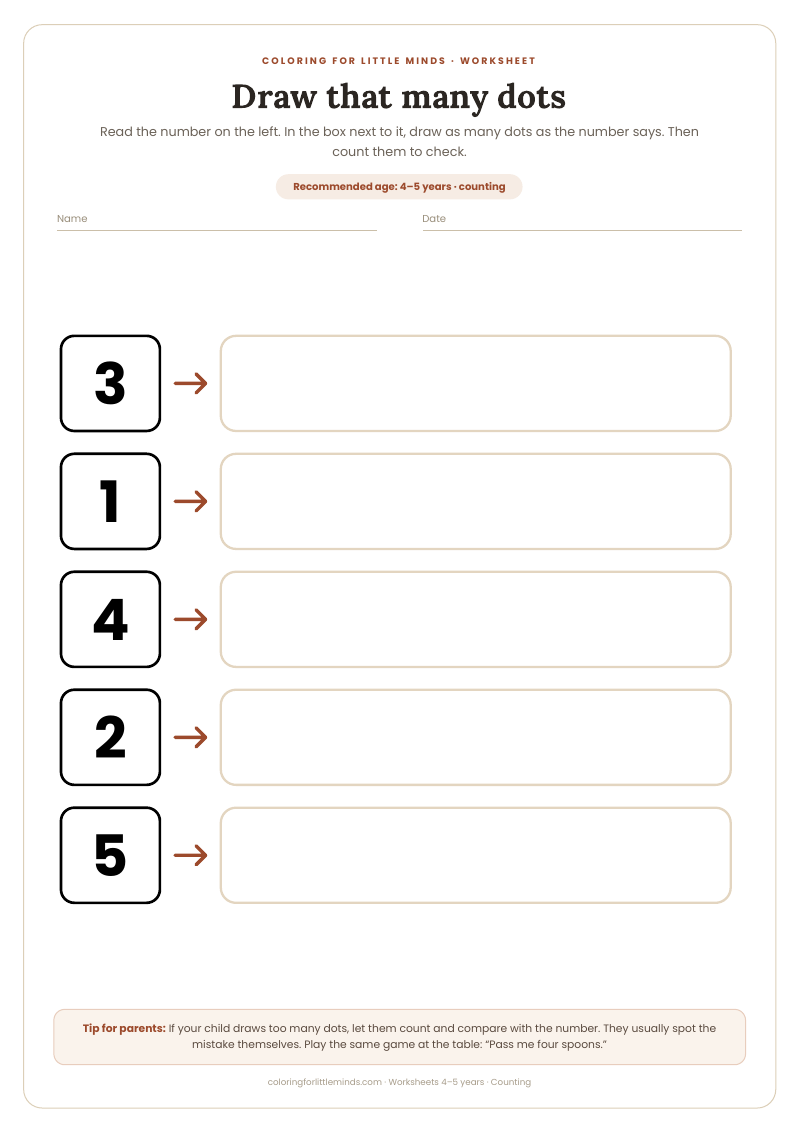
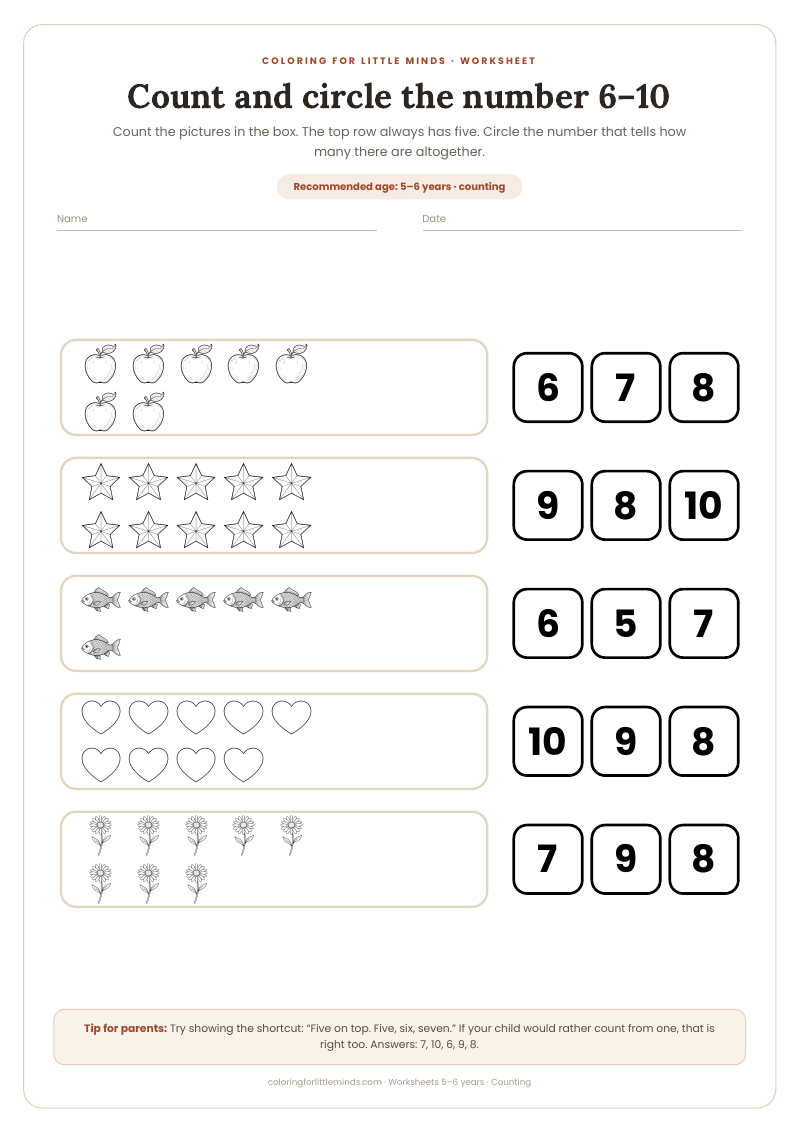
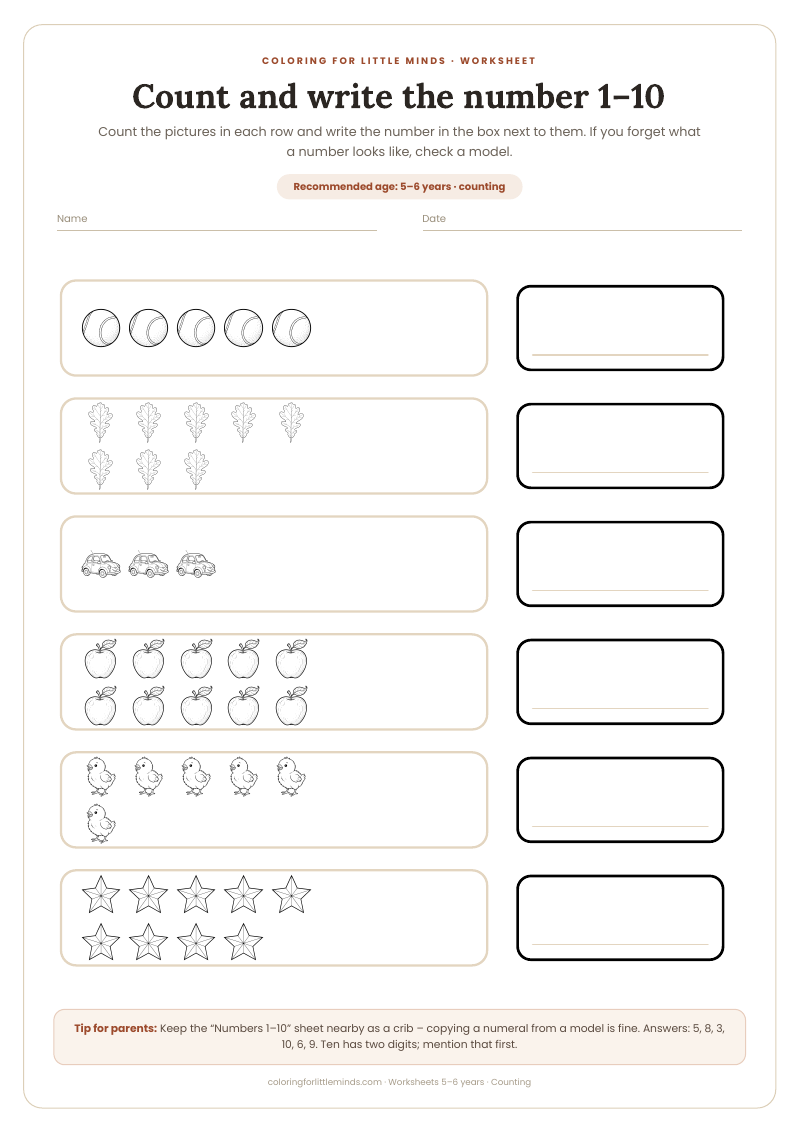
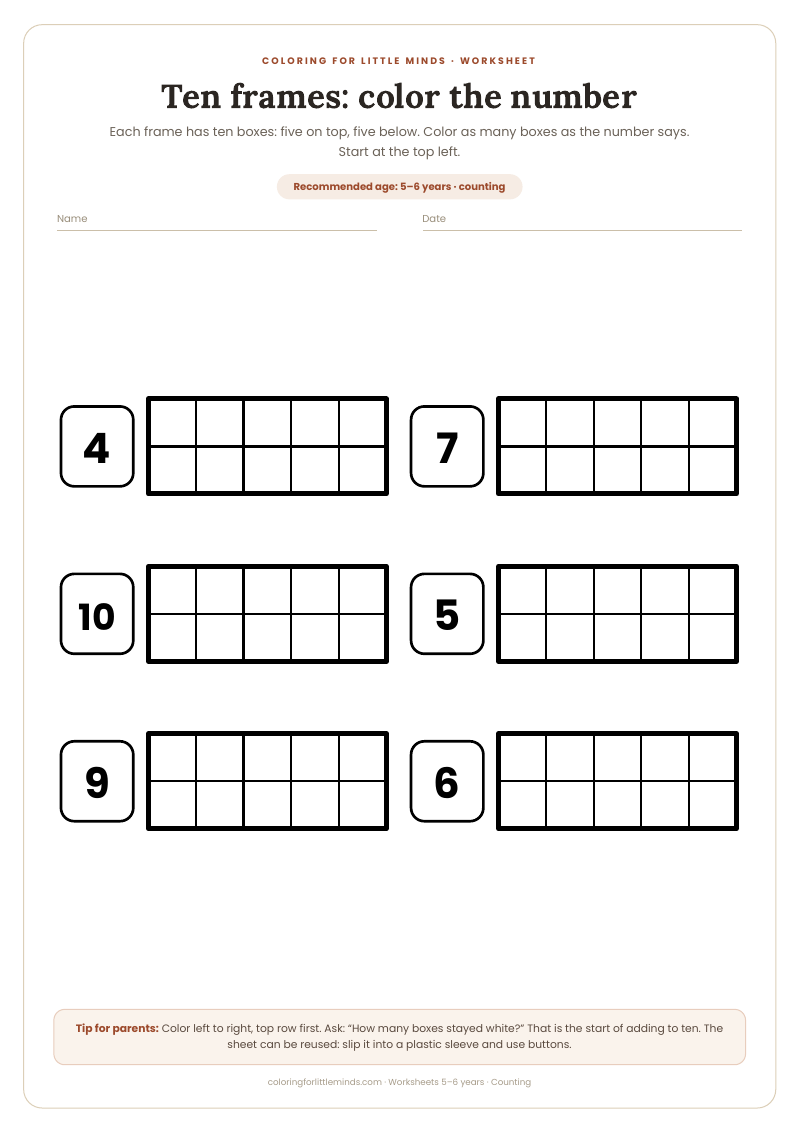
For ages 3–4 the sheets go up to three to five and the answer is colored in or joined with a line – no numerals needed. For ages 4–5 they go to five, with numerals to circle and trace. For ages 5–6 they go to ten, with pictures in rows of five and ten frames. Always count out loud with a finger on the picture. Five minutes at the table is plenty; the rest of counting happens on the stairs and with apples in a bowl.
Sheets by age:
Ages 3–4 (3)
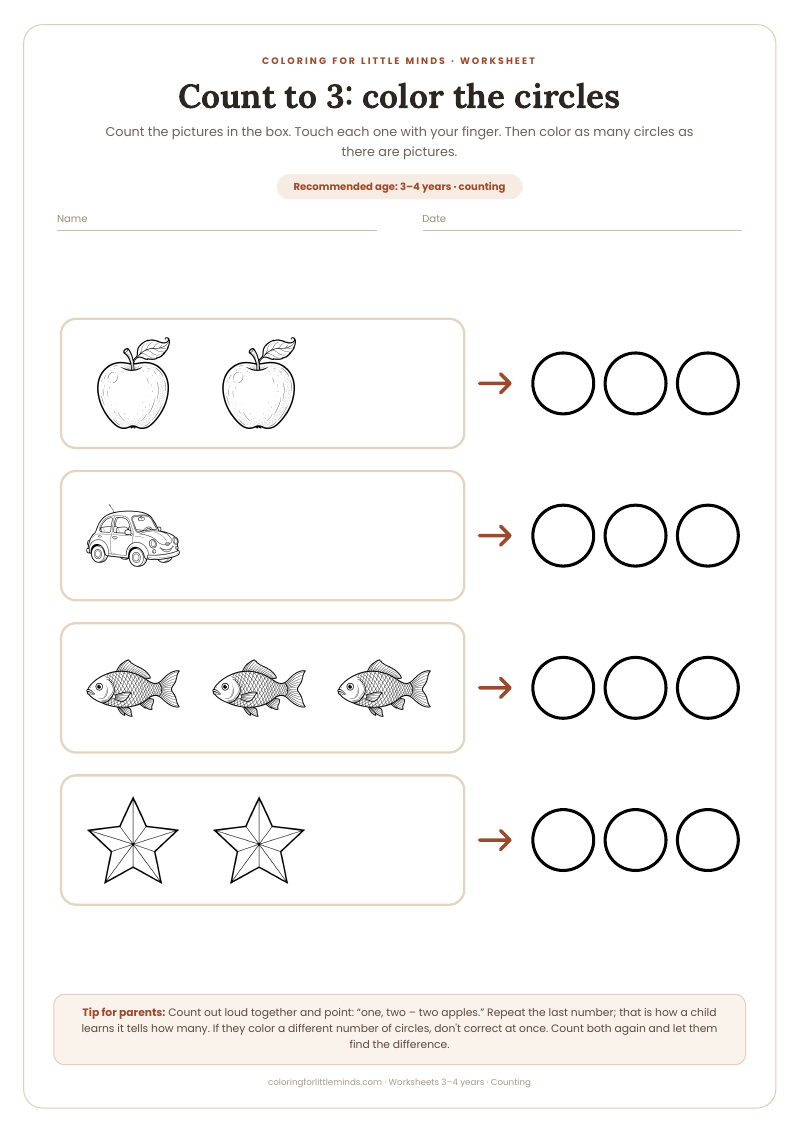
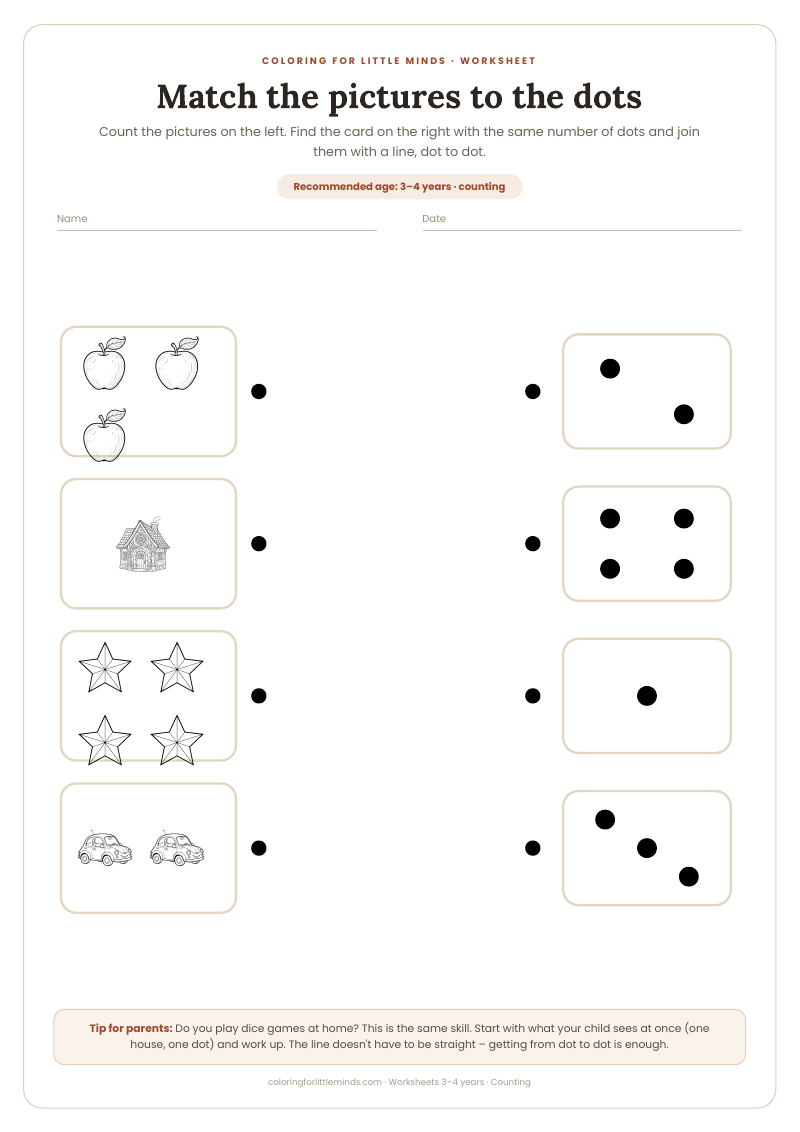
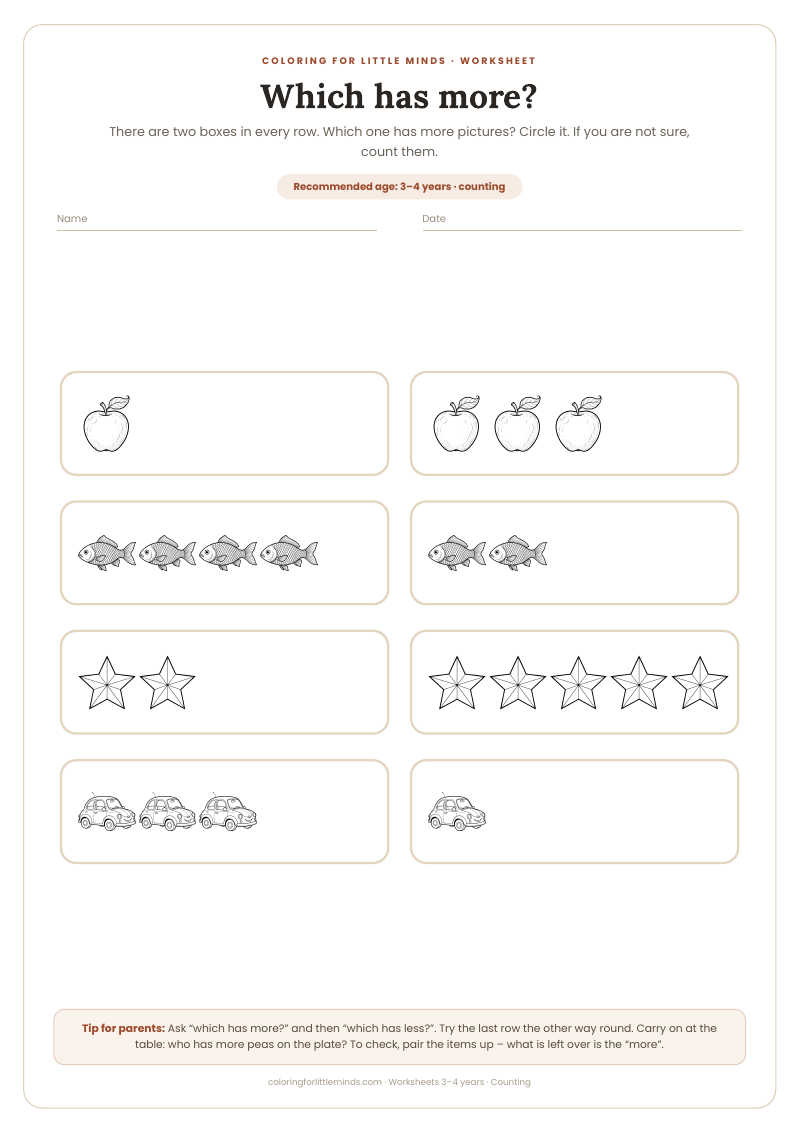
Ages 4–5 (3)
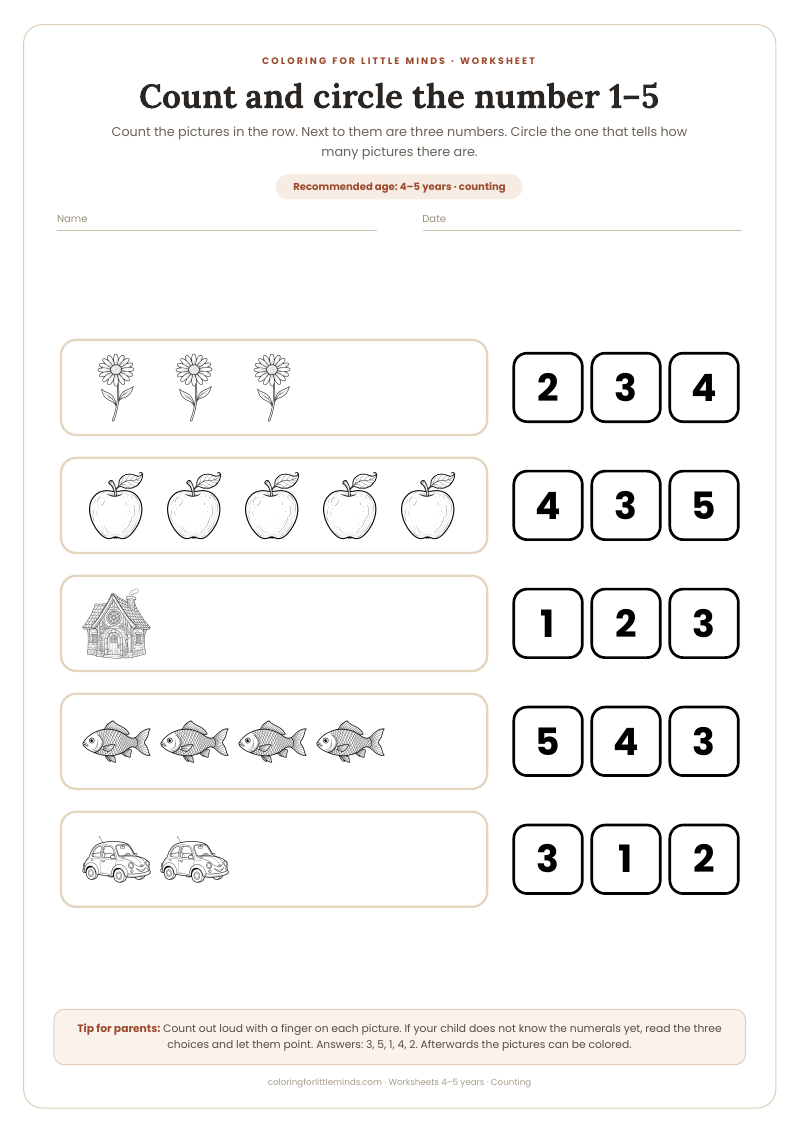
Ages 5–6 (3)
Questions parents ask
How high should a preschooler count?
There is no single rule. Counting five objects correctly – one number per object – matters more than reciting to twenty. Counting ten objects is a sensible goal for the year before kindergarten.
My child can say the numbers to 20 but miscounts five blocks. Why?
Reciting is memory; counting is a skill – giving each object exactly one number. It helps to point, to move each object aside once it is counted, and to slow down.
Why are the pictures in rows of five?
Five is an amount a child learns to see at a glance. Rows of five and ten frames help them see seven as five and two, which is what addition is built on later.