Letter tracing worksheets A–Z
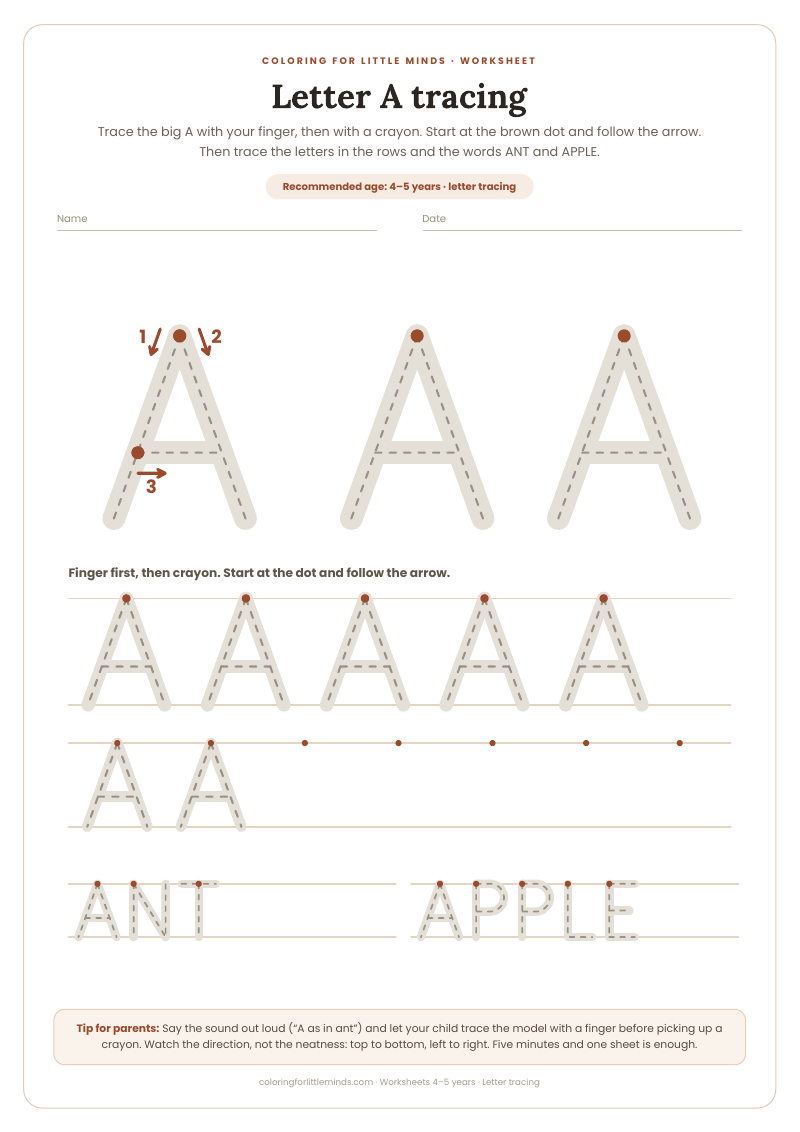
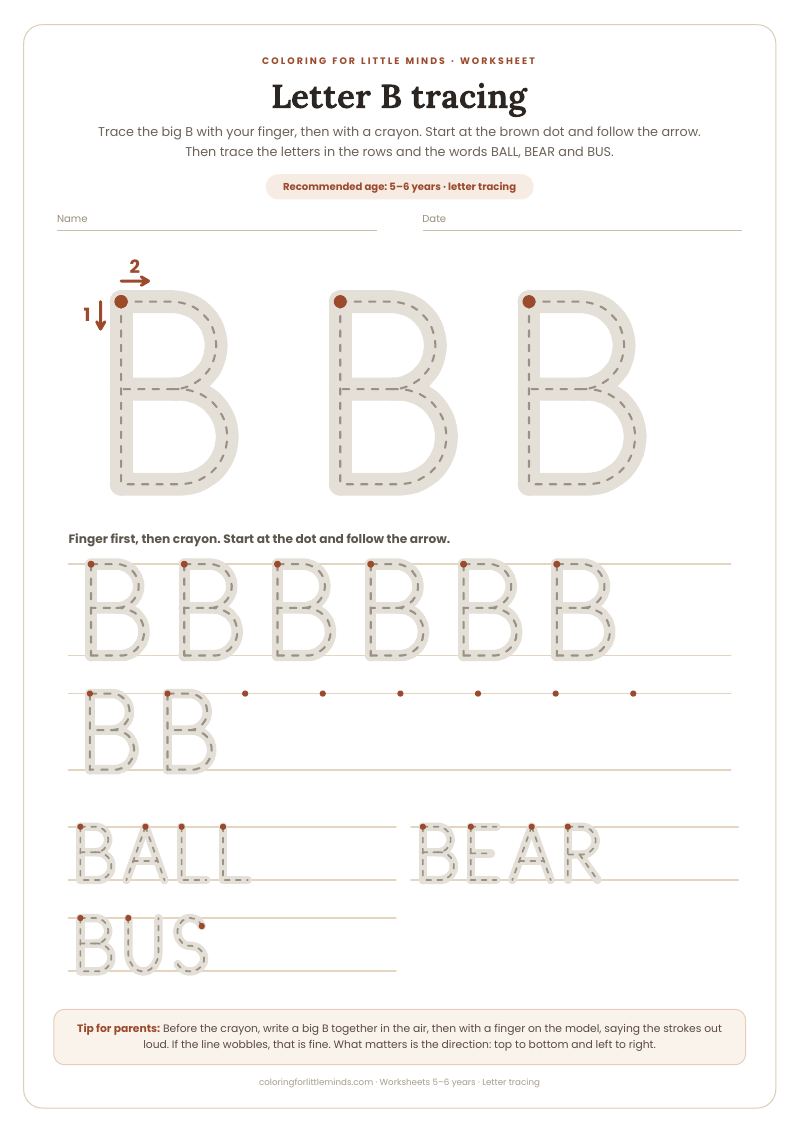
Uppercase letters A–Z to trace, one letter per page. A large model shows where to start (the dot) and, with numbered arrows, the order and direction of each stroke.
Capitals come first: they use the straight lines and curves a child knows from pre-writing, and all are the same height. Strokes go top to bottom and left to right, as print is taught in US schools. Below the model: rows to trace, a row to try alone and two or three short words.
Sheets for ages 4–5 cover the straight-line letters (A, E, F, H, I, K, L, M, N, T, V, W, X, Y, Z). Sheets for ages 5–6 add the letters with curves (B, C, D, G, J, O, P, Q, R, S, U). Start with the letters in your child's name. Trace the model with a finger first, then pick up a crayon.
Sheets by age:
Ages 4–5 (15)
⬇ Bundle: letter tracing ages 4–5 (15 sheets) in one PDF
 Save
Letter A tracing
Letter tracing · ages 4–5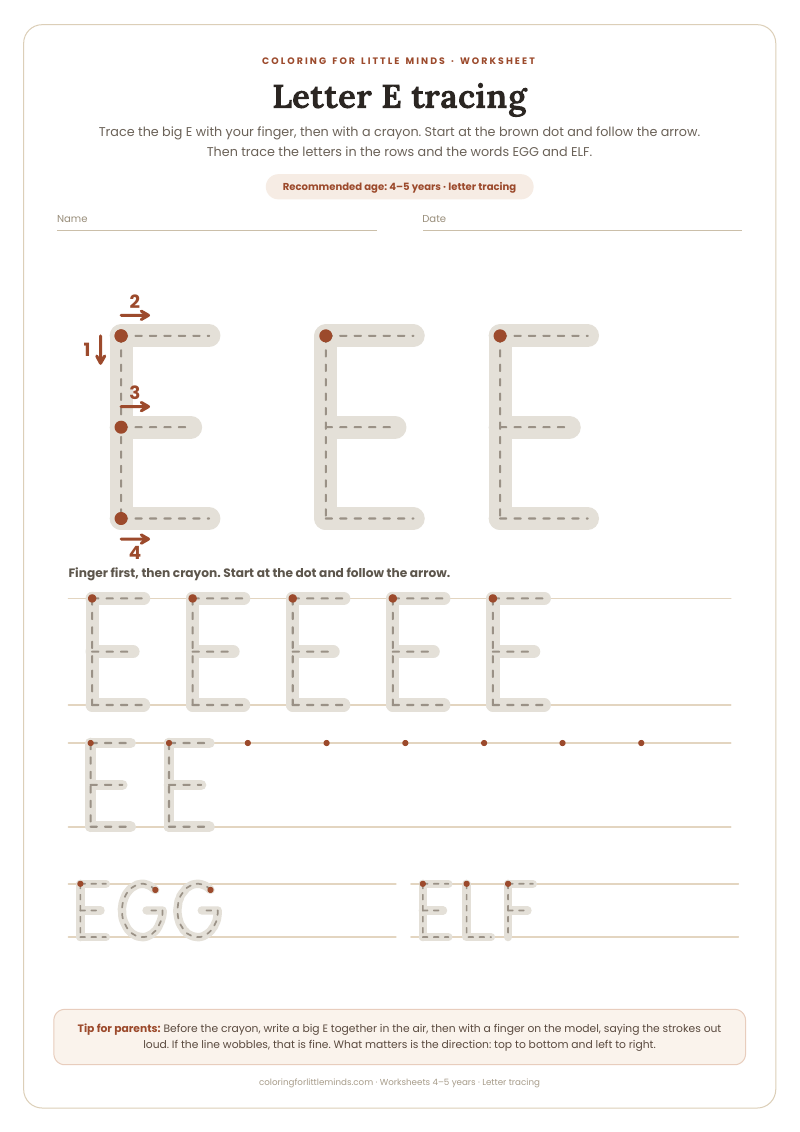 Save
Letter E tracing
Letter tracing · ages 4–5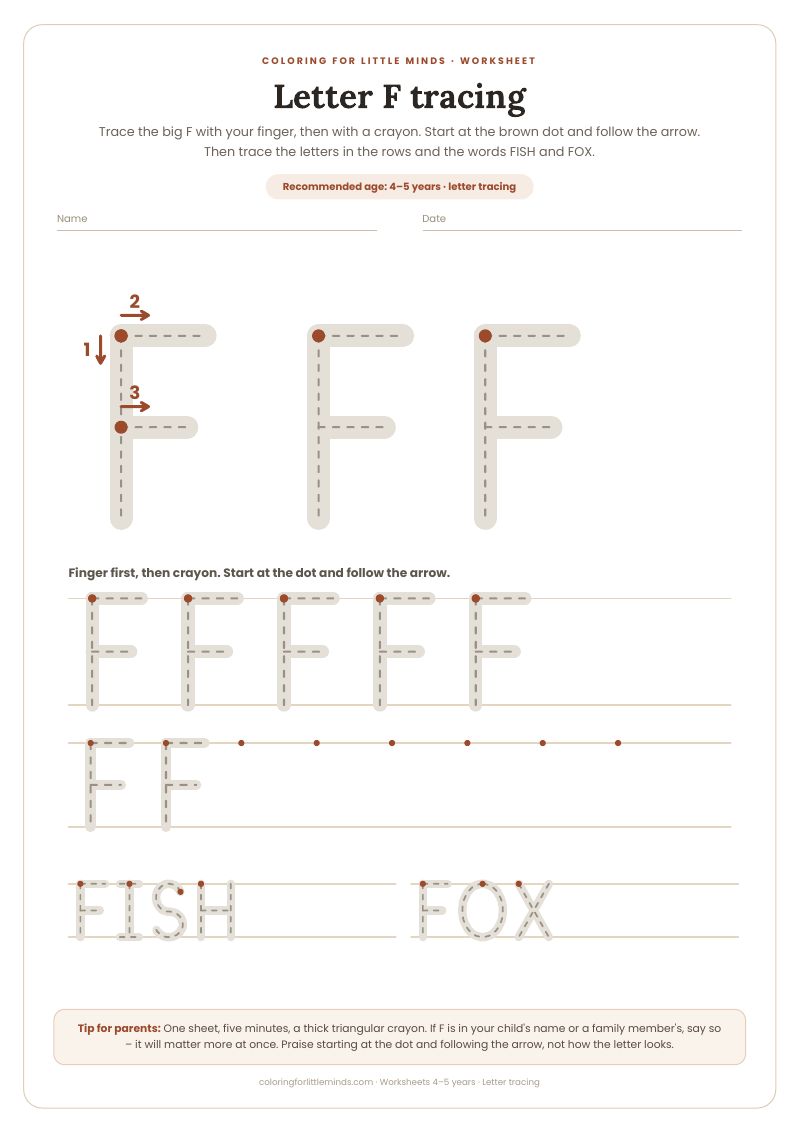 Save
Letter F tracing
Letter tracing · ages 4–5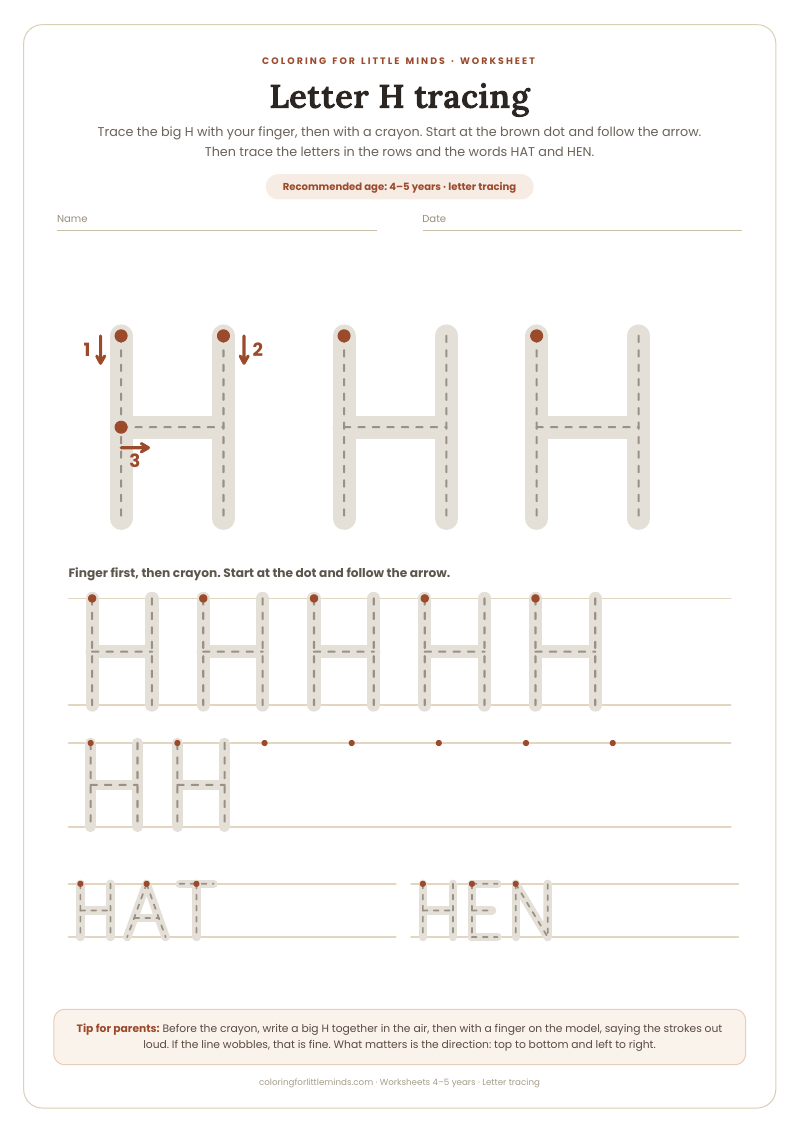 Save
Letter H tracing
Letter tracing · ages 4–5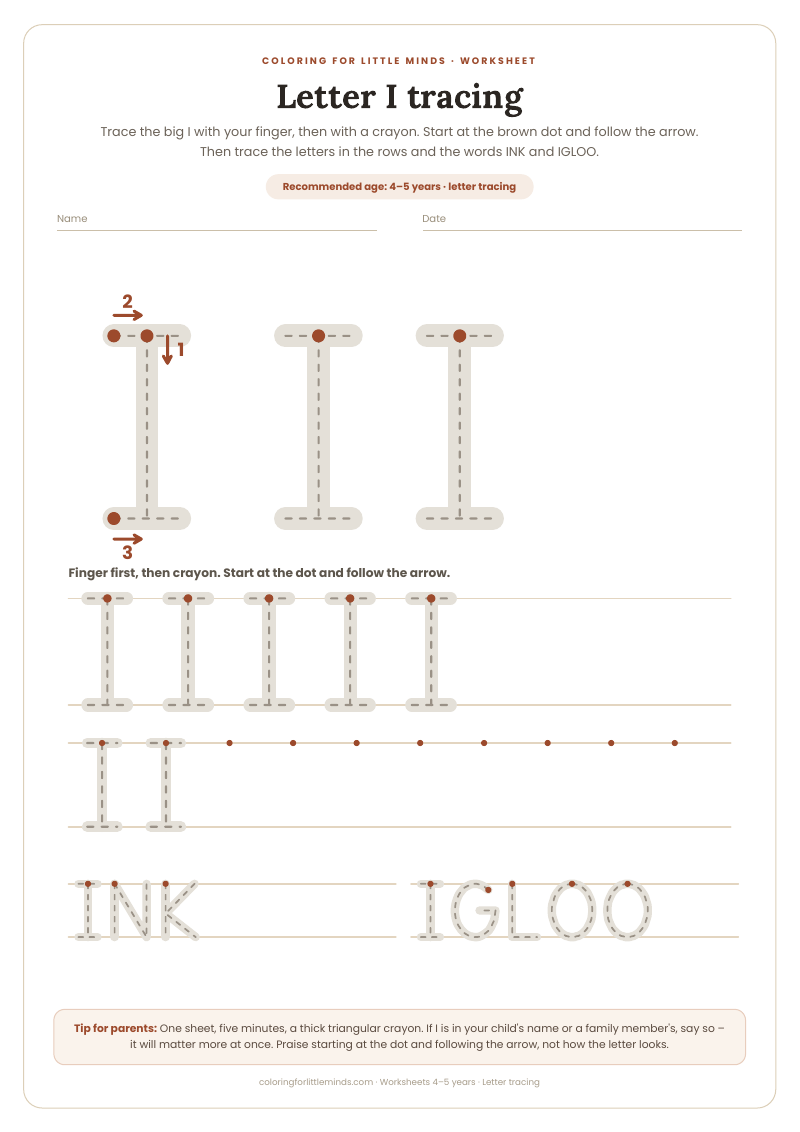 Save
Letter I tracing
Letter tracing · ages 4–5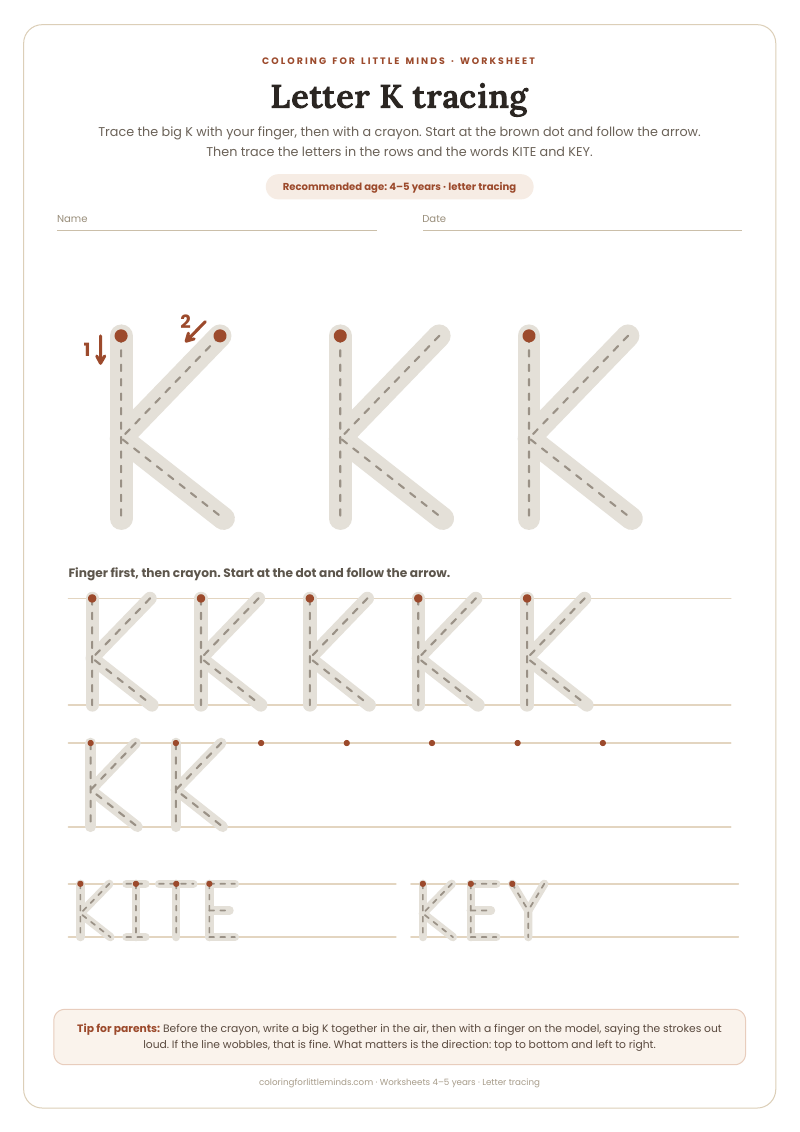 Save
Letter K tracing
Letter tracing · ages 4–5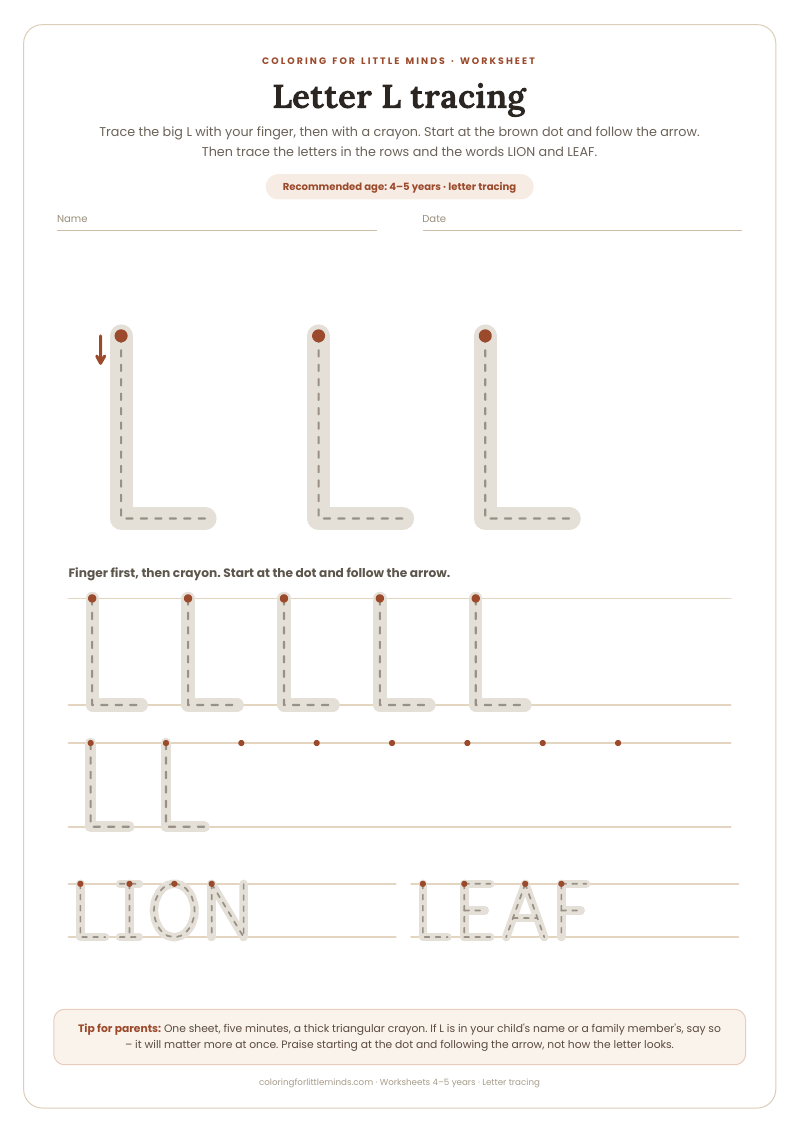 Save
Letter L tracing
Letter tracing · ages 4–5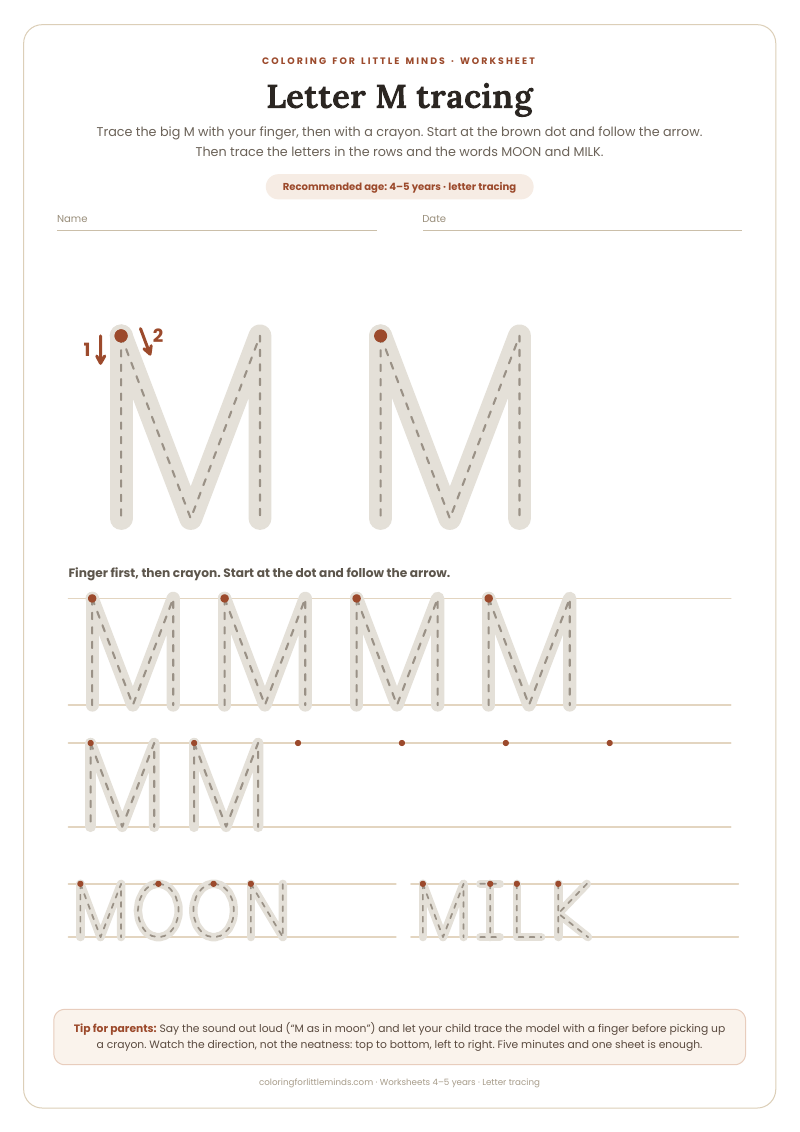 Save
Letter M tracing
Letter tracing · ages 4–5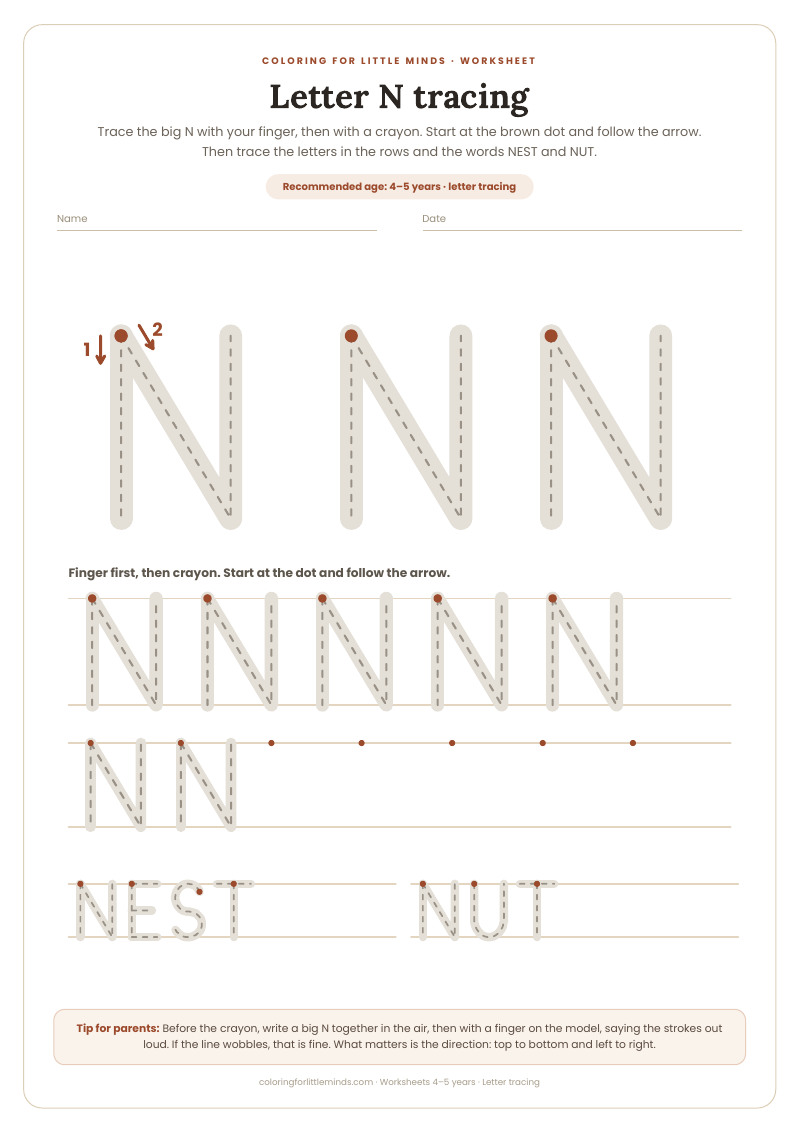 Save
Letter N tracing
Letter tracing · ages 4–5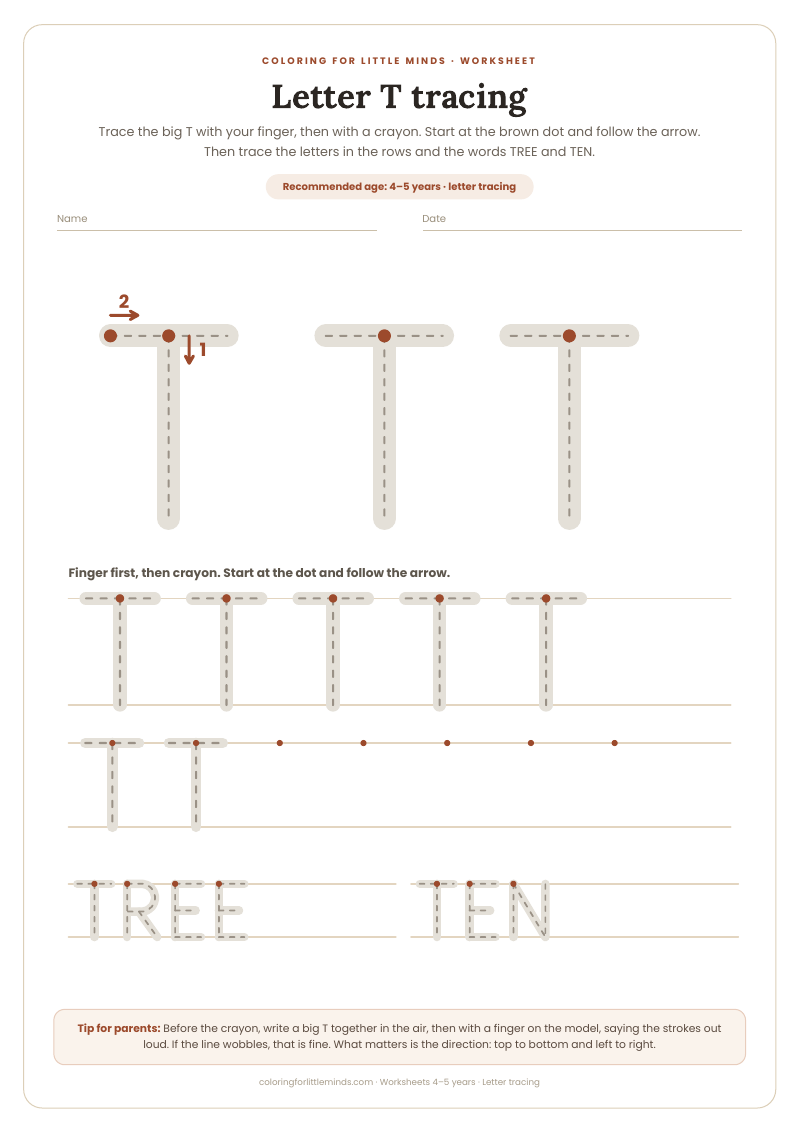 Save
Letter T tracing
Letter tracing · ages 4–5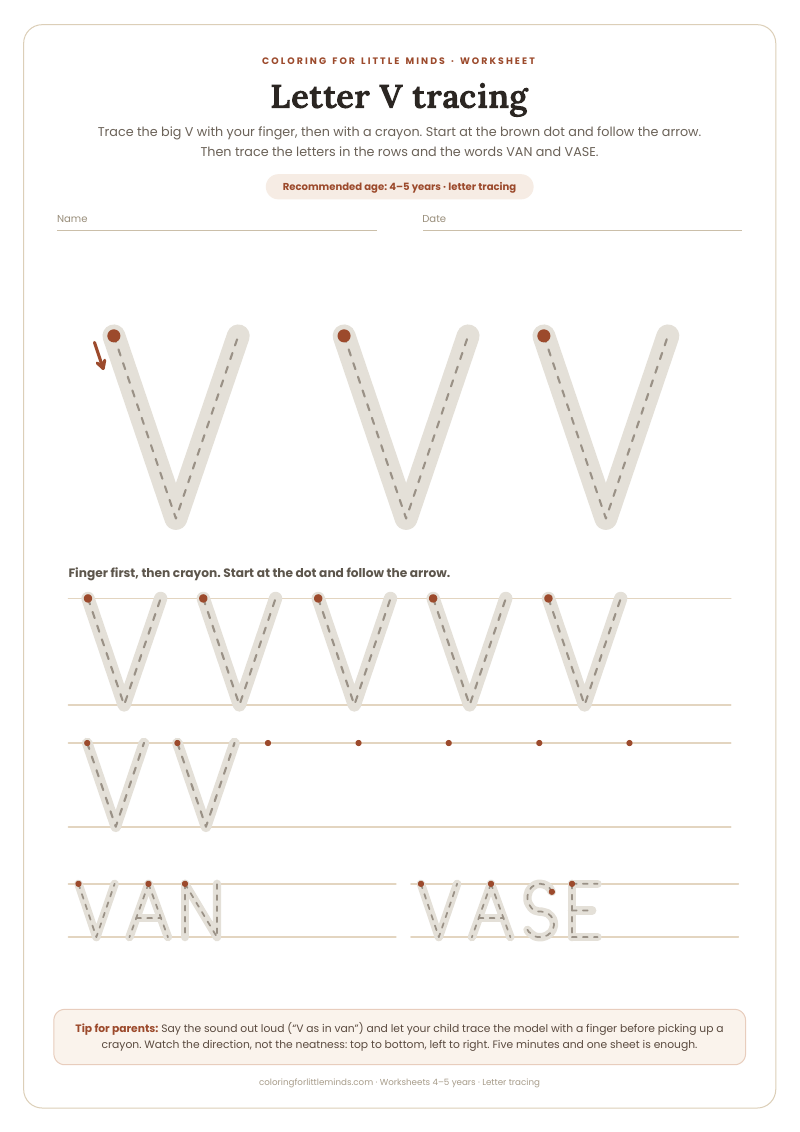 Save
Letter V tracing
Letter tracing · ages 4–5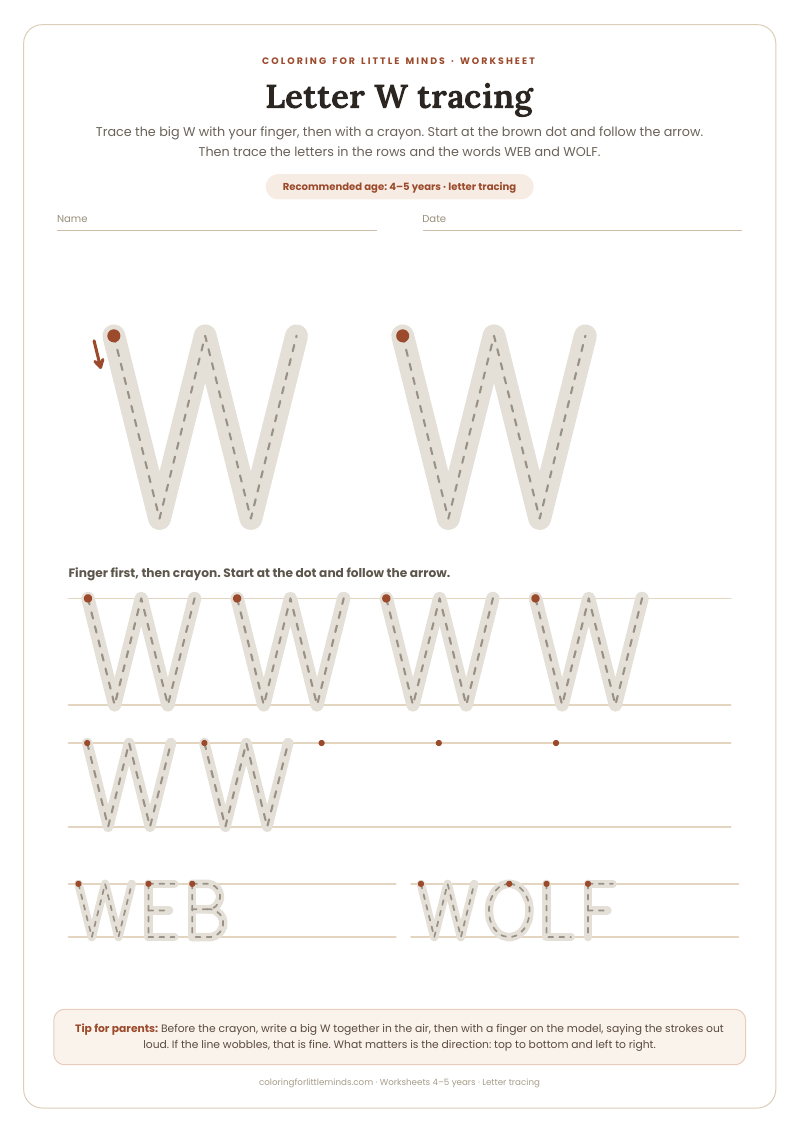 Save
Letter W tracing
Letter tracing · ages 4–5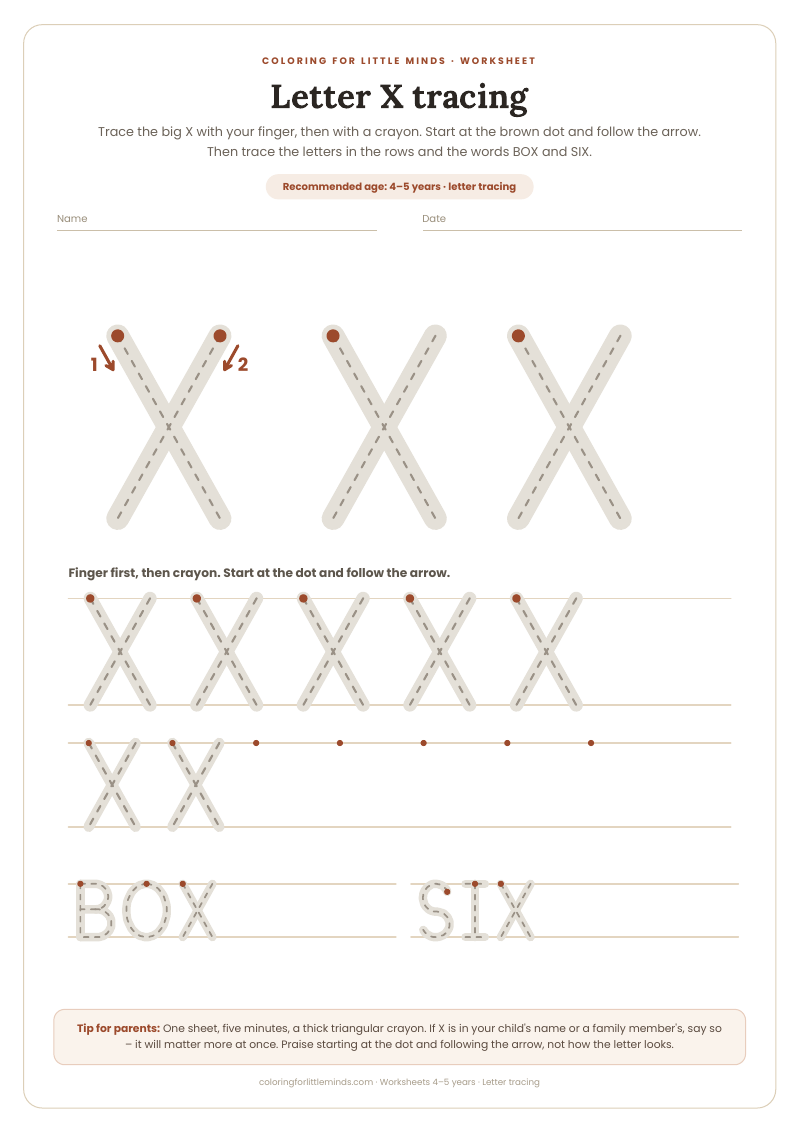 Save
Letter X tracing
Letter tracing · ages 4–5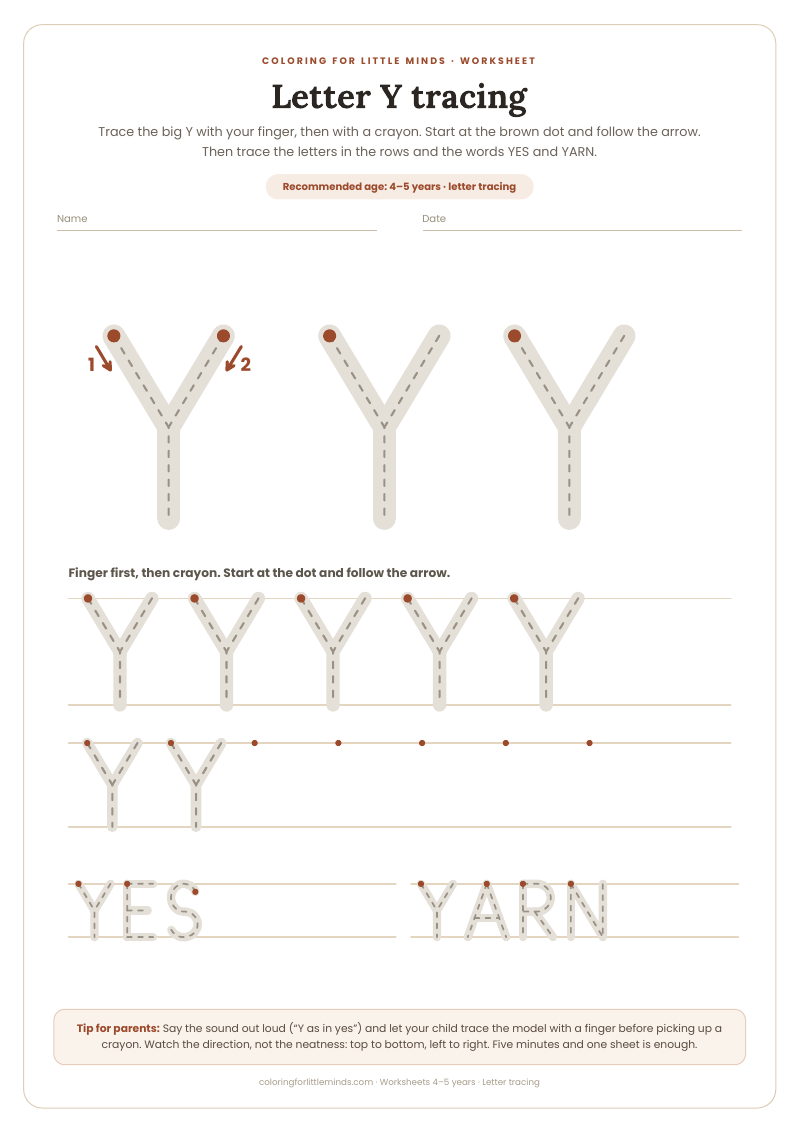 Save
Letter Y tracing
Letter tracing · ages 4–5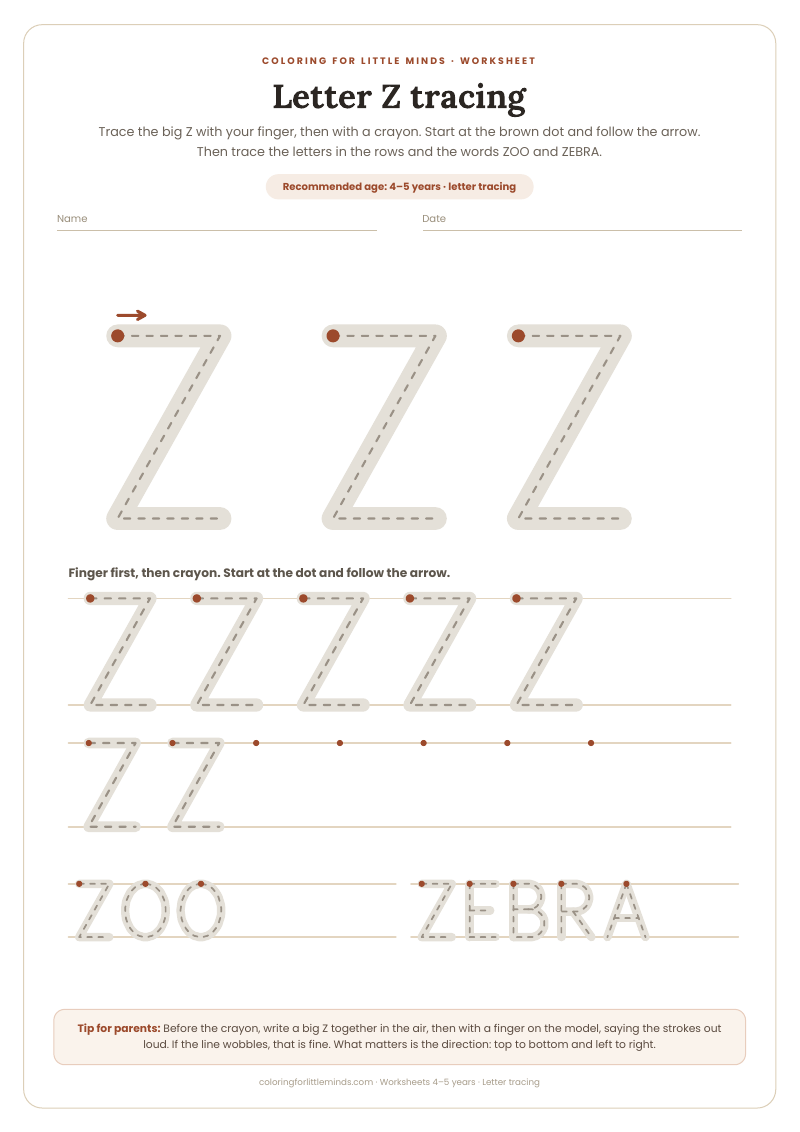 Save
Letter Z tracing
Letter tracing · ages 4–5Ages 5–6 (13)
⬇ Bundle: letter tracing ages 5–6 (11 sheets) in one PDF
 Save
Letter B tracing
Letter tracing · ages 5–6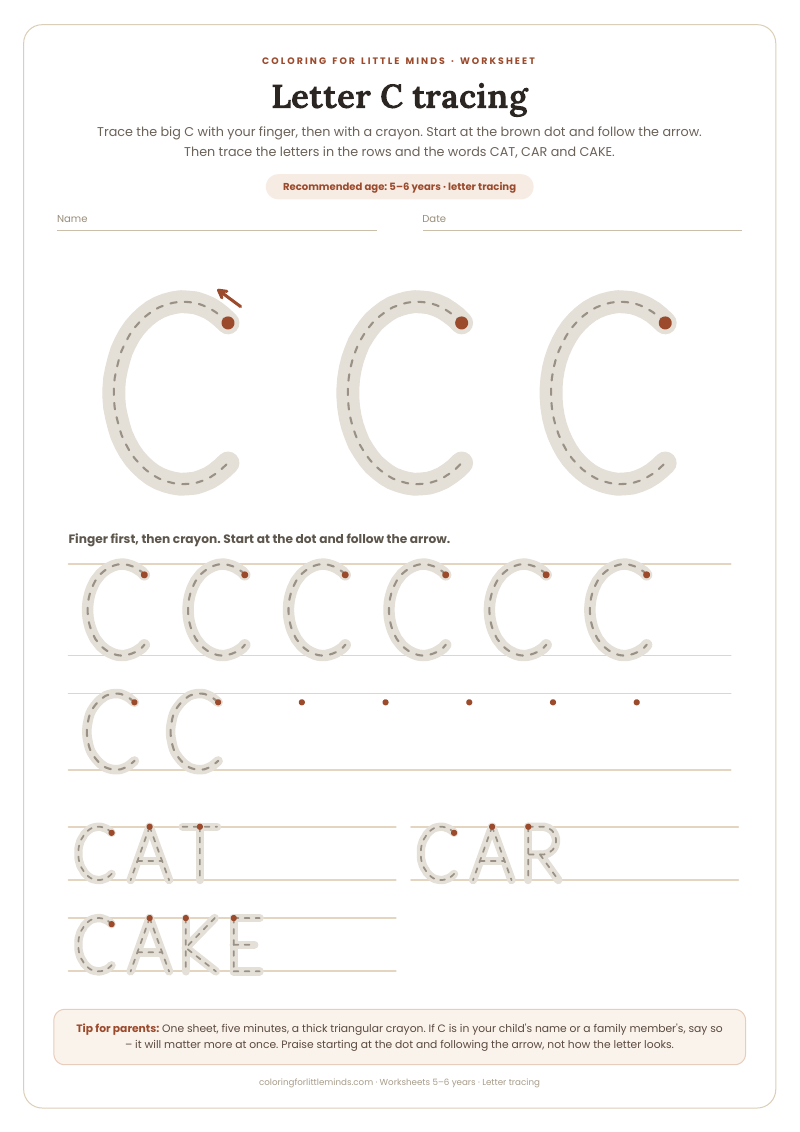 Save
Letter C tracing
Letter tracing · ages 5–6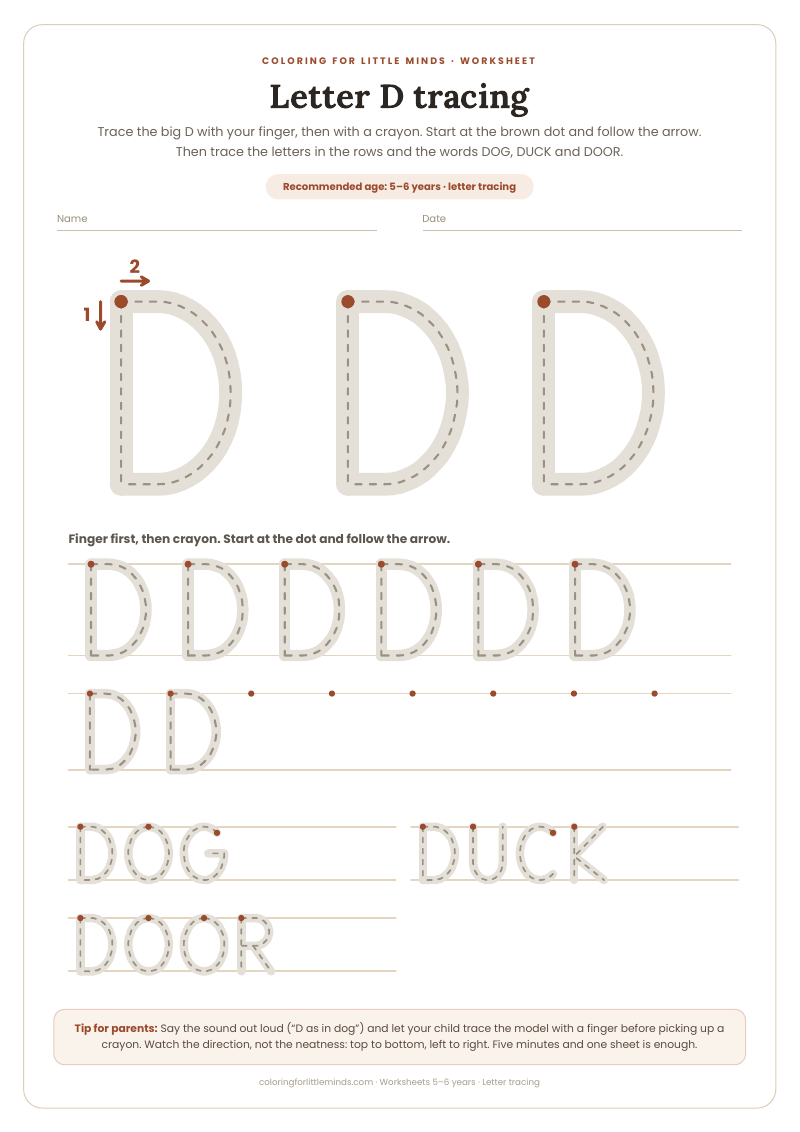 Save
Letter D tracing
Letter tracing · ages 5–6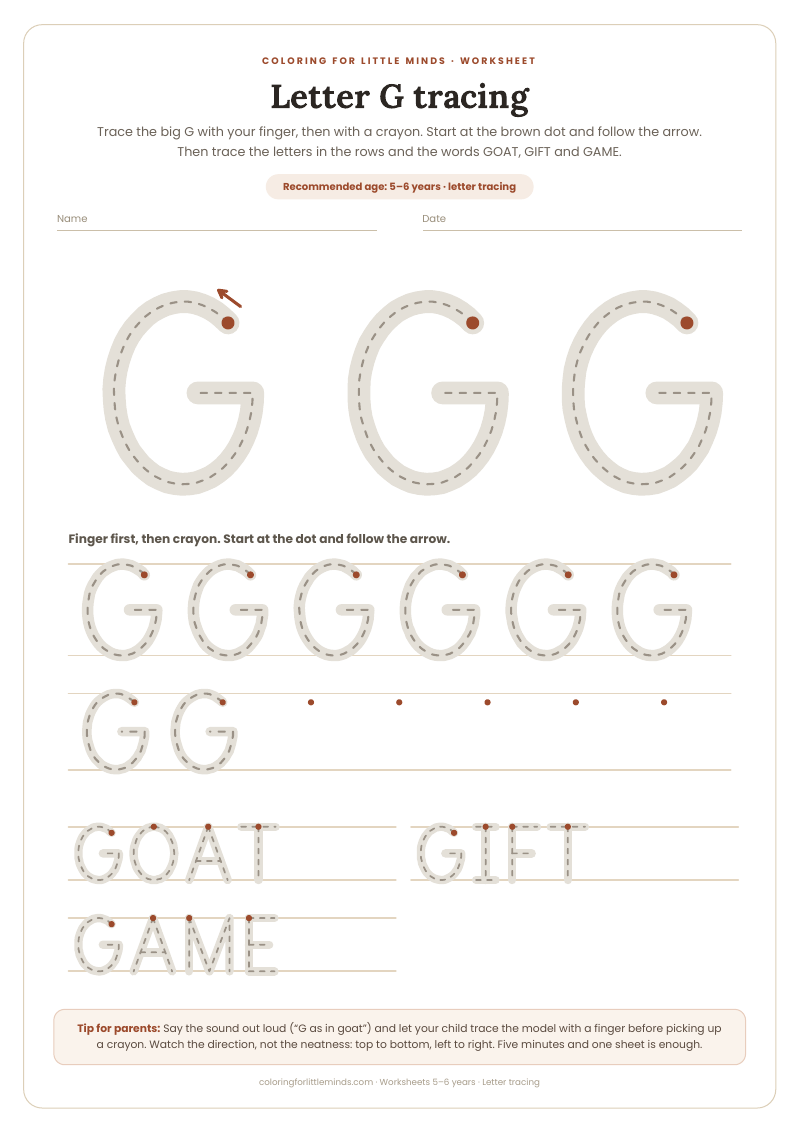 Save
Letter G tracing
Letter tracing · ages 5–6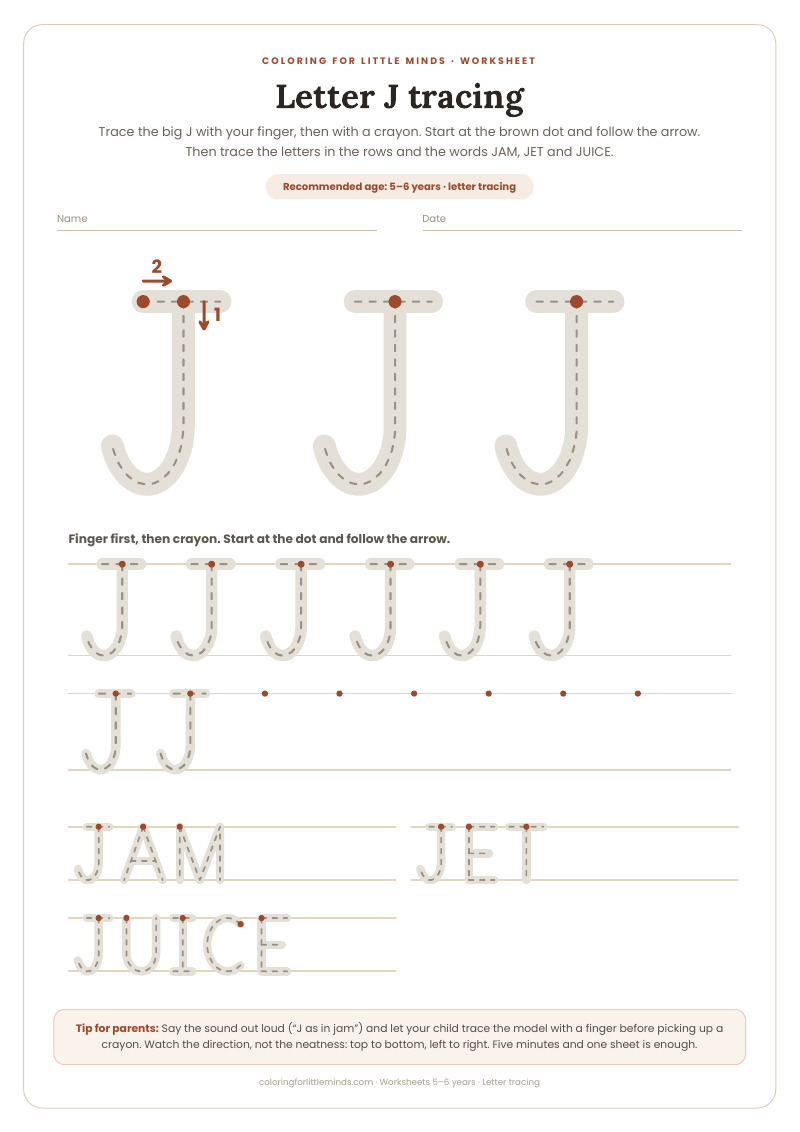 Save
Letter J tracing
Letter tracing · ages 5–6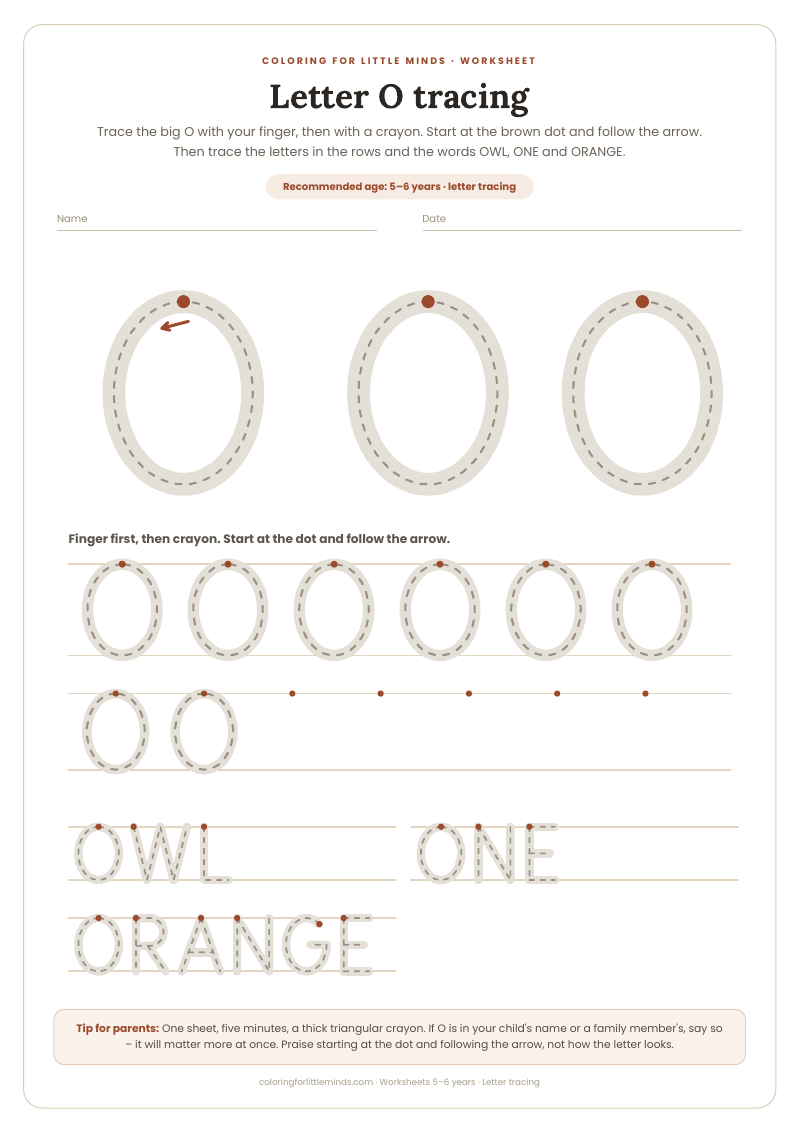 Save
Letter O tracing
Letter tracing · ages 5–6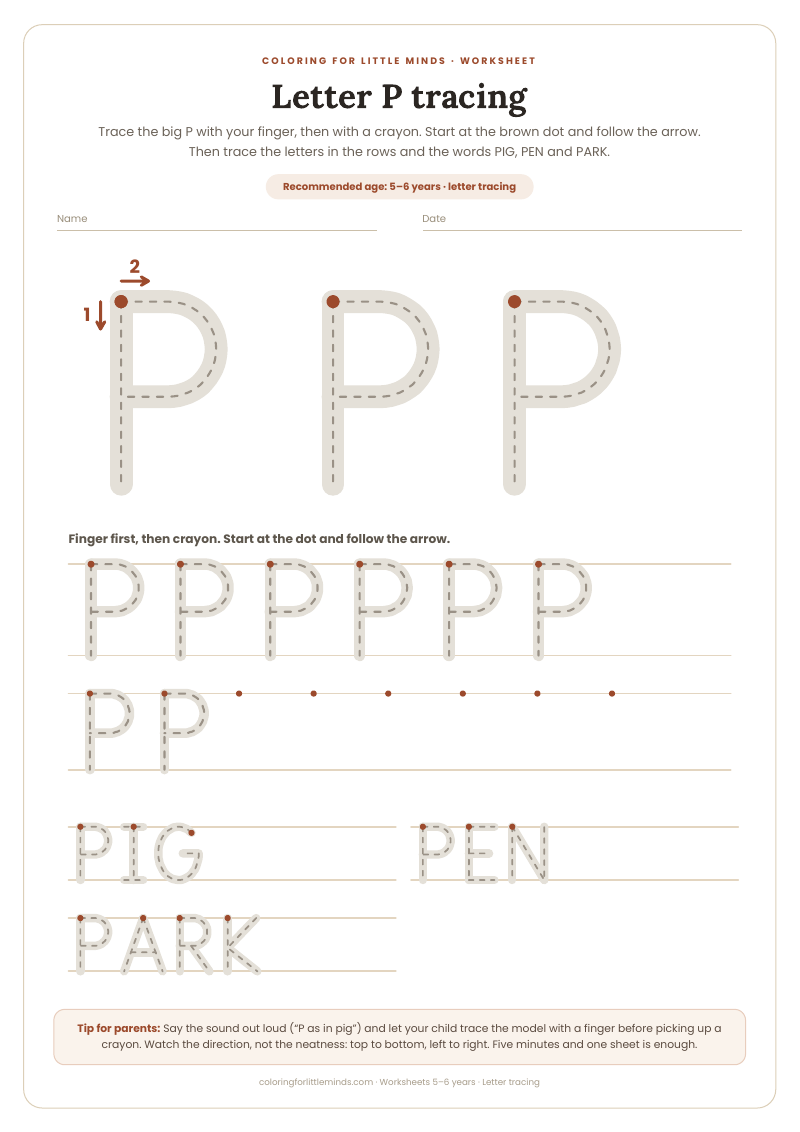 Save
Letter P tracing
Letter tracing · ages 5–6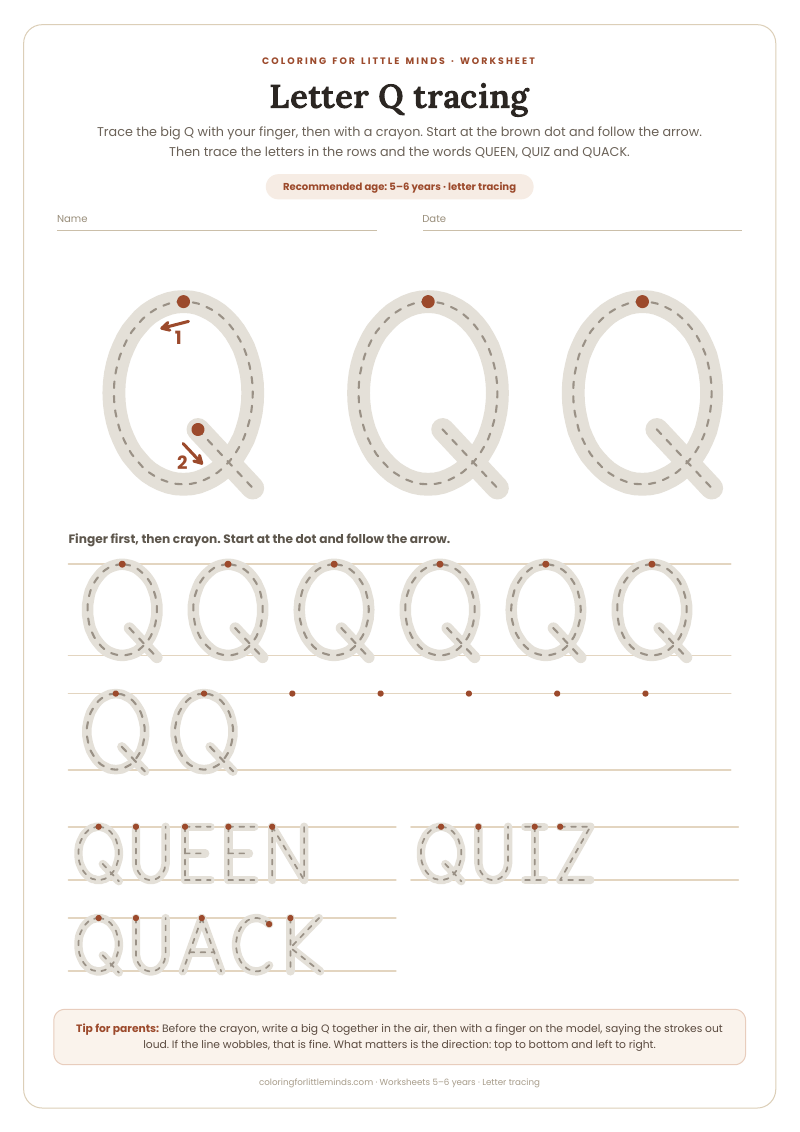 Save
Letter Q tracing
Letter tracing · ages 5–6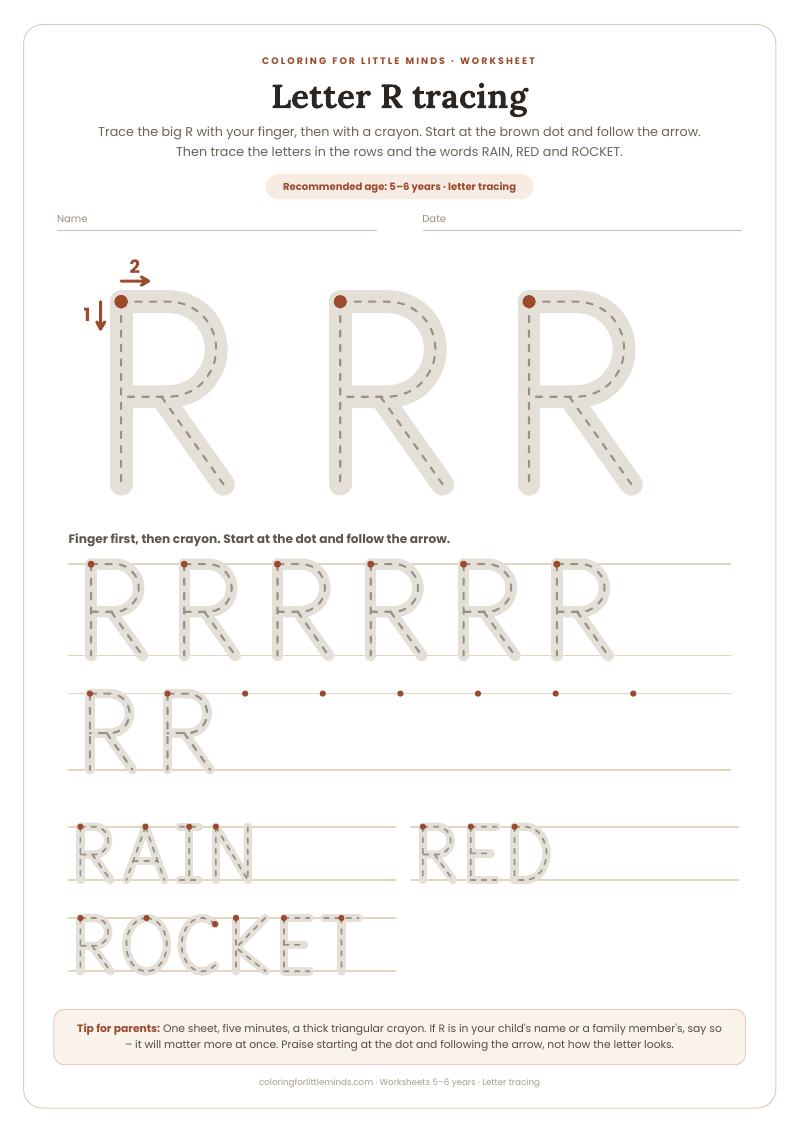 Save
Letter R tracing
Letter tracing · ages 5–6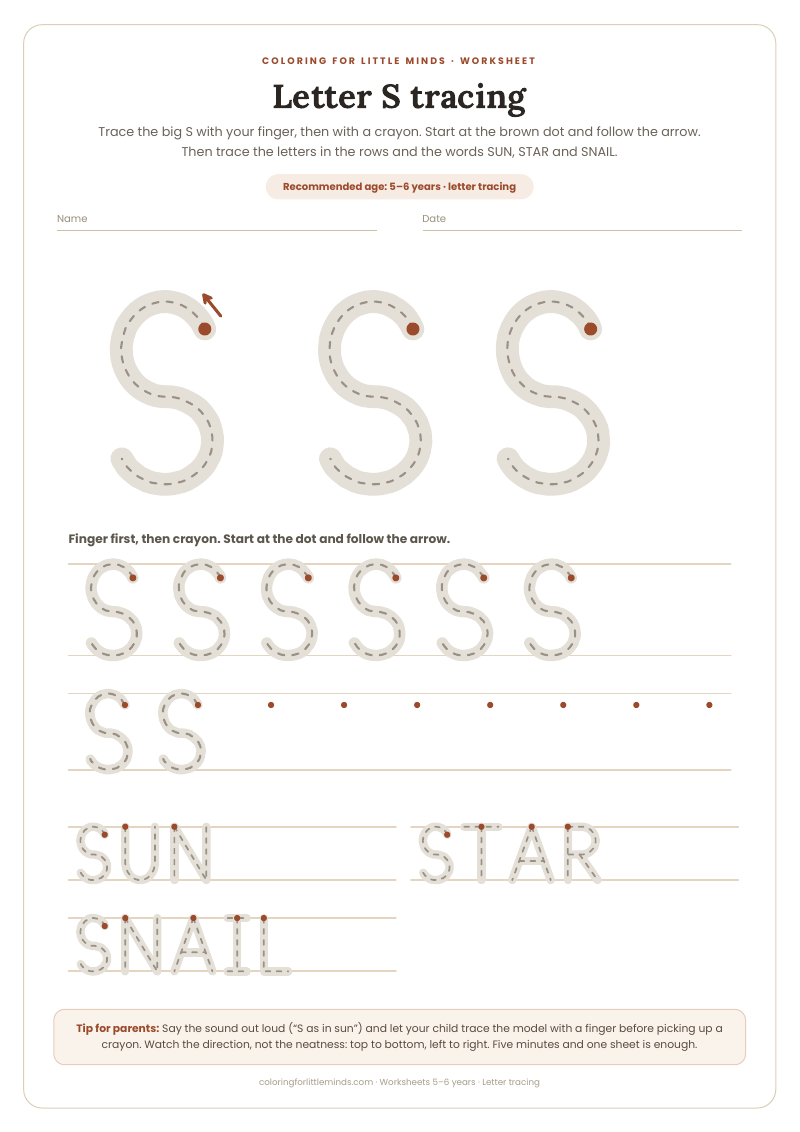 Save
Letter S tracing
Letter tracing · ages 5–6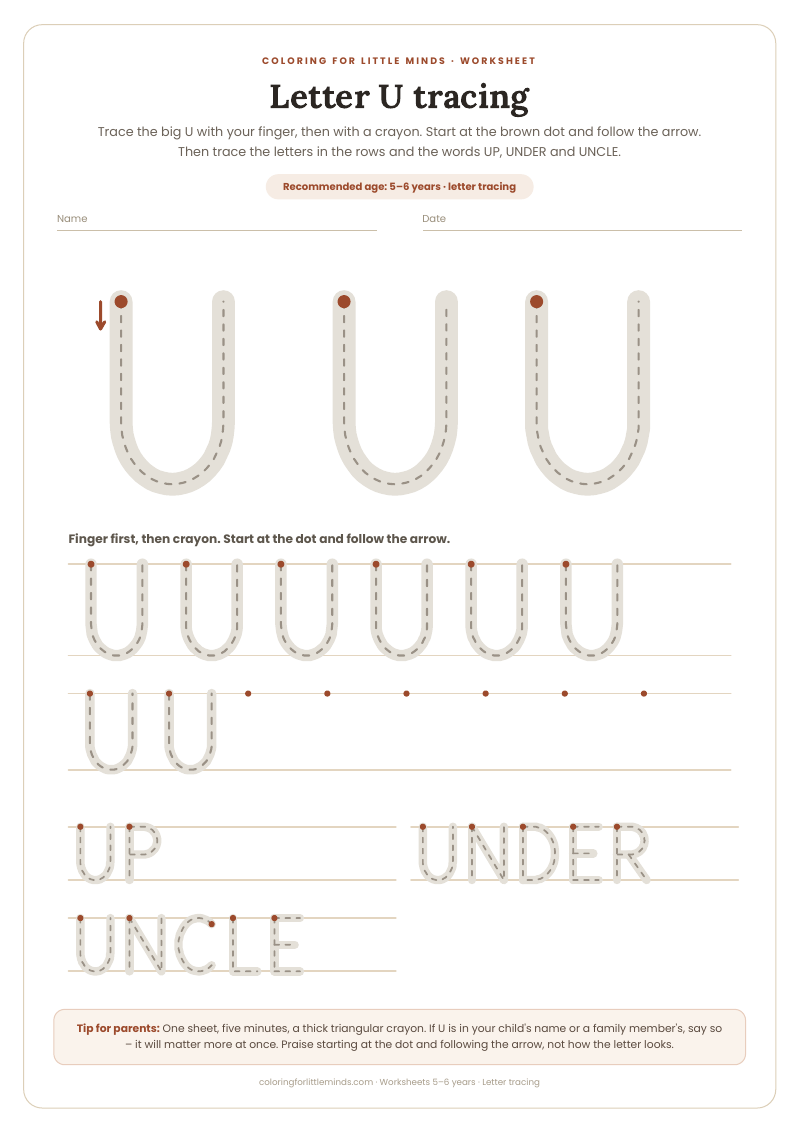 Save
Letter U tracing
Letter tracing · ages 5–6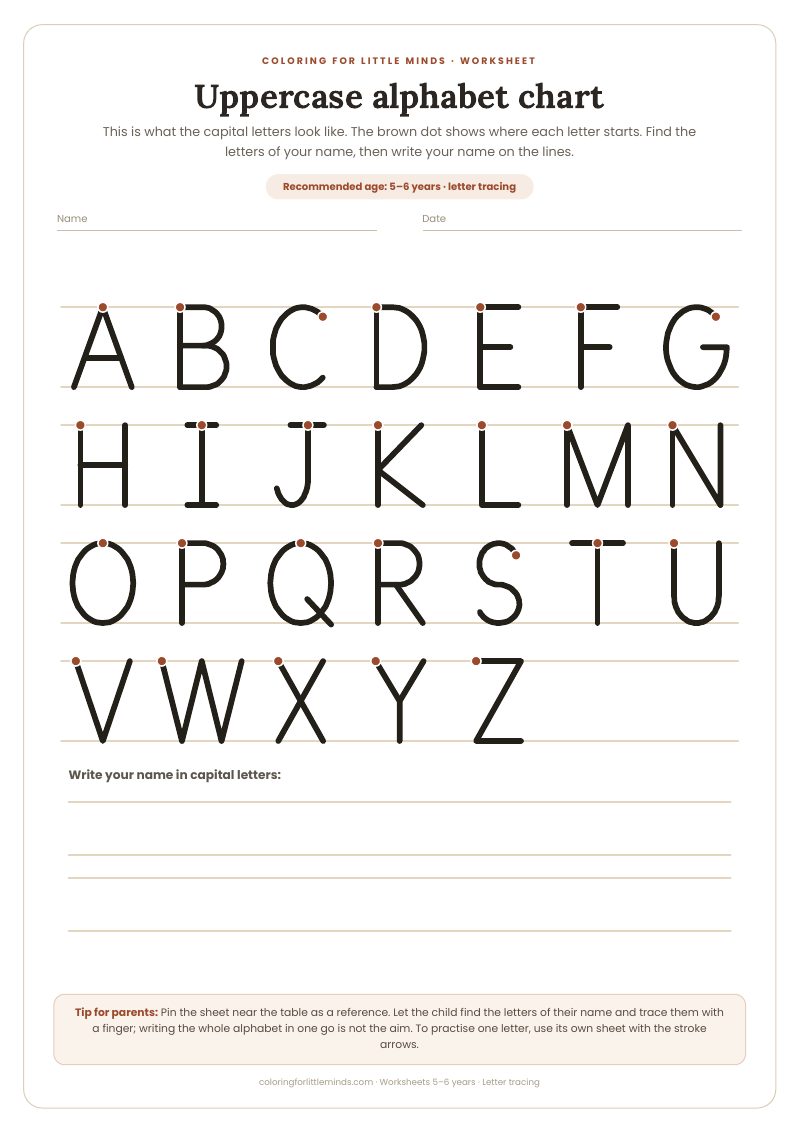 Save
Uppercase alphabet chart
Letter tracing · ages 5–6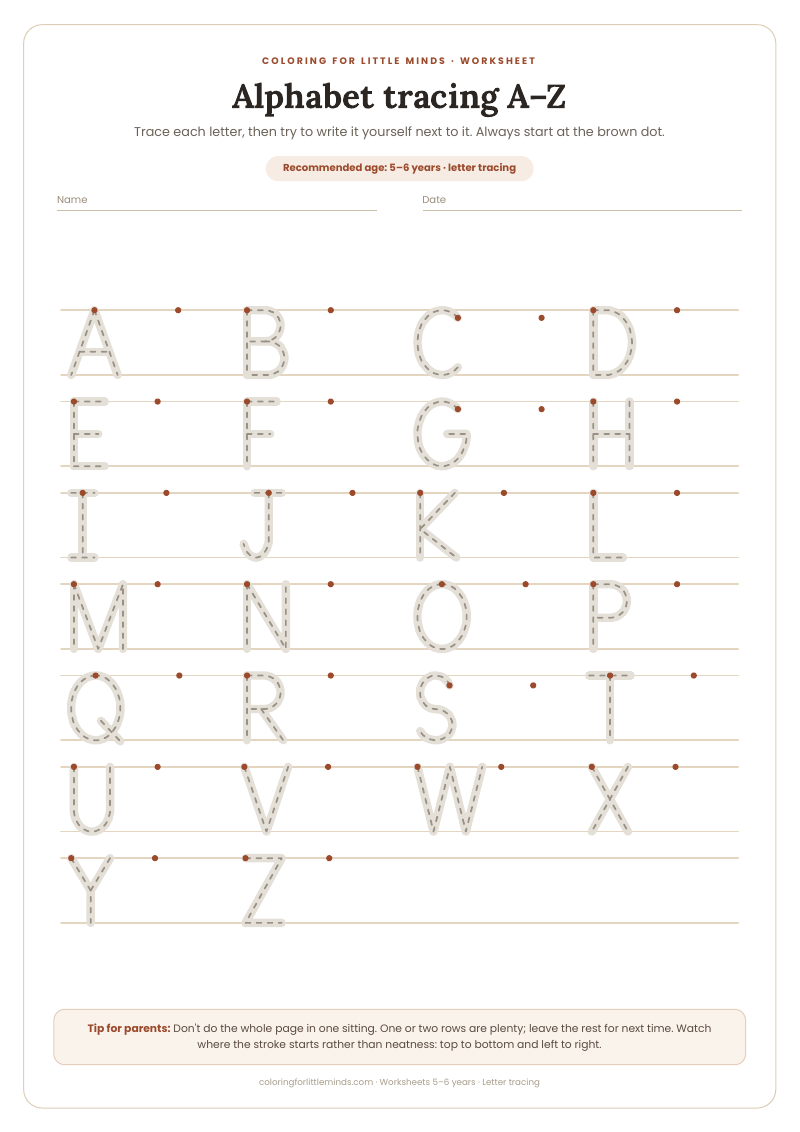 Save
Alphabet tracing A–Z
Letter tracing · ages 5–6Questions parents ask
Should we start with uppercase or lowercase?
Uppercase is easier for the hand: every letter starts at the top and all are the same height. Most text is lowercase though, so move on once the capitals feel easy. These sheets cover capitals only.
Why do the arrows matter?
They show stroke order and direction. A child who draws letters from the bottom up still gets a letter, but the habit slows writing down later and is hard to unlearn.
Which letter should we start with?
The first letter of the child's name, then the rest of the name. For the hand, the easiest capitals are the straight-line ones: L, T, I, H, E, F.
What should my child write with?
A short, thick crayon or a triangular pencil. A short tool is hard to grab with the whole fist, so the fingers do the work.