Cutting practice worksheets
Eighteen cutting worksheets, from the very first snip to cutting out shapes: straight lines, gentle curves, zigzags, waves, a spiral, outlines and cut and paste. The dashed lines are bold and easy to see.
Cutting is good preparation for writing: it strengthens the fingers, teaches the two hands to work together (one cuts, the other turns the paper) and has the eyes guide the hand along a line. The sheets go from easiest to hardest: single snips across a narrow strip, straight lines and gentle curves, zigzags, waves, square corners, and finally a spiral, outlines and a crown.
There are six sheets for each age band. On the sheets cut from the edge of the paper, a grown-up first cuts off the bottom edge along the solid line; on the cut and paste sheets the child cuts out the cards and glues them down alone. Use child-safe scissors with rounded tips, and left-handed scissors for a left-handed child. Thumb on top. The paper turns, not the scissor hand. Cutting happens at the table, with a grown-up nearby.
Sheets by age:
Ages 3–4 (6)
⬇ Bundle: cutting practice ages 3–4 (6 sheets) in one PDF
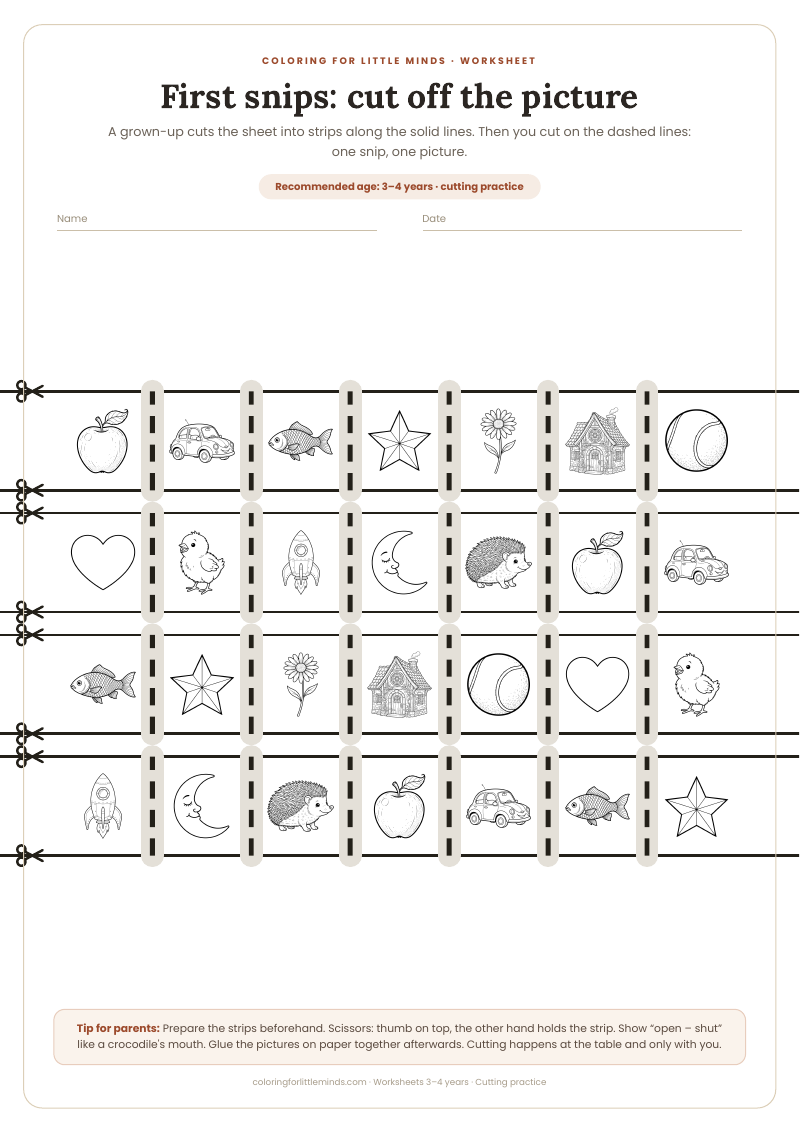 Save
First snips: cut off the picture
Cutting practice · ages 3–4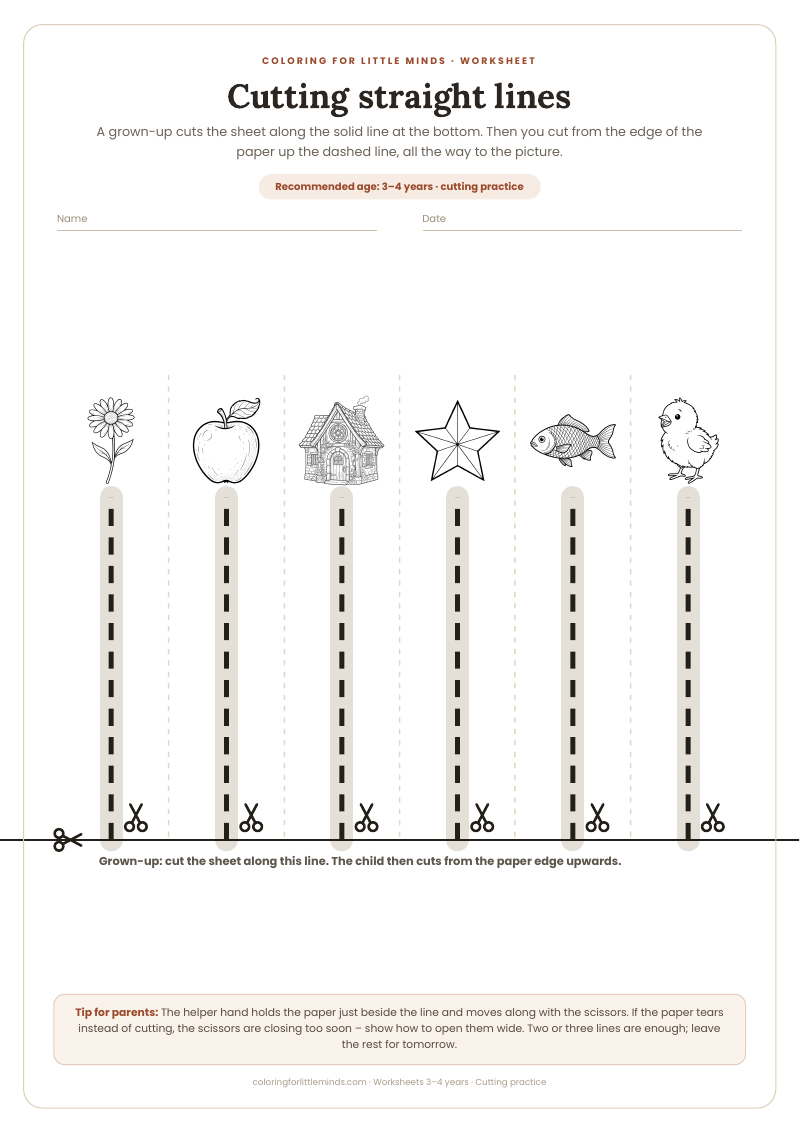 Save
Cutting straight lines
Cutting practice · ages 3–4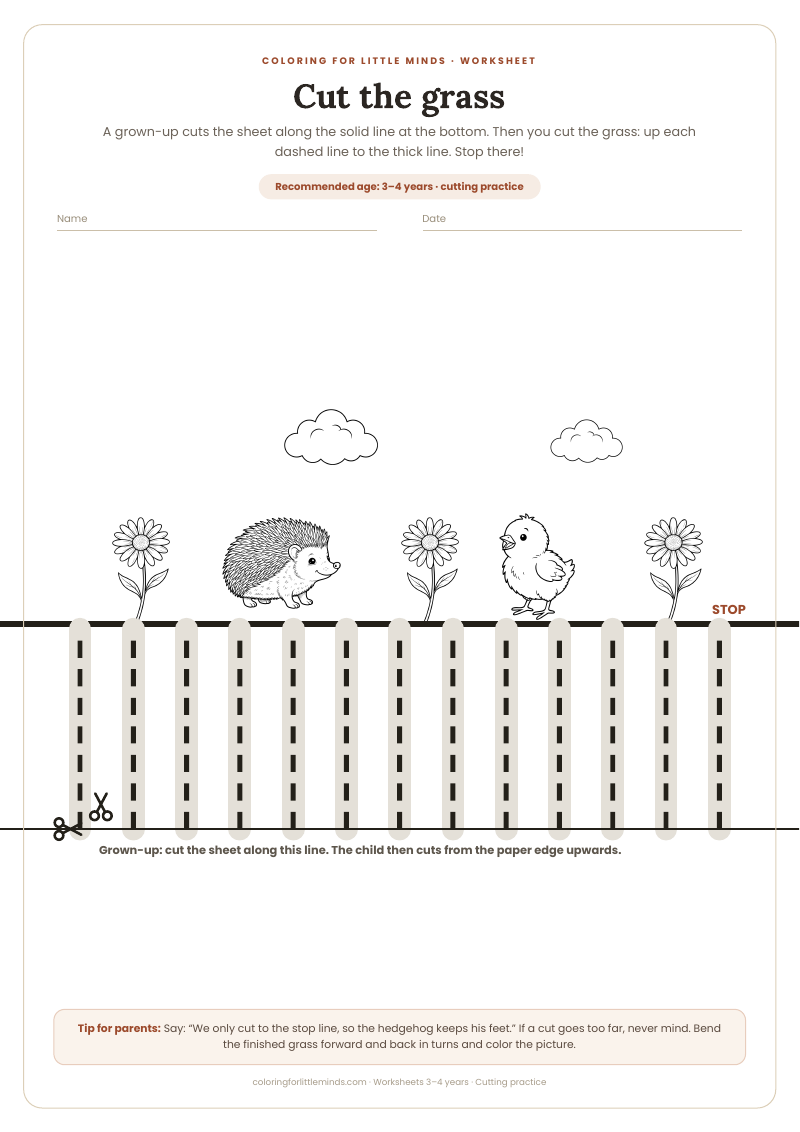 Save
Cut the grass
Cutting practice · ages 3–4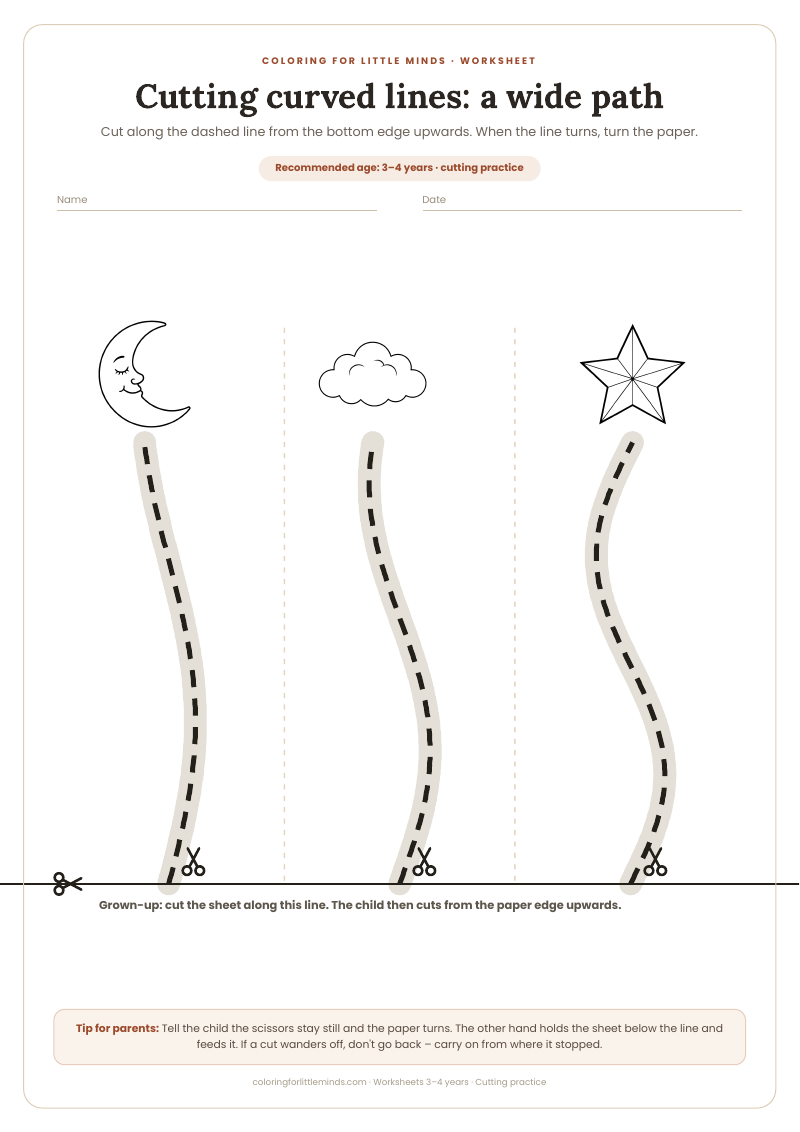 Save
Cutting curved lines: a wide path
Cutting practice · ages 3–4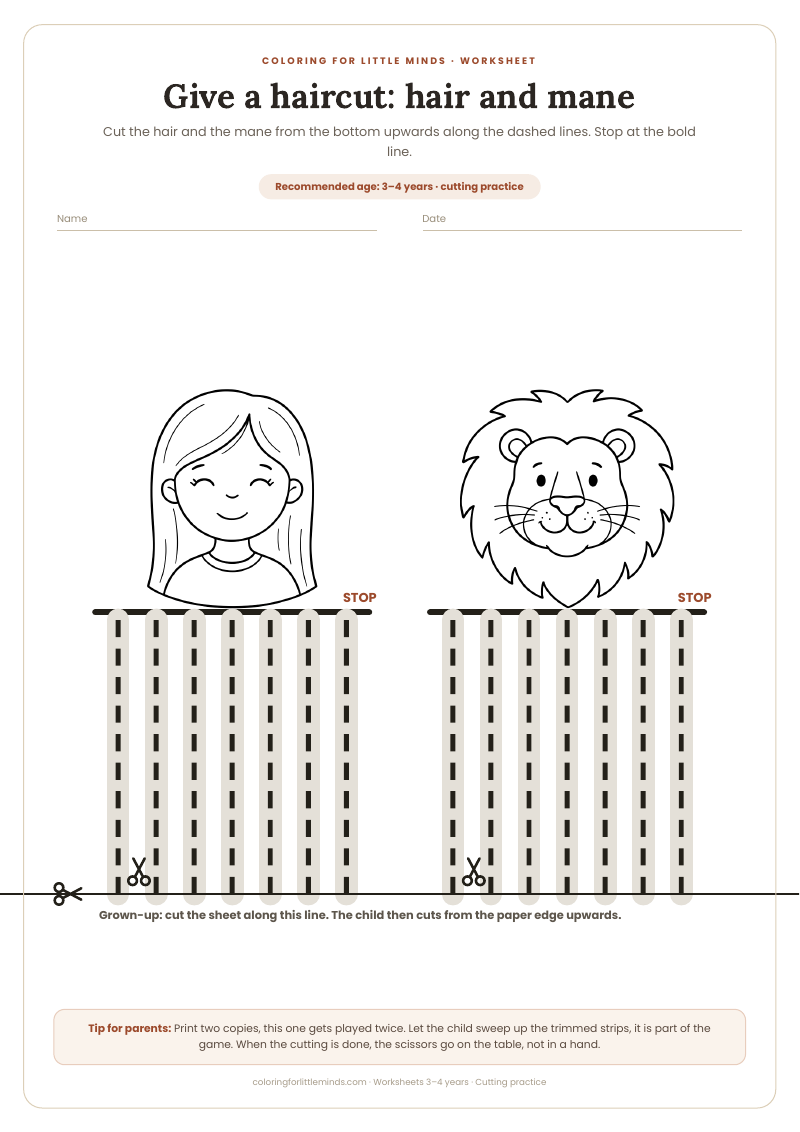 Save
Give a haircut: hair and mane
Cutting practice · ages 3–4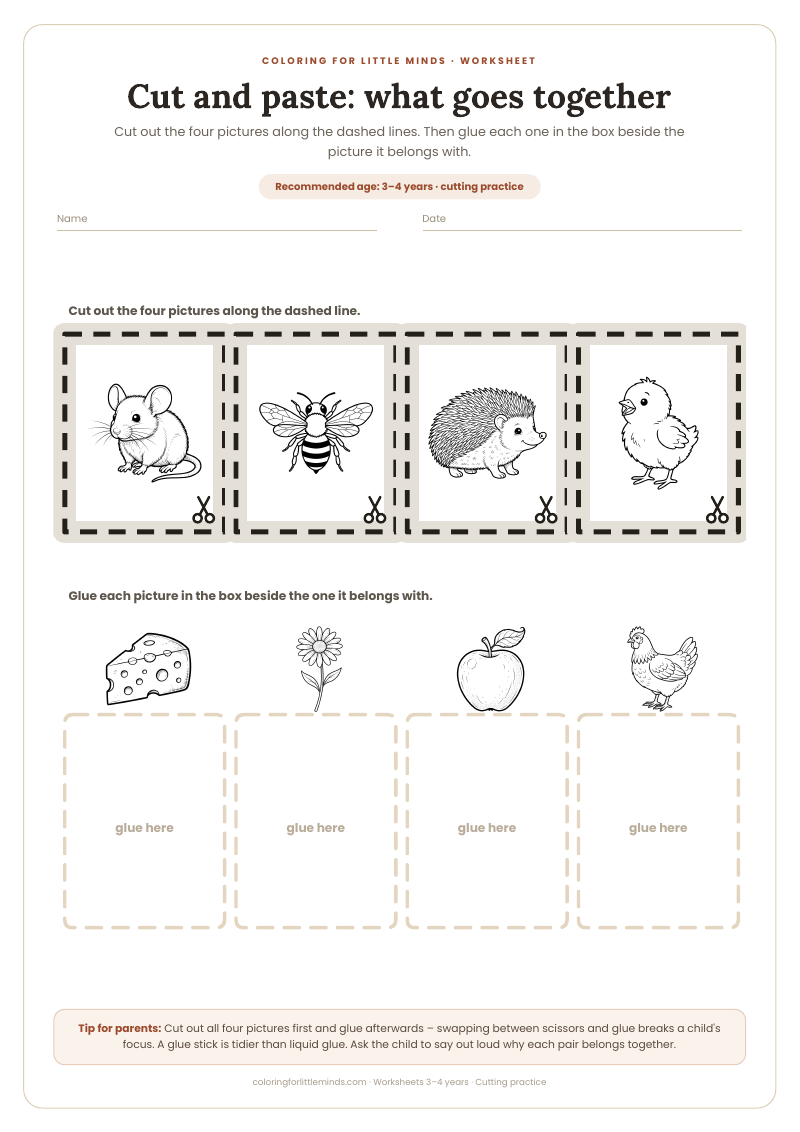 Save
Cut and paste: what goes together
Cutting practice · ages 3–4Ages 4–5 (6)
⬇ Bundle: cutting practice ages 4–5 (6 sheets) in one PDF
 Save
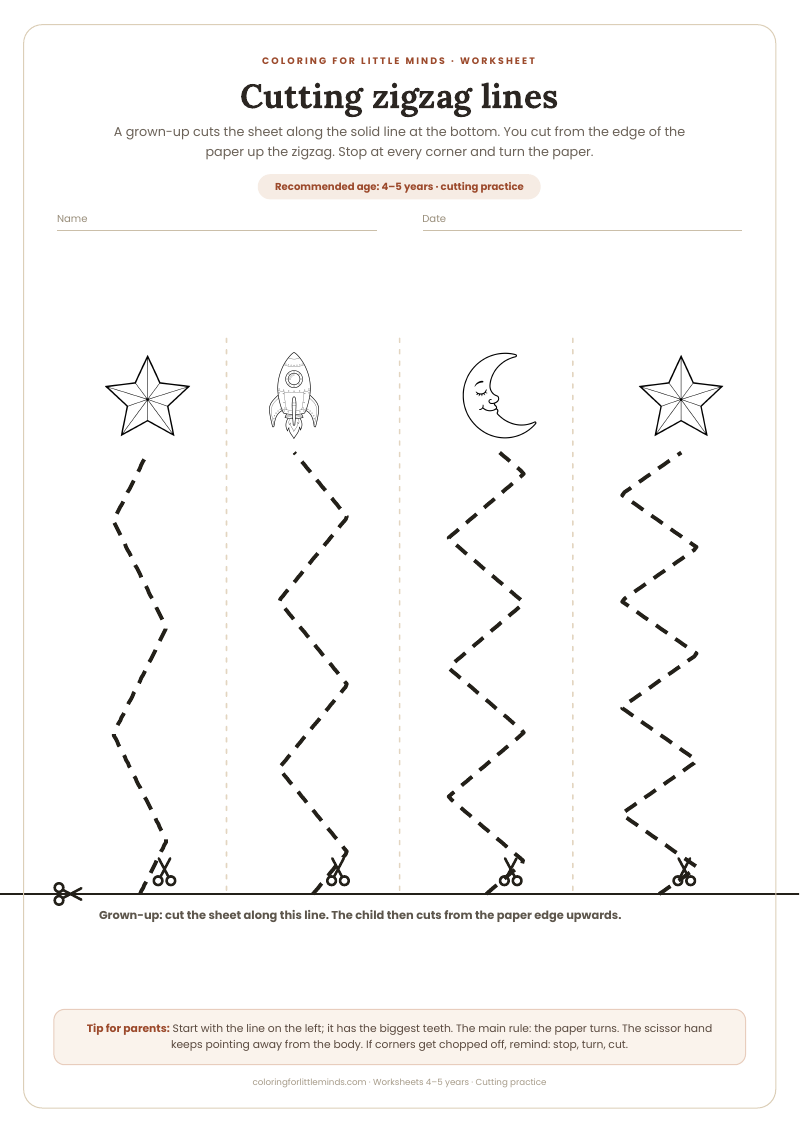
Cutting zigzag lines
Cutting practice · ages 4–5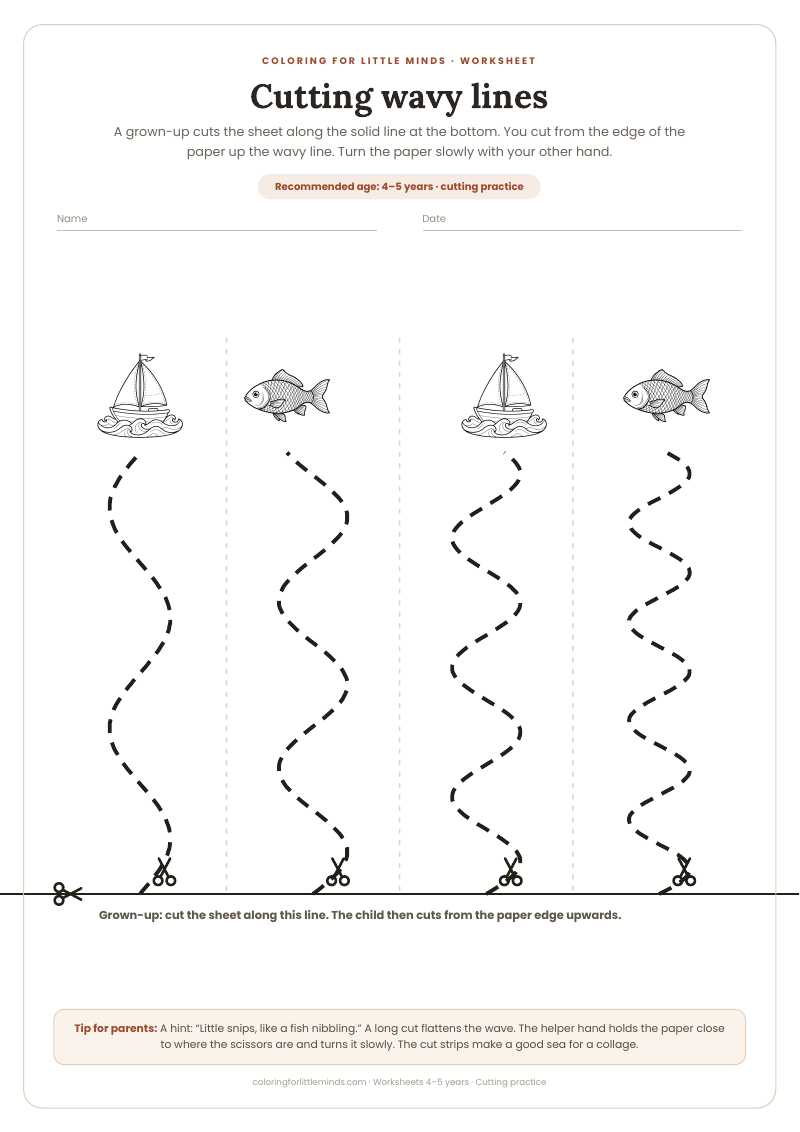 Save
Cutting wavy lines
Cutting practice · ages 4–5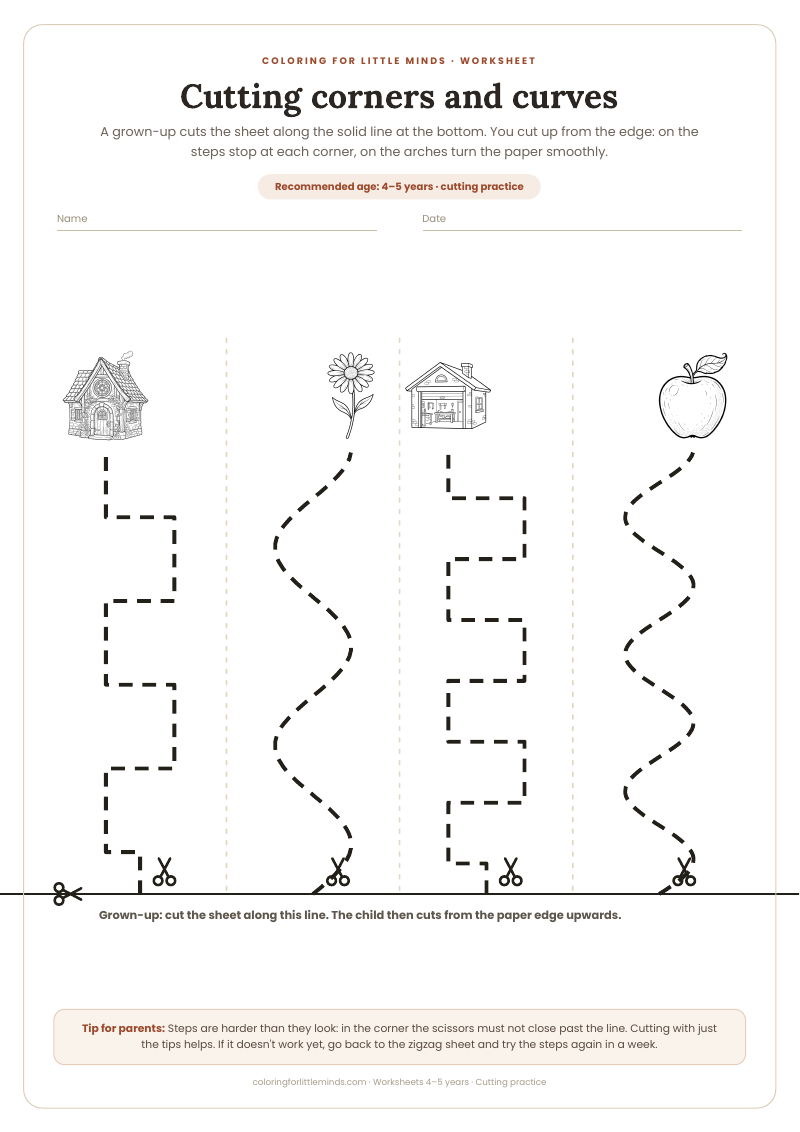 Save
Cutting corners and curves
Cutting practice · ages 4–5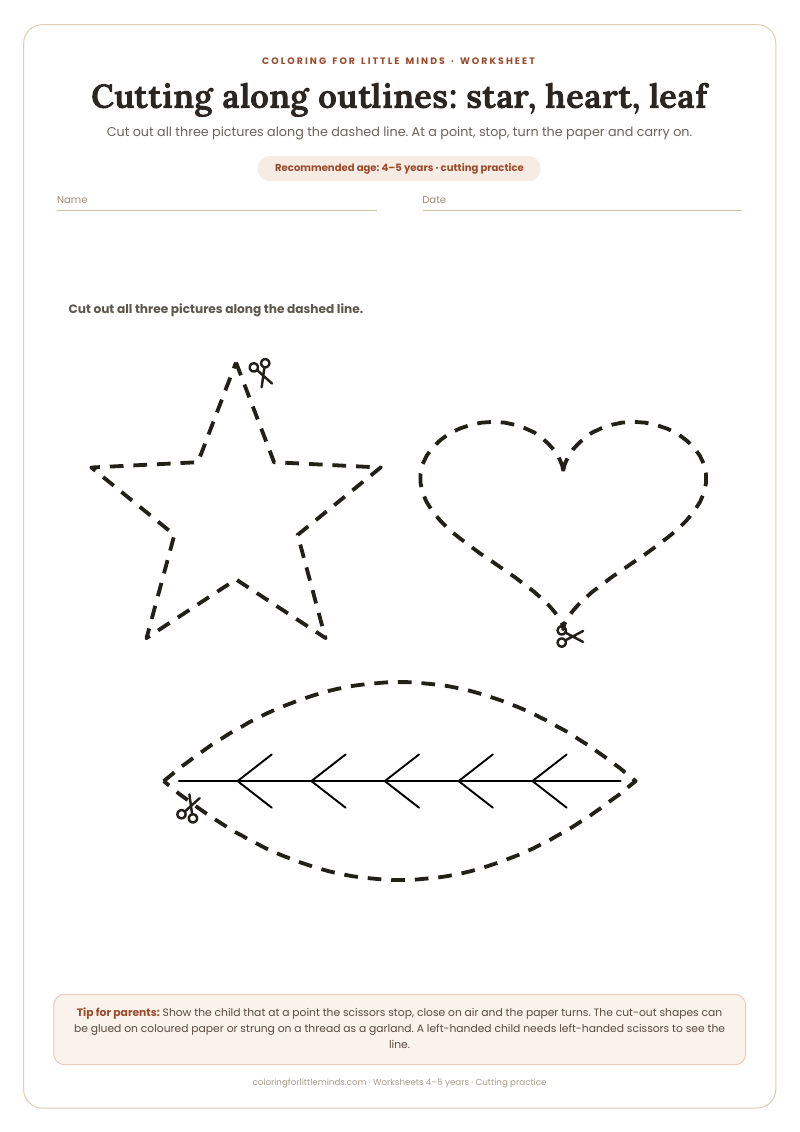 Save
Cutting along outlines: star, heart, leaf
Cutting practice · ages 4–5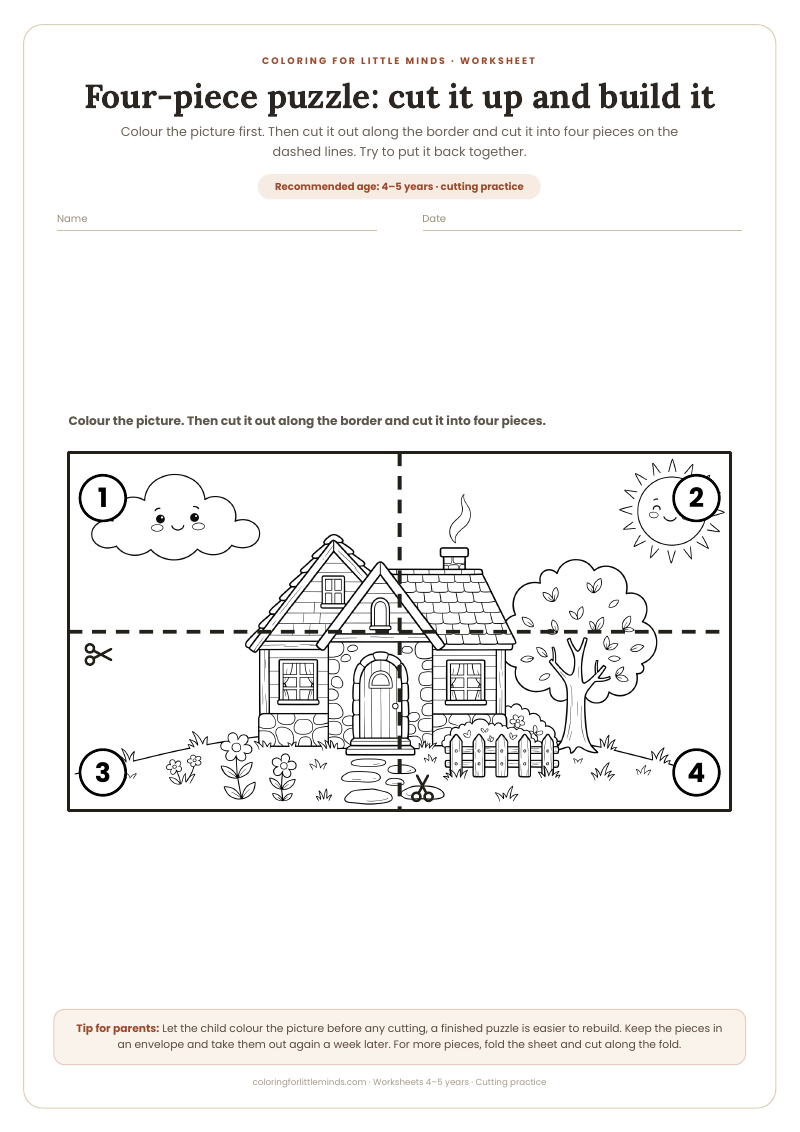 Save
Four-piece puzzle: cut it up and build it
Cutting practice · ages 4–5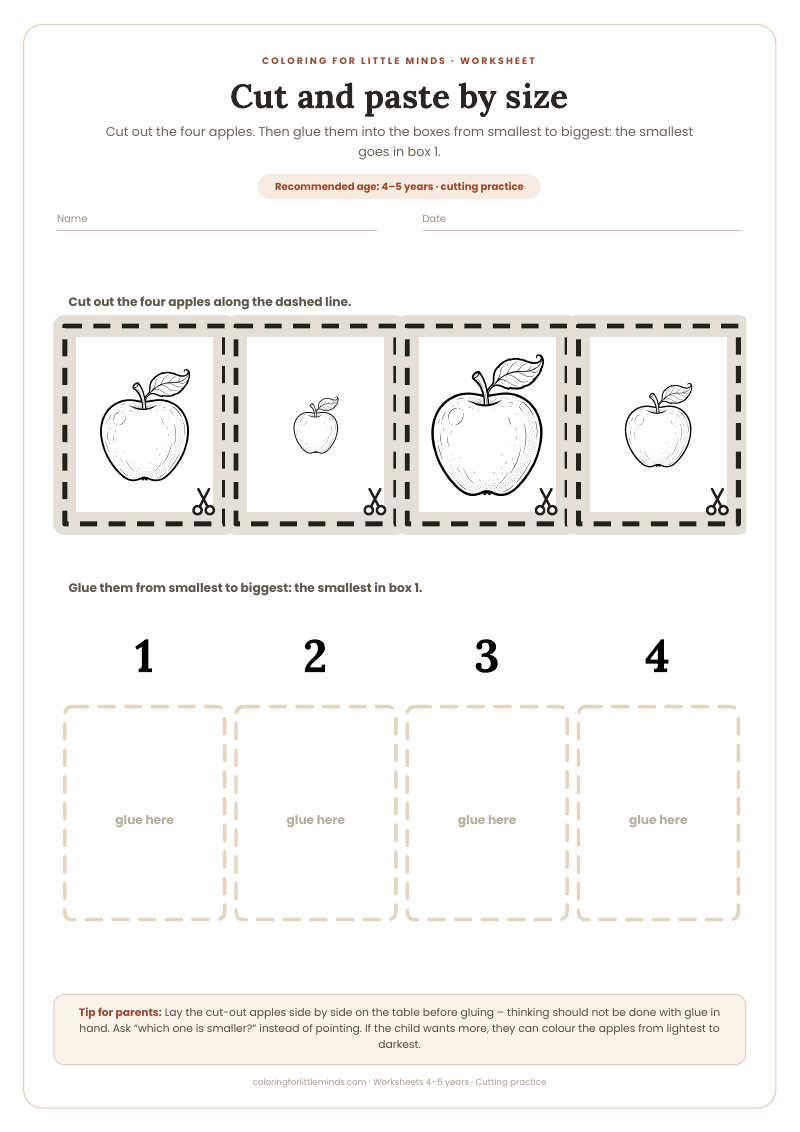 Save
Cut and paste by size
Cutting practice · ages 4–5Ages 5–6 (6)
⬇ Bundle: cutting practice ages 5–6 (6 sheets) in one PDF
 Save
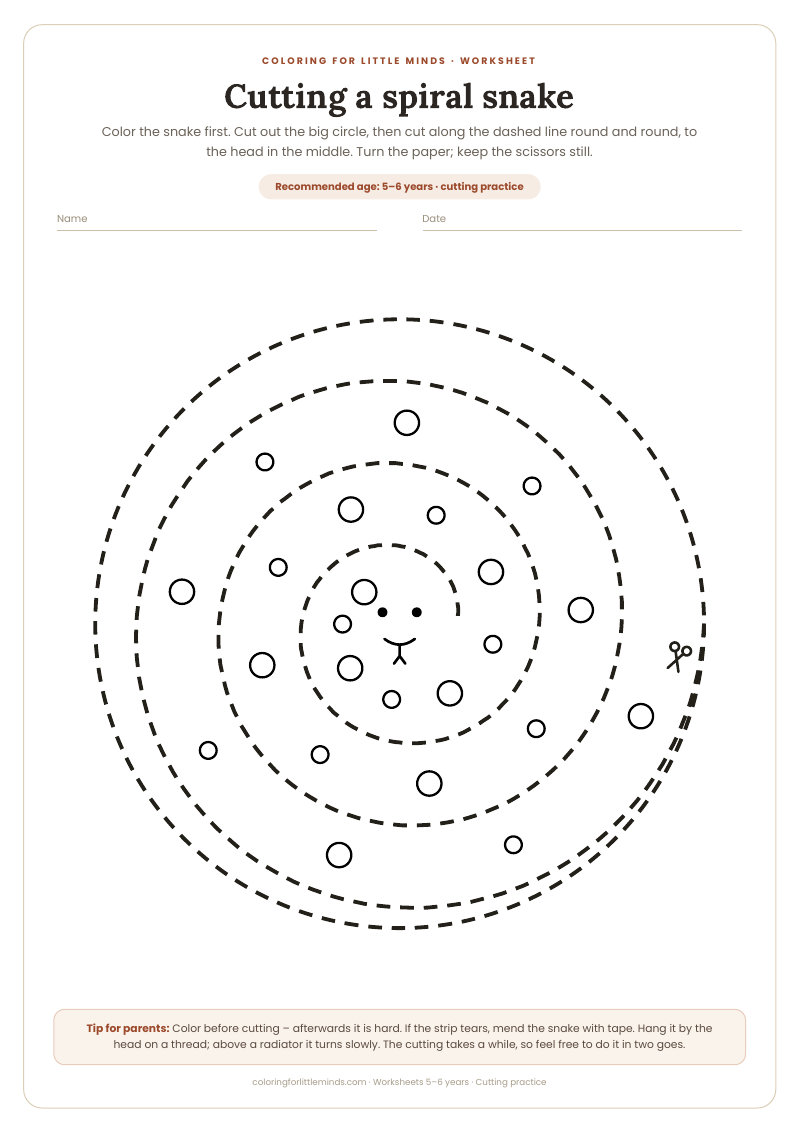
Cutting a spiral snake
Cutting practice · ages 5–6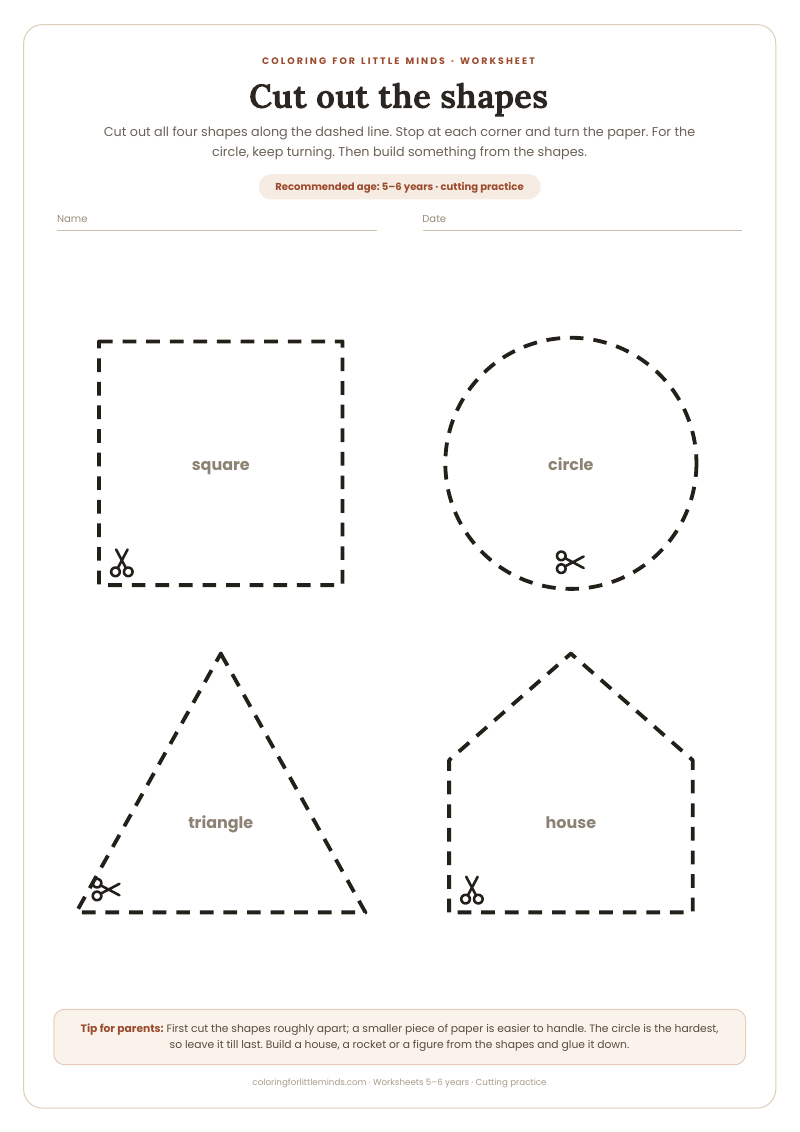 Save
Cut out the shapes
Cutting practice · ages 5–6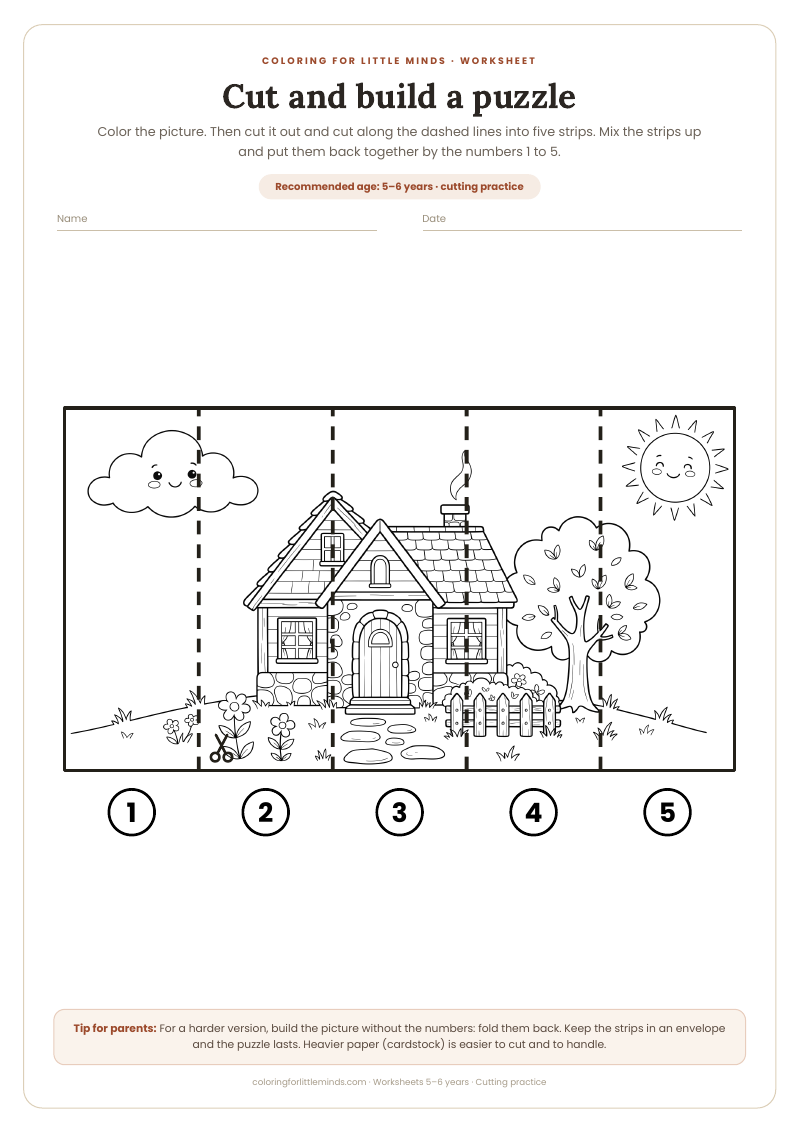 Save
Cut and build a puzzle
Cutting practice · ages 5–6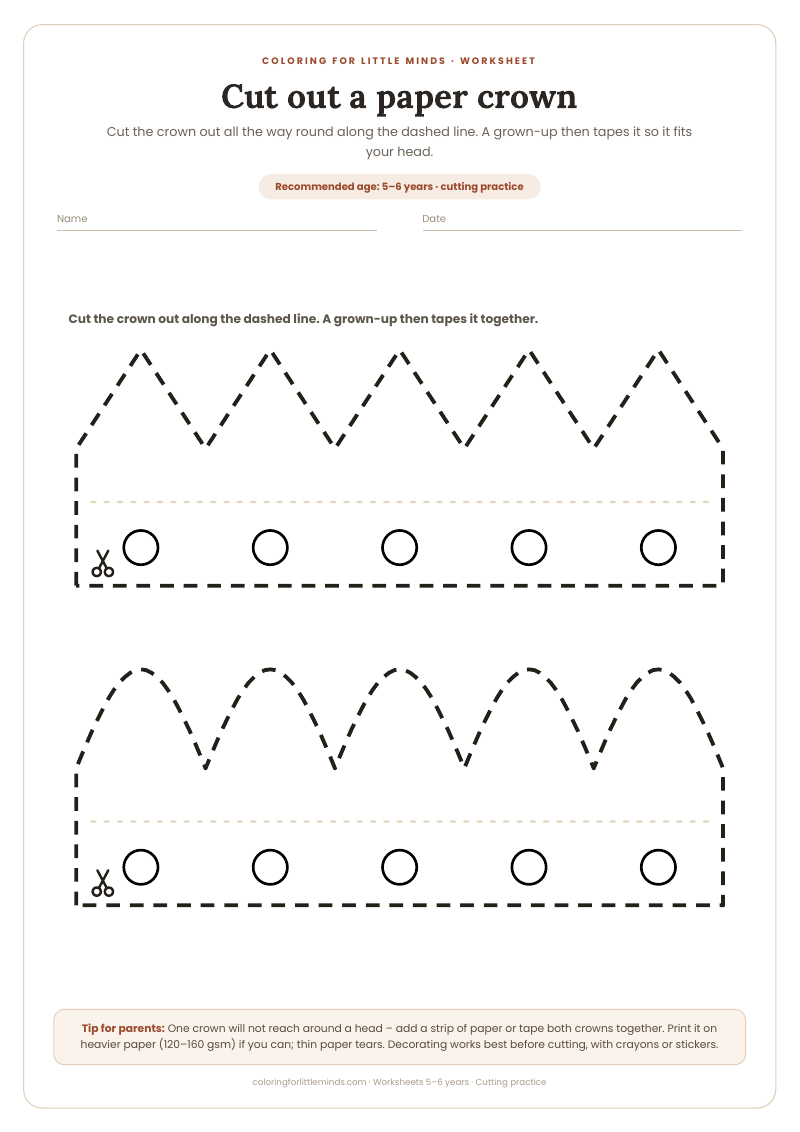 Save
Cut out a paper crown
Cutting practice · ages 5–6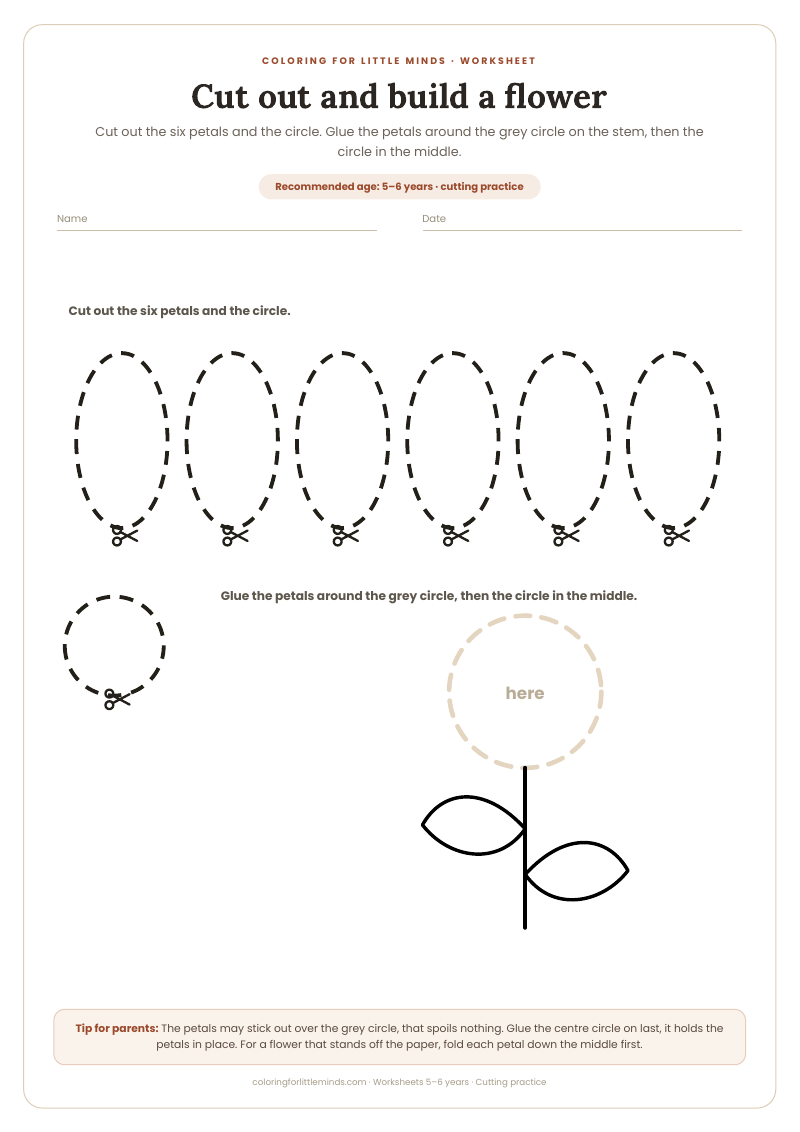 Save
Cut out and build a flower
Cutting practice · ages 5–6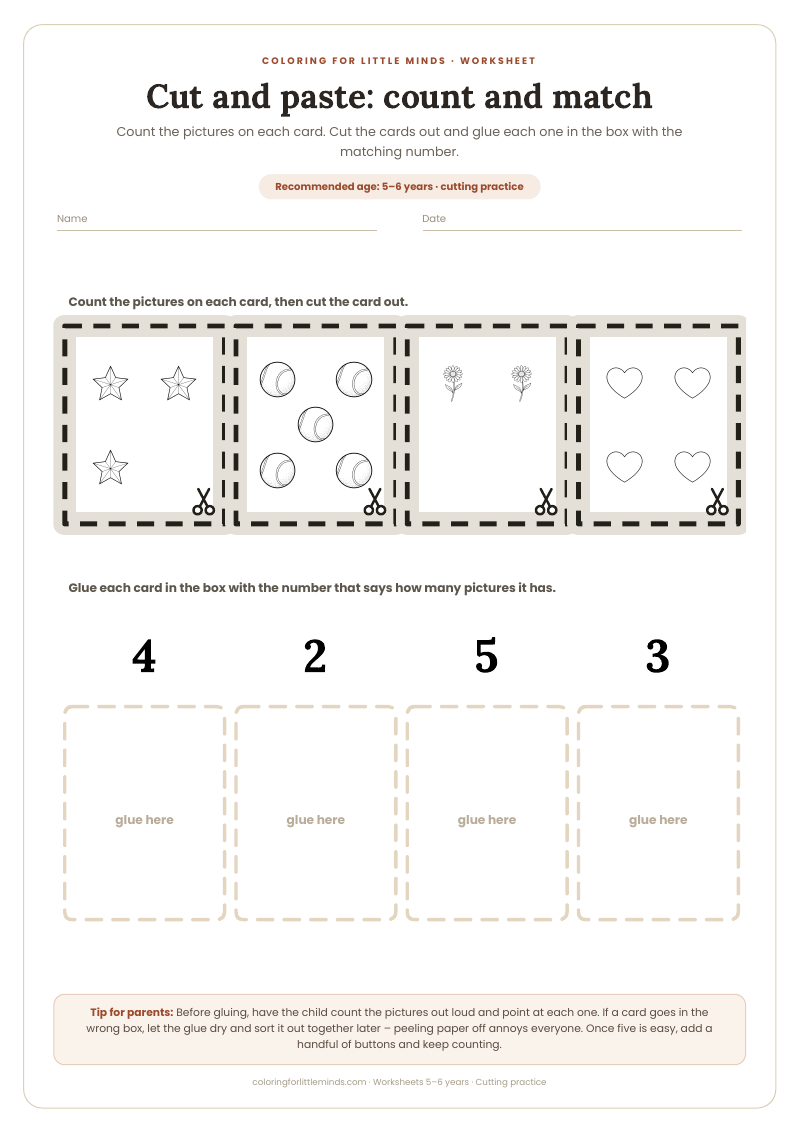 Save
Cut and paste: count and match
Cutting practice · ages 5–6Questions parents ask
At what age can children start using scissors?
As a rough guide: first snips around age three, a straight line around four, curves and shapes around five. Children differ a lot, so go by what the hand can do, not by the birthday.
What scissors should we buy?
Child-safe scissors with rounded tips that really cut paper – blunt ones only frustrate. A left-handed child needs true left-handed scissors: the blades are reversed so the child can see the line.
How should a child hold scissors?
Thumb in the small loop, middle finger in the big loop, index finger outside to steady the blades. Thumb points up. The other hand holds and turns the paper.
Which sheet should we start with?
The picture strips: the strip is narrow enough for a single snip to cut right through. Then the straight lines, the grass fringe and the haircut – all for ages 3–4.
What paper works best?
Plain office paper is fine for lines and strips. For the crown, the puzzle and the cut-out shapes, heavier paper (120–160 gsm) is worth it: it holds its shape and the scissors run through it better.
Why add gluing to cutting?
The cut-out piece gets a purpose: it belongs in one particular place, and the child has to choose it. Gluing is also its own skill – a little glue, in the middle. Cut everything out first, then glue.